








Ethics
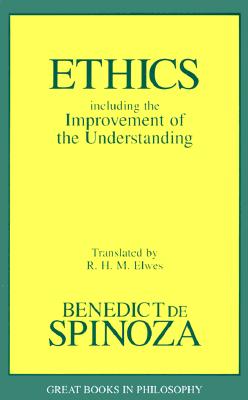
Ethics
BENEDICT DE (BARUCH) SPINOZA was born in Amsterdam, Holland, on November 24, 1632, into a family of Spanish and Portuguese Jewish descent. Given his cultural and religious background, Spinoza was educated in Judaism within the close Amsterdam community. In his mid-twenties, he began to turn away from his religion; after attempting to return Spinoza to the fold, the Amsterdam community expelled him in 1656. To escape these pressures, Spinoza moved to the nearby village of Ouwerkerk in 1660, where he could be close to friends, many of whom belonged to a religious community in the area. Rather than being schooled at the universities, Spinoza was trained as a skilled craftsman--a grinder of optical lenses. This vocation provided him with a modest living, which permitted ample time for study and for writing on a variety of subjects. One of the early products of these independent intellectual efforts was Spinoza's short work on the philosophy of Rene Descartes (Parts I and II of Descartes' Principles of Philosophy, Demonstrated in the Geometrical Manner [1663]). Three years after leaving Amsterdam, Spinoza moved to the town of Voorburg, not far from The Hague. Here he wrote and anonymously published his Theological-Political Treatise in 1670. It was in this work that he departed from the prevailing religious teachings of his day to argue that the Bible was a source for moral guidance rather than the fountain of philosophical or scientific truth. Spinoza's devotion to freedom of thought was later carried forth in an unfinished work titled Political Treatise (1677). Spinoza's skill as a craftsman and as a philosopher gained him so much international attention that in 1673 he was offered the chair in philosophy at the University of Heidelberg. But Spinoza's desire for solitude and the intellectual freedom that the quiet life afforded, prompted him to decline the post. In 1677, Spinoza moved to The Hague, where a short time later he died on February 21. By far the greater proportion of Spinoza's work was published after his death: B. D. S. Opera Posthuma (1677, which includes the works Ethics Demonstrated in a Geometrical Manner, Political Treatise, Treatise on the Improvement of the Understanding, and Hebrew Grammar).
PRP: 195.84 Lei

Acesta este Prețul Recomandat de Producător. Prețul de vânzare al produsului este afișat mai jos.
176.26Lei
176.26Lei
195.84 LeiPrimești 176 puncte

Indisponibil
Descrierea produsului
BENEDICT DE (BARUCH) SPINOZA was born in Amsterdam, Holland, on November 24, 1632, into a family of Spanish and Portuguese Jewish descent. Given his cultural and religious background, Spinoza was educated in Judaism within the close Amsterdam community. In his mid-twenties, he began to turn away from his religion; after attempting to return Spinoza to the fold, the Amsterdam community expelled him in 1656. To escape these pressures, Spinoza moved to the nearby village of Ouwerkerk in 1660, where he could be close to friends, many of whom belonged to a religious community in the area. Rather than being schooled at the universities, Spinoza was trained as a skilled craftsman--a grinder of optical lenses. This vocation provided him with a modest living, which permitted ample time for study and for writing on a variety of subjects. One of the early products of these independent intellectual efforts was Spinoza's short work on the philosophy of Rene Descartes (Parts I and II of Descartes' Principles of Philosophy, Demonstrated in the Geometrical Manner [1663]). Three years after leaving Amsterdam, Spinoza moved to the town of Voorburg, not far from The Hague. Here he wrote and anonymously published his Theological-Political Treatise in 1670. It was in this work that he departed from the prevailing religious teachings of his day to argue that the Bible was a source for moral guidance rather than the fountain of philosophical or scientific truth. Spinoza's devotion to freedom of thought was later carried forth in an unfinished work titled Political Treatise (1677). Spinoza's skill as a craftsman and as a philosopher gained him so much international attention that in 1673 he was offered the chair in philosophy at the University of Heidelberg. But Spinoza's desire for solitude and the intellectual freedom that the quiet life afforded, prompted him to decline the post. In 1677, Spinoza moved to The Hague, where a short time later he died on February 21. By far the greater proportion of Spinoza's work was published after his death: B. D. S. Opera Posthuma (1677, which includes the works Ethics Demonstrated in a Geometrical Manner, Political Treatise, Treatise on the Improvement of the Understanding, and Hebrew Grammar).
Detaliile produsului




