








Ethnic Renewal in Philadelphia's Chinatown: Space, Place, and Struggle
Ethnic Renewal in Philadelphia's Chinatown: Space, Place, and Struggle
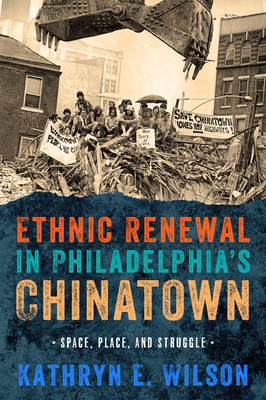
Philadelphia's Chinatown, like many urban chinatowns, began in the late nineteenth century as a refuge for immigrant laborers and merchants in which to form a community to raise families and conduct business. But this enclave for expression, identity, and community is also the embodiment of historical legacies and personal and collective memories. In Ethnic Renewal in Philadelphia's Chinatown. Kathryn Wilson charts the unique history of this neighborhood. After 1945, a new generation of families began to shape Chinatown's future. As plans for urban renewal-ranging from a cross-town expressway and commuter rail in the 1960s to a downtown baseball stadium in 2000-were proposed and developed, "Save Chinatown" activists rose up and fought for social justice. Wilson chronicles the community's efforts to save and renew itself through urban planning, territorial claims, and culturally specific rebuilding. She shows how these efforts led to Chinatown's growth and its continued ability to serve as a living community for subsequent waves of new immigration.
Philadelphia's Chinatown, like many urban chinatowns, began in the late nineteenth century as a refuge for immigrant laborers and merchants in which to form a community to raise families and conduct business. But this enclave for expression, identity, and community is also the embodiment of historical legacies and personal and collective memories. In Ethnic Renewal in Philadelphia's Chinatown. Kathryn Wilson charts the unique history of this neighborhood. After 1945, a new generation of families began to shape Chinatown's future. As plans for urban renewal--ranging from a cross-town expressway and commuter rail in the 1960s to a downtown baseball stadium in 2000--were proposed and developed, "Save Chinatown" activists rose up and fought for social justice. Wilson chronicles the community's efforts to save and renew itself through urban planning, territorial claims, and culturally specific rebuilding. She shows how these efforts led to Chinatown's growth and its continued ability to serve as a living community for subsequent waves of new immigration.
Philadelphia's Chinatown, like many urban chinatowns, began in the late nineteenth century as a refuge for immigrant laborers and merchants in which to form a community to raise families and conduct business. But this enclave for expression, identity, and community is also the embodiment of historical legacies and personal and collective memories. In Ethnic Renewal in Philadelphia's Chinatown. Kathryn Wilson charts the unique history of this neighborhood. After 1945, a new generation of families began to shape Chinatown's future. As plans for urban renewal--ranging from a cross-town expressway and commuter rail in the 1960s to a downtown baseball stadium in 2000--were proposed and developed, "Save Chinatown" activists rose up and fought for social justice. Wilson chronicles the community's efforts to save and renew itself through urban planning, territorial claims, and culturally specific rebuilding. She shows how these efforts led to Chinatown's growth and its continued ability to serve as a living community for subsequent waves of new immigration.
PRP: 255.85 Lei

Acesta este Prețul Recomandat de Producător. Prețul de vânzare al produsului este afișat mai jos.
230.26Lei
230.26Lei
255.85 LeiPrimești 230 puncte

Indisponibil
Descrierea produsului
Philadelphia's Chinatown, like many urban chinatowns, began in the late nineteenth century as a refuge for immigrant laborers and merchants in which to form a community to raise families and conduct business. But this enclave for expression, identity, and community is also the embodiment of historical legacies and personal and collective memories. In Ethnic Renewal in Philadelphia's Chinatown. Kathryn Wilson charts the unique history of this neighborhood. After 1945, a new generation of families began to shape Chinatown's future. As plans for urban renewal-ranging from a cross-town expressway and commuter rail in the 1960s to a downtown baseball stadium in 2000-were proposed and developed, "Save Chinatown" activists rose up and fought for social justice. Wilson chronicles the community's efforts to save and renew itself through urban planning, territorial claims, and culturally specific rebuilding. She shows how these efforts led to Chinatown's growth and its continued ability to serve as a living community for subsequent waves of new immigration.
Philadelphia's Chinatown, like many urban chinatowns, began in the late nineteenth century as a refuge for immigrant laborers and merchants in which to form a community to raise families and conduct business. But this enclave for expression, identity, and community is also the embodiment of historical legacies and personal and collective memories. In Ethnic Renewal in Philadelphia's Chinatown. Kathryn Wilson charts the unique history of this neighborhood. After 1945, a new generation of families began to shape Chinatown's future. As plans for urban renewal--ranging from a cross-town expressway and commuter rail in the 1960s to a downtown baseball stadium in 2000--were proposed and developed, "Save Chinatown" activists rose up and fought for social justice. Wilson chronicles the community's efforts to save and renew itself through urban planning, territorial claims, and culturally specific rebuilding. She shows how these efforts led to Chinatown's growth and its continued ability to serve as a living community for subsequent waves of new immigration.
Philadelphia's Chinatown, like many urban chinatowns, began in the late nineteenth century as a refuge for immigrant laborers and merchants in which to form a community to raise families and conduct business. But this enclave for expression, identity, and community is also the embodiment of historical legacies and personal and collective memories. In Ethnic Renewal in Philadelphia's Chinatown. Kathryn Wilson charts the unique history of this neighborhood. After 1945, a new generation of families began to shape Chinatown's future. As plans for urban renewal--ranging from a cross-town expressway and commuter rail in the 1960s to a downtown baseball stadium in 2000--were proposed and developed, "Save Chinatown" activists rose up and fought for social justice. Wilson chronicles the community's efforts to save and renew itself through urban planning, territorial claims, and culturally specific rebuilding. She shows how these efforts led to Chinatown's growth and its continued ability to serve as a living community for subsequent waves of new immigration.
Detaliile produsului




