





Field Guide to Diseases & Insects of the Rocky Mountain Region
Field Guide to Diseases & Insects of the Rocky Mountain Region
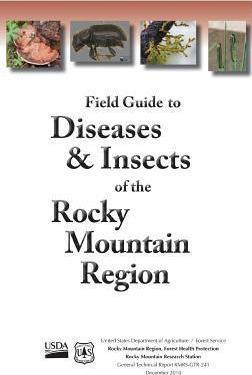
This field guide details the most commonly encountered diseases and insects of forest trees in the Rocky Mountain Region. Descriptions of diseases, insects, and physical injuries focus on the most diagnostic features of each. Photographs, line drawings, and tables are used to illustrate and emphasize characteristics described in the text. Diseases and insects in plains hardwood trees are not covered in depth. Ornamental trees are sometimes affected by the diseases or insects included in this guide but may not be specifically mentioned as hosts. This guide presents diseases and then insects. Entries are arranged according to the part of trees typically damaged by the agent described. The disease section describes dwarf and true mistletoes, decays (including root diseases and stem decays), cankers, wilts, rusts, foliage diseases, shoot blights, and abiotic injuries and miscellaneous diseases. The insect section describes bark beetles, defoliators, wood borers, sap-sucking insects, gall formers, mites, and bud and shoot insects. At the end of the guide is a subject index, a host-pest index to damaging agents by tree species and part of the tree affected, and a glossary of terms. The host-pest index provides a rapid means of assessing the number and variety of agents described for each tree species. This field guide applies to the USDA Forest Service's Rocky Mountain Region, which includes Colorado, Wyoming, South Dakota, Kansas, and Nebraska. Additional hosts, diseases, and insect pests may be encountered outside this Region that are not included here, and a few of the diseases and insects included in this guide may not be seen in other areas. Plant pathologists and entomologists are available to assist resource managers with identification of insects and pathogens encountered in the forests.
PRP: 190.57 Lei

Acesta este Prețul Recomandat de Producător. Prețul de vânzare al produsului este afișat mai jos.
171.51Lei
171.51Lei
190.57 LeiPrimești 171 puncte
Livrare in 2-4 saptamani
Descrierea produsului
This field guide details the most commonly encountered diseases and insects of forest trees in the Rocky Mountain Region. Descriptions of diseases, insects, and physical injuries focus on the most diagnostic features of each. Photographs, line drawings, and tables are used to illustrate and emphasize characteristics described in the text. Diseases and insects in plains hardwood trees are not covered in depth. Ornamental trees are sometimes affected by the diseases or insects included in this guide but may not be specifically mentioned as hosts. This guide presents diseases and then insects. Entries are arranged according to the part of trees typically damaged by the agent described. The disease section describes dwarf and true mistletoes, decays (including root diseases and stem decays), cankers, wilts, rusts, foliage diseases, shoot blights, and abiotic injuries and miscellaneous diseases. The insect section describes bark beetles, defoliators, wood borers, sap-sucking insects, gall formers, mites, and bud and shoot insects. At the end of the guide is a subject index, a host-pest index to damaging agents by tree species and part of the tree affected, and a glossary of terms. The host-pest index provides a rapid means of assessing the number and variety of agents described for each tree species. This field guide applies to the USDA Forest Service's Rocky Mountain Region, which includes Colorado, Wyoming, South Dakota, Kansas, and Nebraska. Additional hosts, diseases, and insect pests may be encountered outside this Region that are not included here, and a few of the diseases and insects included in this guide may not be seen in other areas. Plant pathologists and entomologists are available to assist resource managers with identification of insects and pathogens encountered in the forests.
Detaliile produsului



