





Finding Afro-Mexico: Race and Nation After the Revolution
Finding Afro-Mexico: Race and Nation After the Revolution
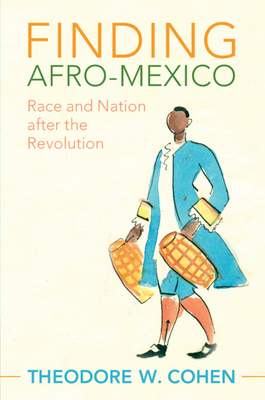
In 2015, the Mexican state counted how many of its citizens identified as Afro-Mexican for the first time since independence. Finding Afro-Mexico reveals the transnational interdisciplinary histories that led to this celebrated reformulation of Mexican national identity. It traces the Mexican, African American, and Cuban writers, poets, anthropologists, artists, composers, historians, and archaeologists who integrated Mexican history, culture, and society into the African Diaspora after the Revolution of 1910. Theodore W. Cohen persuasively shows how these intellectuals rejected the nineteenth-century racial paradigms that heralded black disappearance when they made blackness visible first in Mexican culture and then in post-revolutionary society. Drawing from more than twenty different archives across the Americas, this cultural and intellectual history of black visibility, invisibility, and community-formation questions the racial, cultural, and political dimensions of Mexican history and Afro-diasporic thought.
PRP: 368.81 Lei

Acesta este Prețul Recomandat de Producător. Prețul de vânzare al produsului este afișat mai jos.
331.93Lei
331.93Lei
368.81 LeiPrimești 331 puncte
Livrare in 2-4 saptamani
Descrierea produsului
In 2015, the Mexican state counted how many of its citizens identified as Afro-Mexican for the first time since independence. Finding Afro-Mexico reveals the transnational interdisciplinary histories that led to this celebrated reformulation of Mexican national identity. It traces the Mexican, African American, and Cuban writers, poets, anthropologists, artists, composers, historians, and archaeologists who integrated Mexican history, culture, and society into the African Diaspora after the Revolution of 1910. Theodore W. Cohen persuasively shows how these intellectuals rejected the nineteenth-century racial paradigms that heralded black disappearance when they made blackness visible first in Mexican culture and then in post-revolutionary society. Drawing from more than twenty different archives across the Americas, this cultural and intellectual history of black visibility, invisibility, and community-formation questions the racial, cultural, and political dimensions of Mexican history and Afro-diasporic thought.
Detaliile produsului



