







First Socialist Society: A History of the Soviet Union from Within, Second Edition
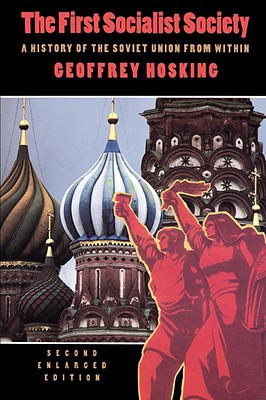
First Socialist Society: A History of the Soviet Union from Within, Second Edition
The First Socialist Society is the compelling and often tragic history of what Soviet citizens lived through from 1917 to 1993, told with great sympathy and perception. Tracing the evolution of the Soviet political system from its origins in 1917, Geoffrey Hosking shows how power has rarely been transmitted outside a tightly knit ruling elite and explains the forms of contact that have existed between rulers and ruled. He emphasizes the experience of the peasantry, urban workers, and professional people, showing how, more often than is commonly realized in the West, they have resisted repression and deprivation. He ranges over the character and role of religion, law, education, and literature within Soviet society; and the significance and fate of various national groups. As the story unfolds, we come to understand how the ideas of Marxism changed, taking on almost unrecognizable forms by unique political and economic circumstances.
Hosking's analysis of this vast and complex country begins by asking how it was that the first socialist revolution took place in backward, autocratic Russia. Why were the Bolsheviks able to seize power and hold on to it? The core of the book lies in the years of Stalin's rule: how did he exercise such unlimited power, and how did the various strata of society survive and come to terms with his tyranny? Later chapters recount Khrushchev's efforts to reform the worst features of Stalinism and the unpredictable effects of his attempts within the East European satellite countries, bringing out elements of socialism that had been obscured or overlaid in the Soviet Union itself. In this second enlarged edition, Hosking charts the remarkable events following the fall of the Berlin Wall in November 1989 through the formation of the Commonwealth of Independent States in December 1991, relating these momentous changes to earlier Soviet history. From changes in style in the early days of glasnost to changes in substance as the reforms under perestroika transformed the political system, Hosking shows the boldness of Gorbachev's program as well as its ultimate result: the dissolution of the Soviet Union.PRP: 355.47 Lei

Acesta este Prețul Recomandat de Producător. Prețul de vânzare al produsului este afișat mai jos.
319.92Lei
319.92Lei
355.47 LeiPrimești 319 puncte
Indisponibil
Descrierea produsului
The First Socialist Society is the compelling and often tragic history of what Soviet citizens lived through from 1917 to 1993, told with great sympathy and perception. Tracing the evolution of the Soviet political system from its origins in 1917, Geoffrey Hosking shows how power has rarely been transmitted outside a tightly knit ruling elite and explains the forms of contact that have existed between rulers and ruled. He emphasizes the experience of the peasantry, urban workers, and professional people, showing how, more often than is commonly realized in the West, they have resisted repression and deprivation. He ranges over the character and role of religion, law, education, and literature within Soviet society; and the significance and fate of various national groups. As the story unfolds, we come to understand how the ideas of Marxism changed, taking on almost unrecognizable forms by unique political and economic circumstances.
Hosking's analysis of this vast and complex country begins by asking how it was that the first socialist revolution took place in backward, autocratic Russia. Why were the Bolsheviks able to seize power and hold on to it? The core of the book lies in the years of Stalin's rule: how did he exercise such unlimited power, and how did the various strata of society survive and come to terms with his tyranny? Later chapters recount Khrushchev's efforts to reform the worst features of Stalinism and the unpredictable effects of his attempts within the East European satellite countries, bringing out elements of socialism that had been obscured or overlaid in the Soviet Union itself. In this second enlarged edition, Hosking charts the remarkable events following the fall of the Berlin Wall in November 1989 through the formation of the Commonwealth of Independent States in December 1991, relating these momentous changes to earlier Soviet history. From changes in style in the early days of glasnost to changes in substance as the reforms under perestroika transformed the political system, Hosking shows the boldness of Gorbachev's program as well as its ultimate result: the dissolution of the Soviet Union.Detaliile produsului



