







Free: Why Science Hasn't Disproved Free Will
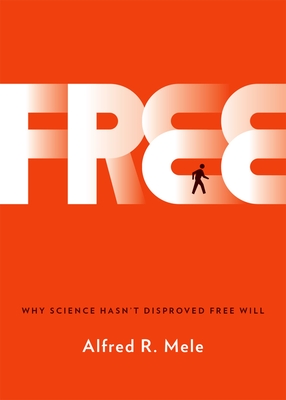
Free: Why Science Hasn't Disproved Free Will
Does free will exist? The question has fueled heated debates spanning from philosophy to psychology and religion. The answer has major implications, and the stakes are high. To put it in the simple terms that have come to dominate these debates, if we are free to make our own decisions, we are accountable for what we do, and if we aren't free, we're off the hook. There are neuroscientists who claim that our decisions are made unconsciously and are therefore outside of our control and social psychologists who argue that myriad imperceptible factors influence even our minor decisions to the extent that there is no room for free will. According to philosopher Alfred R. Mele, what they point to as hard and fast evidence that free will cannot exist actually leaves much room for doubt. If we look more closely at the major experiments that free will deniers cite, we can see large gaps where the light of possibility shines through. In Free: Why Science Hasn't Disproved Free Will, Mele lays out his opponents' experiments simply and clearly, and proceeds to debunk their supposed findings, one by one, explaining how the experiments don't provide the solid evidence for which they have been touted. There is powerful evidence that conscious decisions play an important role in our lives, and knowledge about situational influences can allow people to respond to those influences rationally rather than with blind obedience. Mele also explores the meaning and ramifications of free will. What, exactly, does it mean to have free will -- is it a state of our soul, or an undefinable openness to alternative decisions? Is it something natural and practical that is closely tied to moral responsibility? Since evidence suggests that denying the existence of free will actually encourages bad behavior, we have a duty to give it a fair chance.
PRP: 173.53 Lei

Acesta este Prețul Recomandat de Producător. Prețul de vânzare al produsului este afișat mai jos.
156.18Lei
156.18Lei
173.53 LeiPrimești 156 puncte
Indisponibil
Descrierea produsului
Does free will exist? The question has fueled heated debates spanning from philosophy to psychology and religion. The answer has major implications, and the stakes are high. To put it in the simple terms that have come to dominate these debates, if we are free to make our own decisions, we are accountable for what we do, and if we aren't free, we're off the hook. There are neuroscientists who claim that our decisions are made unconsciously and are therefore outside of our control and social psychologists who argue that myriad imperceptible factors influence even our minor decisions to the extent that there is no room for free will. According to philosopher Alfred R. Mele, what they point to as hard and fast evidence that free will cannot exist actually leaves much room for doubt. If we look more closely at the major experiments that free will deniers cite, we can see large gaps where the light of possibility shines through. In Free: Why Science Hasn't Disproved Free Will, Mele lays out his opponents' experiments simply and clearly, and proceeds to debunk their supposed findings, one by one, explaining how the experiments don't provide the solid evidence for which they have been touted. There is powerful evidence that conscious decisions play an important role in our lives, and knowledge about situational influences can allow people to respond to those influences rationally rather than with blind obedience. Mele also explores the meaning and ramifications of free will. What, exactly, does it mean to have free will -- is it a state of our soul, or an undefinable openness to alternative decisions? Is it something natural and practical that is closely tied to moral responsibility? Since evidence suggests that denying the existence of free will actually encourages bad behavior, we have a duty to give it a fair chance.
Detaliile produsului



