





Governing China's Population: From Leninist to Neoliberal Biopolitics
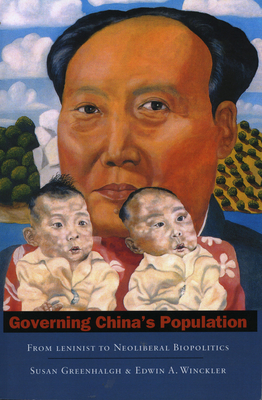
Governing China's Population: From Leninist to Neoliberal Biopolitics
China's giant project in social engineering has drawn worldwide attention, both because of its coercive enforcement of strict birth limits, and because of the striking changes that have occurred in China's population: one of the fastest fertility declines in modern history and a gender gap among infants that is the highest in the world. These changes have contributed to an imminent crisis of social security for a rapidly aging population, provoking concern in China and abroad. What political processes underlie these population shifts? What is the political significance of population policy for the PRC regime, the Chinese people, and China's place in the world? The book documents the gradual "governmentalization" of China's population after 1949, a remarkable buildup of capacity for governance by the regime, the professions, and individuals. Since the turn of the millennium the regime has initiated a drastic shift from "hard" Leninist methods of birth planning toward "soft" neoliberal approaches involving indirect regulation by the state and self-regulation by citizens themselves. Population policy, once a lagging sector in China's transition from communism, is now helping lead the country toward more modern and internationally accepted forms of governance. Governing China's Population tells the story of these shifts, from the perspectives of both regime and society, based on internal documents, long-term fieldwork, and interviews with a wide range of actors--policymakers and implementers, propagandists and critics, compliers and resisters. This study also illuminates the far-reaching consequences for China's society and politics of deep state intrusion in individual reproduction. Like Mao's Great Leap Forward, Deng's one-child policy has created vast social suffering and human trauma. Yet power over population has also been positive and productive, promoting China's global rise by creating new kinds of "quality" persons equipped to succeed in the world economy. Politically, the PRC's population project has strengthened the regime and created a whole new field of biopolitics centering on the production and cultivation of life itself. Drawing on approaches from political science and anthropology that are rarely combined, this book develops a new kind of interdisciplinary inquiry that expands the domain of the political in provocative ways. The book provides fresh answers to broad questions about China's Leninist transition, regime capacity, "science" and "de
PRP: 217.00 Lei

Acesta este Prețul Recomandat de Producător. Prețul de vânzare al produsului este afișat mai jos.
195.30Lei
195.30Lei
217.00 LeiPrimești 195 puncte
Indisponibil
Descrierea produsului
China's giant project in social engineering has drawn worldwide attention, both because of its coercive enforcement of strict birth limits, and because of the striking changes that have occurred in China's population: one of the fastest fertility declines in modern history and a gender gap among infants that is the highest in the world. These changes have contributed to an imminent crisis of social security for a rapidly aging population, provoking concern in China and abroad. What political processes underlie these population shifts? What is the political significance of population policy for the PRC regime, the Chinese people, and China's place in the world? The book documents the gradual "governmentalization" of China's population after 1949, a remarkable buildup of capacity for governance by the regime, the professions, and individuals. Since the turn of the millennium the regime has initiated a drastic shift from "hard" Leninist methods of birth planning toward "soft" neoliberal approaches involving indirect regulation by the state and self-regulation by citizens themselves. Population policy, once a lagging sector in China's transition from communism, is now helping lead the country toward more modern and internationally accepted forms of governance. Governing China's Population tells the story of these shifts, from the perspectives of both regime and society, based on internal documents, long-term fieldwork, and interviews with a wide range of actors--policymakers and implementers, propagandists and critics, compliers and resisters. This study also illuminates the far-reaching consequences for China's society and politics of deep state intrusion in individual reproduction. Like Mao's Great Leap Forward, Deng's one-child policy has created vast social suffering and human trauma. Yet power over population has also been positive and productive, promoting China's global rise by creating new kinds of "quality" persons equipped to succeed in the world economy. Politically, the PRC's population project has strengthened the regime and created a whole new field of biopolitics centering on the production and cultivation of life itself. Drawing on approaches from political science and anthropology that are rarely combined, this book develops a new kind of interdisciplinary inquiry that expands the domain of the political in provocative ways. The book provides fresh answers to broad questions about China's Leninist transition, regime capacity, "science" and "de
Detaliile produsului



