








Hebraica veritas versus Septuaginta auctoritatem
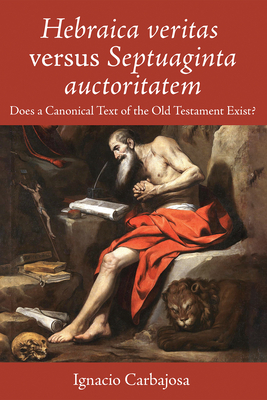
Hebraica veritas versus Septuaginta auctoritatem
At the end of the fourth century, Jerome decided to translate the Old Testament into Latin from the Hebrew manuscripts that were available to him, and not from the ""traditional"" Greek text. This fact provoked a reaction from Augustine, who considered that the Greek translation of the LXX must be the starting point of every translation, since it had the authority of the apostles. The two great figures of the Latin West engaged in a dialectical battle in which we find clearly delineated the two principles which are in tension and which have determined the reception of the biblical text down to our time: the value of the ""original"" text (hebraica veritas) and the authority of the text received by the church (Septuaginta auctoritas). In facing this ""battle,"" we are dealing with some very up-to-date questions: Is it possible to speak of a canonical text of the Old Testament? In what language is that text? On what text should our liturgical translations be based? Is there an ""original"" text of the Bible? Can an ancient version be superior to the text it is translating? What is the value of the LXX?
PRP: 198.40 Lei

Acesta este Prețul Recomandat de Producător. Prețul de vânzare al produsului este afișat mai jos.
178.56Lei
178.56Lei
198.40 LeiPrimești 178 puncte

Indisponibil
Descrierea produsului
At the end of the fourth century, Jerome decided to translate the Old Testament into Latin from the Hebrew manuscripts that were available to him, and not from the ""traditional"" Greek text. This fact provoked a reaction from Augustine, who considered that the Greek translation of the LXX must be the starting point of every translation, since it had the authority of the apostles. The two great figures of the Latin West engaged in a dialectical battle in which we find clearly delineated the two principles which are in tension and which have determined the reception of the biblical text down to our time: the value of the ""original"" text (hebraica veritas) and the authority of the text received by the church (Septuaginta auctoritas). In facing this ""battle,"" we are dealing with some very up-to-date questions: Is it possible to speak of a canonical text of the Old Testament? In what language is that text? On what text should our liturgical translations be based? Is there an ""original"" text of the Bible? Can an ancient version be superior to the text it is translating? What is the value of the LXX?
Detaliile produsului