





Hollow Moon: How Can Science Know So Little About Something So Big?
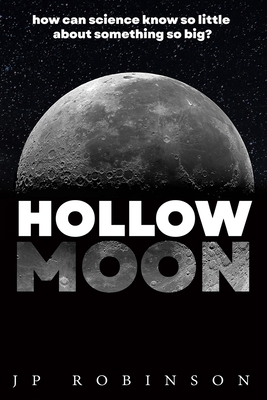
Hollow Moon: How Can Science Know So Little About Something So Big?
Hollow Moon delves into the fascinating scientific theory that our moon could be hollow and therefore not a natural object. J.P. Robinson examines the many lunar anomalies that have led to this area of research becoming a real thorn in the side for the scientific establishment. The book reveals intriguing data which suggests that our nearest celestial neighbour may not be simply a large ball of rock trapped in orbit by the gravitational pull of the Earth, but something much, much stranger. Could the Moon have been put into our orbit at some time in the remote past, thus explaining the almost miraculously perfect fit that we find during a solar eclipse? And how can the moon rocks brought back from the Apollo missions be over two billion years older than earth's? And why, if the Moon is a solid chunk of rock as NASA contend, does the Moon 'ring like a bell' when struck with great force, as Apollo seismological data reveals?
PRP: 135.63 Lei

Acesta este Prețul Recomandat de Producător. Prețul de vânzare al produsului este afișat mai jos.
122.07Lei
122.07Lei
135.63 LeiPrimești 122 puncte
Livrare in 2-4 saptamani
Descrierea produsului
Hollow Moon delves into the fascinating scientific theory that our moon could be hollow and therefore not a natural object. J.P. Robinson examines the many lunar anomalies that have led to this area of research becoming a real thorn in the side for the scientific establishment. The book reveals intriguing data which suggests that our nearest celestial neighbour may not be simply a large ball of rock trapped in orbit by the gravitational pull of the Earth, but something much, much stranger. Could the Moon have been put into our orbit at some time in the remote past, thus explaining the almost miraculously perfect fit that we find during a solar eclipse? And how can the moon rocks brought back from the Apollo missions be over two billion years older than earth's? And why, if the Moon is a solid chunk of rock as NASA contend, does the Moon 'ring like a bell' when struck with great force, as Apollo seismological data reveals?
Detaliile produsului



