







Indigenous Borderlands: Native Agency, Resilience, and Power in the Americas
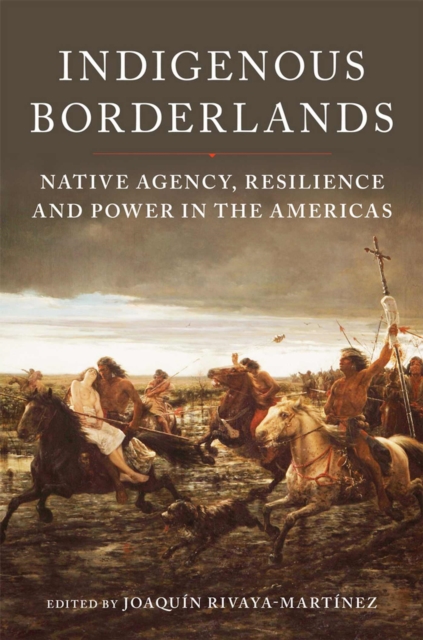
Indigenous Borderlands: Native Agency, Resilience, and Power in the Americas
Pervasive myths of European domination and indigenous submission in the Americas receive an overdue corrective in this far-reaching revisionary work. Despite initial upheavals caused by the European intrusion, Native people often thrived after contact, preserving their sovereignty, territory, and culture and shaping indigenous borderlands across the hemisphere. Borderlands, in this context, are spaces where diverse populations interact, cross-cultural exchanges are frequent and consequential, and no polity or community holds dominion. Within the indigenous borderlands of the Americas, as this volume shows, Native peoples exercised considerable power, often retaining control of the land, and remaining paramount agents of historical transformation after the European incursion. Conversely, European conquest and colonialism were typically slow and incomplete, as the newcomers struggled to assert their authority and implement policies designed to subjugate Native societies and change their beliefs and practices. Indigenous Borderlands covers a wide chronological and geographical span, from the sixteenth-century U.S. South to twentieth-century Bolivia, and gathers leading scholars from the United States and Latin America. Drawing on previously untapped or underutilized primary sources, the original essays in this volume document the resilience and relative success of indigenous communities commonly and wrongly thought to have been subordinated by colonial forces, or even vanished, as well as the persistence of indigenous borderlands within territories claimed by people of European descent. Indeed, numerous indigenous groups remain culturally distinct and politically autonomous. Hemispheric in its scope, unique in its approach, this work significantly recasts our understanding of the important roles played by Native agents in constructing indigenous borderlands in the era of European imperialism. Chapters 5, 6, 8, and 9 are published with generous support from the Americas Research Network.
PRP: 558.00 Lei

Acesta este Prețul Recomandat de Producător. Prețul de vânzare al produsului este afișat mai jos.
502.20Lei
502.20Lei
558.00 LeiPrimești 502 puncte
Indisponibil
Descrierea produsului
Pervasive myths of European domination and indigenous submission in the Americas receive an overdue corrective in this far-reaching revisionary work. Despite initial upheavals caused by the European intrusion, Native people often thrived after contact, preserving their sovereignty, territory, and culture and shaping indigenous borderlands across the hemisphere. Borderlands, in this context, are spaces where diverse populations interact, cross-cultural exchanges are frequent and consequential, and no polity or community holds dominion. Within the indigenous borderlands of the Americas, as this volume shows, Native peoples exercised considerable power, often retaining control of the land, and remaining paramount agents of historical transformation after the European incursion. Conversely, European conquest and colonialism were typically slow and incomplete, as the newcomers struggled to assert their authority and implement policies designed to subjugate Native societies and change their beliefs and practices. Indigenous Borderlands covers a wide chronological and geographical span, from the sixteenth-century U.S. South to twentieth-century Bolivia, and gathers leading scholars from the United States and Latin America. Drawing on previously untapped or underutilized primary sources, the original essays in this volume document the resilience and relative success of indigenous communities commonly and wrongly thought to have been subordinated by colonial forces, or even vanished, as well as the persistence of indigenous borderlands within territories claimed by people of European descent. Indeed, numerous indigenous groups remain culturally distinct and politically autonomous. Hemispheric in its scope, unique in its approach, this work significantly recasts our understanding of the important roles played by Native agents in constructing indigenous borderlands in the era of European imperialism. Chapters 5, 6, 8, and 9 are published with generous support from the Americas Research Network.
Detaliile produsului



