







Inventing the English Massacre: Amboyna in History and Memory
Inventing the English Massacre: Amboyna in History and Memory
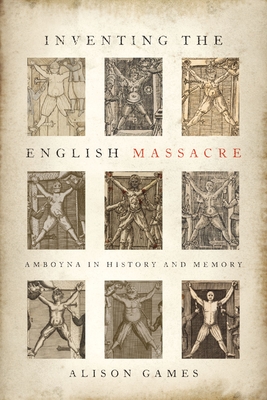
My Lai, Wounded Knee, Sandy Hook: the place names evoke grief and horror, each the site of a massacre. Massacres-the mass slaughter of people-might seem as old as time, but the word itself is not. It worked its way into the English language in the late sixteenth century, and ultimately came to signify a specific type of death, one characterized by cruelty, intimacy, and treachery. How that happened is the story of yet another place, Amboyna, an island in the Indonesian archipelago where English and Dutch merchants fought over the spice trade. There a conspiracy trial featuring English, Japanese, and Indo-Portuguese plotters took place in 1623 and led to the beheading of more than a dozen men in a public execution. Inventing the English Massacre shows how the English East India Company transformed that conspiracy into a massacre through printed works, both books and images, which ensured the story's tenacity over four centuries. By the eighteenth century, the story emerged as a familiar and shared cultural touchstone and a term that needed no further explanation. By the nineteenth century, the Amboyna Massacre became the linchpin of the British empire, an event that historians argued well into the twentieth century had changed the course of history and explained why the British had a stronghold in India. The broad familiarity with the incident and the Amboyna Massacre's position as an early and formative violent event turned the episode into the first English massacre. Drawing on archival documents in Dutch, French, and English, Alison Games masterfully recovers the history, ramifications, and afterlives of this event, which shaped the meaning of subsequent acts of violence and made intimacy, treachery, and cruelty indelibly connected with massacres.
PRP: 471.10 Lei

Acesta este Prețul Recomandat de Producător. Prețul de vânzare al produsului este afișat mai jos.
423.99Lei
423.99Lei
471.10 LeiPrimești 423 puncte
Livrare in 2-4 saptamani
Descrierea produsului
My Lai, Wounded Knee, Sandy Hook: the place names evoke grief and horror, each the site of a massacre. Massacres-the mass slaughter of people-might seem as old as time, but the word itself is not. It worked its way into the English language in the late sixteenth century, and ultimately came to signify a specific type of death, one characterized by cruelty, intimacy, and treachery. How that happened is the story of yet another place, Amboyna, an island in the Indonesian archipelago where English and Dutch merchants fought over the spice trade. There a conspiracy trial featuring English, Japanese, and Indo-Portuguese plotters took place in 1623 and led to the beheading of more than a dozen men in a public execution. Inventing the English Massacre shows how the English East India Company transformed that conspiracy into a massacre through printed works, both books and images, which ensured the story's tenacity over four centuries. By the eighteenth century, the story emerged as a familiar and shared cultural touchstone and a term that needed no further explanation. By the nineteenth century, the Amboyna Massacre became the linchpin of the British empire, an event that historians argued well into the twentieth century had changed the course of history and explained why the British had a stronghold in India. The broad familiarity with the incident and the Amboyna Massacre's position as an early and formative violent event turned the episode into the first English massacre. Drawing on archival documents in Dutch, French, and English, Alison Games masterfully recovers the history, ramifications, and afterlives of this event, which shaped the meaning of subsequent acts of violence and made intimacy, treachery, and cruelty indelibly connected with massacres.
Detaliile produsului



