







Jesus, Paul, Luke-Acts, and 1 Clement: Studies in Class, Ethnicity, Gender, and Orientation
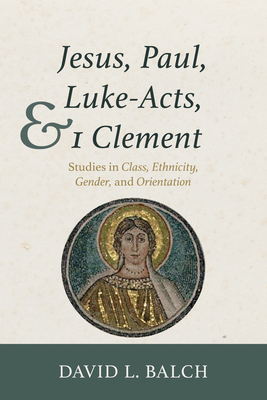
Jesus, Paul, Luke-Acts, and 1 Clement: Studies in Class, Ethnicity, Gender, and Orientation
In this book, the author draws on two original sources, on a Greek biographer, historian, and rhetorician, Dionysius of Halicarnassus, as well as on Pompeian domestic art and architecture. Generally, NT scholars read texts, but Greeks and ancient Romans loved beauty. The walls and floors of their houses were decorated with thousands of colorful frescoes and mosaics, art that two millennia later is still on display in Pompeii. Christians lived and worshipped in those typical houses; relating the art to NT texts generates many intriguing new questions! What stories/myths did Greeks and Romans see every day? What were their sports, and how violent were they? Many NT scholars know as much or more Latin than they do Greek, and they therefore cite the Latin historian Livy rather than the Greek Dionysius, who wrote a century before the first Christian historian, Luke. Dionysius' rhetoric expressed values shared across cultures, by Greeks, Romans, and Jews (e.g., by the historian--and rhetorician--Josephus), some values that Luke also shares. Dionysius makes clear that cities and ethnic groups had to praise how they treated emigrant foreigners, questions handled differently by Josephus and by Luke. This enables new interpretations of Jesus' inaugural speech in Luke 4 and of Peter's second Pentecost speech in Acts 10.
PRP: 285.20 Lei

Acesta este Prețul Recomandat de Producător. Prețul de vânzare al produsului este afișat mai jos.
256.68Lei
256.68Lei
285.20 LeiPrimești 256 puncte
Indisponibil
Descrierea produsului
In this book, the author draws on two original sources, on a Greek biographer, historian, and rhetorician, Dionysius of Halicarnassus, as well as on Pompeian domestic art and architecture. Generally, NT scholars read texts, but Greeks and ancient Romans loved beauty. The walls and floors of their houses were decorated with thousands of colorful frescoes and mosaics, art that two millennia later is still on display in Pompeii. Christians lived and worshipped in those typical houses; relating the art to NT texts generates many intriguing new questions! What stories/myths did Greeks and Romans see every day? What were their sports, and how violent were they? Many NT scholars know as much or more Latin than they do Greek, and they therefore cite the Latin historian Livy rather than the Greek Dionysius, who wrote a century before the first Christian historian, Luke. Dionysius' rhetoric expressed values shared across cultures, by Greeks, Romans, and Jews (e.g., by the historian--and rhetorician--Josephus), some values that Luke also shares. Dionysius makes clear that cities and ethnic groups had to praise how they treated emigrant foreigners, questions handled differently by Josephus and by Luke. This enables new interpretations of Jesus' inaugural speech in Luke 4 and of Peter's second Pentecost speech in Acts 10.
Detaliile produsului



