





Knowing the Natural Law: From Precepts and Inclinations to Deriving Oughts
Knowing the Natural Law: From Precepts and Inclinations to Deriving Oughts
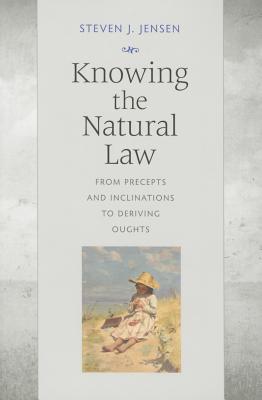
Recent discussions of Thomas Aquinas's treatment of natural law have focused upon the ""self-evident"" character of the first principles, but few attempts have been made to determine in what manner they are selfevident. On some accounts, a self-evident precept must have, at most, a tenuous connection with speculative reason, especially our knowledge of God, and it must be untainted by the stain of ""deriving"" an ought from an is. Yet Aquinas himself had a robust account of the good, rooted in human nature. He saw no fundamental di erence between is-statements and ought-statements, both of which he considered to be descriptive. Knowing the Natural Law traces the thought of Aquinas from an understanding of human nature to a knowledge of the human good, from there to an account of ought-statements, and finally to choice, which issues in human actions. The much discussed article on the precepts of the natural law (I-II, 94, 2) provides the framework for a natural law rooted in human nature and in speculative knowledge. Practical knowledge is itself threefold: potentially practical knowledge, virtually practical knowledge, and fully practical knowledge. This distinction within practical knowledge, typically overlooked or underutilized, reveals the steps by which the mind moves from speculative knowledge all the way to fully practical knowledge. The most significant sections of Knowing the Natural Law examine the nature of ought-statements, the imperative force of moral precepts, the special character of per se nota propositions as found within the natural law, and the final movement from knowledge to action.
PRP: 325.04 Lei

Acesta este Prețul Recomandat de Producător. Prețul de vânzare al produsului este afișat mai jos.
292.54Lei
292.54Lei
325.04 LeiPrimești 292 puncte
Livrare in 2-4 saptamani
Descrierea produsului
Recent discussions of Thomas Aquinas's treatment of natural law have focused upon the ""self-evident"" character of the first principles, but few attempts have been made to determine in what manner they are selfevident. On some accounts, a self-evident precept must have, at most, a tenuous connection with speculative reason, especially our knowledge of God, and it must be untainted by the stain of ""deriving"" an ought from an is. Yet Aquinas himself had a robust account of the good, rooted in human nature. He saw no fundamental di erence between is-statements and ought-statements, both of which he considered to be descriptive. Knowing the Natural Law traces the thought of Aquinas from an understanding of human nature to a knowledge of the human good, from there to an account of ought-statements, and finally to choice, which issues in human actions. The much discussed article on the precepts of the natural law (I-II, 94, 2) provides the framework for a natural law rooted in human nature and in speculative knowledge. Practical knowledge is itself threefold: potentially practical knowledge, virtually practical knowledge, and fully practical knowledge. This distinction within practical knowledge, typically overlooked or underutilized, reveals the steps by which the mind moves from speculative knowledge all the way to fully practical knowledge. The most significant sections of Knowing the Natural Law examine the nature of ought-statements, the imperative force of moral precepts, the special character of per se nota propositions as found within the natural law, and the final movement from knowledge to action.
Detaliile produsului



