

headerdesktop transpgratuittimer04dec25

MAI SUNT 00:00:00:00

MAI SUNT

X

headermobile transpgratuittimer04dec25

MAI SUNT 00:00:00:00

MAI SUNT

X

Promotii popup img

Livrare: 0 lei

3-4 decembrie

❤️ transport gratuit ❤️

la orice comanda in Romania 🚚

La Patria del Criollo: An Interpretation of Colonial Guatemala
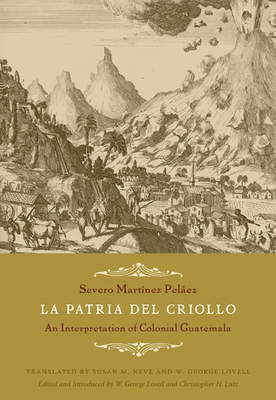
De (autor): Severo Martnez Pelez

La Patria del Criollo: An Interpretation of Colonial Guatemala - Severo Martínez Peláez

La Patria del Criollo: An Interpretation of Colonial Guatemala

De (autor): Severo Martnez Pelez

This translation of Severo Martínez Peláez's La Patria del Criollo, first published in Guatemala in 1970, makes a classic, controversial work of Latin American history available to English-language readers. Martínez Peláez was one of Guatemala's foremost historians and a political activist committed to revolutionary social change. La Patria del Criollo is his scathing assessment of Guatemala's colonial legacy. Martínez Peláez argues that Guatemala remains a colonial society because the conditions that arose centuries ago when imperial Spain held sway have endured. He maintains that economic circumstances that assure prosperity for a few and deprivation for the majority were altered neither by independence in 1821 nor by liberal reform following 1871. The few in question are an elite group of criollos, people of Spanish descent born in Guatemala; the majority are predominantly Maya Indians, whose impoverishment is shared by many mixed-race Guatemalans.

Martínez Peláez asserts that "the coffee dictatorships were the full and radical realization of criollo notions of the patria." This patria, or homeland, was one that criollos had wrested from Spaniards in the name of independence and taken control of based on claims of liberal reform. He contends that since labor is needed to make land productive, the exploitation of labor, particularly Indian labor, was a necessary complement to criollo appropriation. His depiction of colonial reality is bleak, and his portrayal of Spanish and criollo behavior toward Indians unrelenting in its emphasis on cruelty and oppression. Martínez Peláez felt that the grim past he documented surfaces each day in an equally grim present, and that confronting the past is a necessary step in any effort to improve Guatemala's woes. An extensive introduction situates La Patria del Criollo in historical context and relates it to contemporary issues and debates.

Citește mai mult

-20%

transport gratuit

PRP: 303.83 Lei

!

Acesta este Prețul Recomandat de Producător. Prețul de vânzare al produsului este afișat mai jos.

243.06Lei

243.06Lei

303.83 Lei

Primești 243 puncte

Important icon msg

Primești puncte de fidelitate după fiecare comandă! 100 puncte de fidelitate reprezintă 1 leu. Folosește-le la viitoarele achiziții!

Indisponibil

Descrierea produsului

This translation of Severo Martínez Peláez's La Patria del Criollo, first published in Guatemala in 1970, makes a classic, controversial work of Latin American history available to English-language readers. Martínez Peláez was one of Guatemala's foremost historians and a political activist committed to revolutionary social change. La Patria del Criollo is his scathing assessment of Guatemala's colonial legacy. Martínez Peláez argues that Guatemala remains a colonial society because the conditions that arose centuries ago when imperial Spain held sway have endured. He maintains that economic circumstances that assure prosperity for a few and deprivation for the majority were altered neither by independence in 1821 nor by liberal reform following 1871. The few in question are an elite group of criollos, people of Spanish descent born in Guatemala; the majority are predominantly Maya Indians, whose impoverishment is shared by many mixed-race Guatemalans.

Martínez Peláez asserts that "the coffee dictatorships were the full and radical realization of criollo notions of the patria." This patria, or homeland, was one that criollos had wrested from Spaniards in the name of independence and taken control of based on claims of liberal reform. He contends that since labor is needed to make land productive, the exploitation of labor, particularly Indian labor, was a necessary complement to criollo appropriation. His depiction of colonial reality is bleak, and his portrayal of Spanish and criollo behavior toward Indians unrelenting in its emphasis on cruelty and oppression. Martínez Peláez felt that the grim past he documented surfaces each day in an equally grim present, and that confronting the past is a necessary step in any effort to improve Guatemala's woes. An extensive introduction situates La Patria del Criollo in historical context and relates it to contemporary issues and debates.

Citește mai mult

S-ar putea să-ți placă și

De același autor

Părerea ta e inspirație pentru comunitatea Libris!

Istoricul tău de navigare

Acum se comandă

Noi suntem despre cărți, și la fel este și

Newsletter-ul nostru.

Abonează-te la veștile literare și primești un cupon de -10% pentru viitoarea ta comandă!

*Reducerea aplicată prin cupon nu se cumulează, ci se aplică reducerea cea mai mare.

Mă abonez image one
Mă abonez image one
Accessibility Logo



