








While visiting family in Mississippi in August 1955, Emmett Till allegedly whistled at a white woman working behind the counter of a crossroads country store. Her husband and brother-in-law kidnapped the fourteen-year-old Chicago kid in the middle of the night and tortured, beat, and shot him. Three days later, his body rose from the Tallahatchie River, a cotton gin fan tied around his neck with barbed wire. Confronting her son's nightmarishly disfigured face, Mamie Till-Mobley decided that his funeral in Chicago would be open-casket. "Let the people see what they did to my boy." The South Side church where her son's body lay in state kept its doors open day and night. More than one hundred thousand people came and saw his face. Millions more stared at the photographs of it published in the African-American press, especially Jet magazine and the Chicago Defender. The pictures galvanized the black community. Journalists and activists drove down to the Mississippi Delta, and risked their lives interviewing townsfolk, encouraging witnesses, spiriting those in danger out of the region, and above all keeping the news cycle turning. Less than a month after Till's murder, despite strong evidence, a fair-minded judge, and prosecutors eager for a conviction, an all-white jury found Till's killers not guilty. For black Americans, the Till lynching and acquittal was a defining moment. Muhammad Ali, Rosa Parks, Anne Moody, John Lewis, and countless others later said that it changed their lives. They were "the Emmett Till generation," and they would help lead the greatest mass movement in twentieth-century America. His story haunts us still, its meanings blurring and shifting with time. Documentaries, histories, memoirs, and oral testimony have revealed new facts. In 2005, fifty years after the lynching, his murderers long dead, the FBI reopened the Till case. They reopened it again the summer of 2018, after new revelations came to light. Building on all the material, old and new, Elliott J. Gorn offers the most complete and immersive account of Emmett Till's story. Let the People See also probes its enduring truths, truths we confront with each fresh spasm of racial violence. Till is more with us today than at any time since 1955, his name invoked whenever another young black man falls victim. His face remains the face of racism, and, as Gorn shows us in this haunting and definitive account, we cannot turn away from it.
Let the People See: The Story of Emmett Till
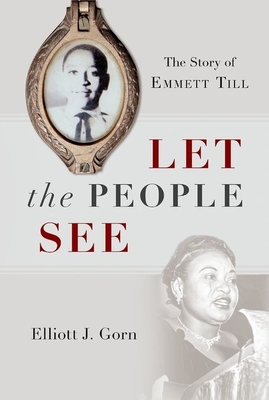
Let the People See: The Story of Emmett Till
While visiting family in Mississippi in August 1955, Emmett Till allegedly whistled at a white woman working behind the counter of a crossroads country store. Her husband and brother-in-law kidnapped the fourteen-year-old Chicago kid in the middle of the night and tortured, beat, and shot him. Three days later, his body rose from the Tallahatchie River, a cotton gin fan tied around his neck with barbed wire. Confronting her son's nightmarishly disfigured face, Mamie Till-Mobley decided that his funeral in Chicago would be open-casket. "Let the people see what they did to my boy." The South Side church where her son's body lay in state kept its doors open day and night. More than one hundred thousand people came and saw his face. Millions more stared at the photographs of it published in the African-American press, especially Jet magazine and the Chicago Defender. The pictures galvanized the black community. Journalists and activists drove down to the Mississippi Delta, and risked their lives interviewing townsfolk, encouraging witnesses, spiriting those in danger out of the region, and above all keeping the news cycle turning. Less than a month after Till's murder, despite strong evidence, a fair-minded judge, and prosecutors eager for a conviction, an all-white jury found Till's killers not guilty. For black Americans, the Till lynching and acquittal was a defining moment. Muhammad Ali, Rosa Parks, Anne Moody, John Lewis, and countless others later said that it changed their lives. They were "the Emmett Till generation," and they would help lead the greatest mass movement in twentieth-century America. His story haunts us still, its meanings blurring and shifting with time. Documentaries, histories, memoirs, and oral testimony have revealed new facts. In 2005, fifty years after the lynching, his murderers long dead, the FBI reopened the Till case. They reopened it again the summer of 2018, after new revelations came to light. Building on all the material, old and new, Elliott J. Gorn offers the most complete and immersive account of Emmett Till's story. Let the People See also probes its enduring truths, truths we confront with each fresh spasm of racial violence. Till is more with us today than at any time since 1955, his name invoked whenever another young black man falls victim. His face remains the face of racism, and, as Gorn shows us in this haunting and definitive account, we cannot turn away from it.
PRP: 142.54 Lei

Acesta este Prețul Recomandat de Producător. Prețul de vânzare al produsului este afișat mai jos.
128.29Lei
128.29Lei
142.54 LeiPrimești 128 puncte

Indisponibil
Descrierea produsului
While visiting family in Mississippi in August 1955, Emmett Till allegedly whistled at a white woman working behind the counter of a crossroads country store. Her husband and brother-in-law kidnapped the fourteen-year-old Chicago kid in the middle of the night and tortured, beat, and shot him. Three days later, his body rose from the Tallahatchie River, a cotton gin fan tied around his neck with barbed wire. Confronting her son's nightmarishly disfigured face, Mamie Till-Mobley decided that his funeral in Chicago would be open-casket. "Let the people see what they did to my boy." The South Side church where her son's body lay in state kept its doors open day and night. More than one hundred thousand people came and saw his face. Millions more stared at the photographs of it published in the African-American press, especially Jet magazine and the Chicago Defender. The pictures galvanized the black community. Journalists and activists drove down to the Mississippi Delta, and risked their lives interviewing townsfolk, encouraging witnesses, spiriting those in danger out of the region, and above all keeping the news cycle turning. Less than a month after Till's murder, despite strong evidence, a fair-minded judge, and prosecutors eager for a conviction, an all-white jury found Till's killers not guilty. For black Americans, the Till lynching and acquittal was a defining moment. Muhammad Ali, Rosa Parks, Anne Moody, John Lewis, and countless others later said that it changed their lives. They were "the Emmett Till generation," and they would help lead the greatest mass movement in twentieth-century America. His story haunts us still, its meanings blurring and shifting with time. Documentaries, histories, memoirs, and oral testimony have revealed new facts. In 2005, fifty years after the lynching, his murderers long dead, the FBI reopened the Till case. They reopened it again the summer of 2018, after new revelations came to light. Building on all the material, old and new, Elliott J. Gorn offers the most complete and immersive account of Emmett Till's story. Let the People See also probes its enduring truths, truths we confront with each fresh spasm of racial violence. Till is more with us today than at any time since 1955, his name invoked whenever another young black man falls victim. His face remains the face of racism, and, as Gorn shows us in this haunting and definitive account, we cannot turn away from it.
Detaliile produsului