







Making Kids Cleverer
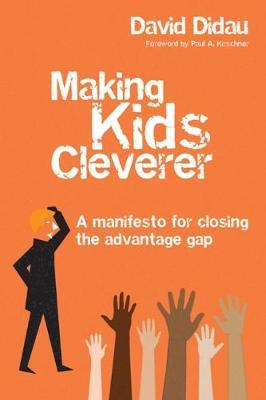
Making Kids Cleverer
Foreword by Paul A. Kirschner. Given the choice, who wouldn't want to be cleverer? What teacher wouldn't want this for their students, and what parent wouldn't wish it for their children? When David started researching this book, he thought the answers to the above were obvious. But it turns out that the very idea of measuring and increasing children's intelligence makes many people extremely uncomfortable: If some people were more intelligent, where would that leave those of us who weren't? The question of whether or not we can get cleverer is a crucial one. If you believe that intelligence is hereditary and environmental effects are trivial, you may be sceptical. But environment does matter, and it matters most for children from the most socially disadvantaged backgrounds those who not only have the most to gain, but who are also the ones most likely to gain from our efforts to make all kids cleverer. And one thing we can be fairly sure will raise children's intelligence is sending them to school. In this wide-ranging enquiry into psychology, sociology, philosophy and cognitive science, David argues that with greater access to culturally accumulated information taught explicitly within a knowledge-rich curriculum children are more likely to become cleverer, to think more critically and, subsequently, to live happier, healthier and more secure lives. Furthermore, by sharing valuable insights into what children truly need to learn during their formative school years, he sets out the numerous practical ways in which policy makers and school leaders can make better choices about organising schools, and how teachers can communicate the knowledge that will make the most difference to young people as effectively and efficiently as possible. David underpins his discussion with an exploration of the evolutionary basis for learning and also untangles the forms of practice teachers should be engaging their students in to ensure that they are acquiring expertise, not just consolidating mistakes and misconceptions.
There are so many competing suggestions as to how we should improve education that knowing how to act can seem an impossible challenge. Once you have absorbed the arguments in this book, however, David hopes you will find the simple question that he asks himself whenever he encounters new ideas and initiatives Will this make children cleverer? as useful as he does. S
PRP: 183.49 Lei

Acesta este Prețul Recomandat de Producător. Prețul de vânzare al produsului este afișat mai jos.
146.79Lei
146.79Lei
183.49 LeiPrimești 146 puncte

Livrare in 2-4 saptamani
Descrierea produsului
Foreword by Paul A. Kirschner. Given the choice, who wouldn't want to be cleverer? What teacher wouldn't want this for their students, and what parent wouldn't wish it for their children? When David started researching this book, he thought the answers to the above were obvious. But it turns out that the very idea of measuring and increasing children's intelligence makes many people extremely uncomfortable: If some people were more intelligent, where would that leave those of us who weren't? The question of whether or not we can get cleverer is a crucial one. If you believe that intelligence is hereditary and environmental effects are trivial, you may be sceptical. But environment does matter, and it matters most for children from the most socially disadvantaged backgrounds those who not only have the most to gain, but who are also the ones most likely to gain from our efforts to make all kids cleverer. And one thing we can be fairly sure will raise children's intelligence is sending them to school. In this wide-ranging enquiry into psychology, sociology, philosophy and cognitive science, David argues that with greater access to culturally accumulated information taught explicitly within a knowledge-rich curriculum children are more likely to become cleverer, to think more critically and, subsequently, to live happier, healthier and more secure lives. Furthermore, by sharing valuable insights into what children truly need to learn during their formative school years, he sets out the numerous practical ways in which policy makers and school leaders can make better choices about organising schools, and how teachers can communicate the knowledge that will make the most difference to young people as effectively and efficiently as possible. David underpins his discussion with an exploration of the evolutionary basis for learning and also untangles the forms of practice teachers should be engaging their students in to ensure that they are acquiring expertise, not just consolidating mistakes and misconceptions.
There are so many competing suggestions as to how we should improve education that knowing how to act can seem an impossible challenge. Once you have absorbed the arguments in this book, however, David hopes you will find the simple question that he asks himself whenever he encounters new ideas and initiatives Will this make children cleverer? as useful as he does. S
Detaliile produsului