








Mustafa Kemal Atatürk and the Republic of Turkey: The History of the Ottoman Empire's Collapse and the Establishment of a New State
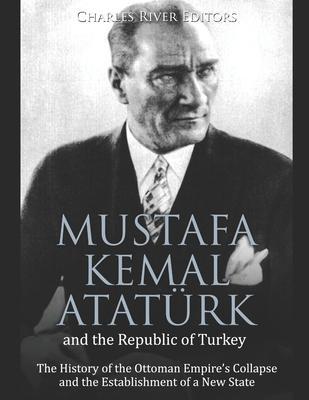
Mustafa Kemal Atatürk and the Republic of Turkey: The History of the Ottoman Empire's Collapse and the Establishment of a New State
*Includes pictures
*Includes a bibliography for further reading
"In human life, you will find players of religion until the knowledge and proficiency in religion will be cleansed from all superstitions, and will be purified and perfected by the enlightenment of real science." - Mustafa Kemal Atatürk
The long agony of the "sick man of Europe," an expression used by the Tsar of Russia to depict the falling Ottoman Empire, could almost blind people to its incredible power and history. Preserving its mixed heritage, coming from both its geographic position rising above the ashes of the Byzantine Empire and the tradition inherited from the Muslim Conquests, the Ottoman Empire lasted more than six centuries. Its soldiers fought, died, and conquered lands on three different continents, making it one of the few stable multi-ethnic empires in history, and likely one of the last. Thus, it's somewhat inevitable that the history of its decline is at the heart of complex geopolitical disputes, as well as sectarian tensions that are still key to understanding the Middle East, North Africa and the Balkans.
Despite it all, the Ottoman Empire would survive for over 200 more years, and in the last century of its life it strove to reform its military, administration and economy until it was finally dissolved. Years before the final collapse of the Empire, the Tanzimat ("Reorganization"), a period of swiping reforms, led to significant changes in the country's military apparatus, among others, which certainly explains the initial success the Ottoman Empire was able to achieve against its rivals. Similarly, the drafting of a new Constitution (Kanûn-u Esâsî, basic law) in 1876, despite it being shot down by Sultan Abdul Hamid II just two years later, as well as its revival by the "Young Turks" movement in 1908, highlights the understanding among Ottoman elites that change was needed, and their belief that such change was possible.
The fall of the Ottoman Empire set the political and geostrategic scene of the new Middle East. In 1920, two years after the end of the war, the region was already experiencing growing instability. The issues and trends that would plague the region until today were growing. On April 4, Arab riots broke out in Jerusalem, fueled by the growing hostility against the Zionist movement. The British passivity would convince one of the Jewish leaders, Vladimir Jabotinsky (the future founder of the Israeli right-wing), of the strategic necessi
*Includes a bibliography for further reading
"In human life, you will find players of religion until the knowledge and proficiency in religion will be cleansed from all superstitions, and will be purified and perfected by the enlightenment of real science." - Mustafa Kemal Atatürk
The long agony of the "sick man of Europe," an expression used by the Tsar of Russia to depict the falling Ottoman Empire, could almost blind people to its incredible power and history. Preserving its mixed heritage, coming from both its geographic position rising above the ashes of the Byzantine Empire and the tradition inherited from the Muslim Conquests, the Ottoman Empire lasted more than six centuries. Its soldiers fought, died, and conquered lands on three different continents, making it one of the few stable multi-ethnic empires in history, and likely one of the last. Thus, it's somewhat inevitable that the history of its decline is at the heart of complex geopolitical disputes, as well as sectarian tensions that are still key to understanding the Middle East, North Africa and the Balkans.
Despite it all, the Ottoman Empire would survive for over 200 more years, and in the last century of its life it strove to reform its military, administration and economy until it was finally dissolved. Years before the final collapse of the Empire, the Tanzimat ("Reorganization"), a period of swiping reforms, led to significant changes in the country's military apparatus, among others, which certainly explains the initial success the Ottoman Empire was able to achieve against its rivals. Similarly, the drafting of a new Constitution (Kanûn-u Esâsî, basic law) in 1876, despite it being shot down by Sultan Abdul Hamid II just two years later, as well as its revival by the "Young Turks" movement in 1908, highlights the understanding among Ottoman elites that change was needed, and their belief that such change was possible.
The fall of the Ottoman Empire set the political and geostrategic scene of the new Middle East. In 1920, two years after the end of the war, the region was already experiencing growing instability. The issues and trends that would plague the region until today were growing. On April 4, Arab riots broke out in Jerusalem, fueled by the growing hostility against the Zionist movement. The British passivity would convince one of the Jewish leaders, Vladimir Jabotinsky (the future founder of the Israeli right-wing), of the strategic necessi
PRP: 86.34 Lei

Acesta este Prețul Recomandat de Producător. Prețul de vânzare al produsului este afișat mai jos.
69.07Lei
69.07Lei
86.34 LeiPrimești 69 puncte

Indisponibil
Descrierea produsului
*Includes pictures
*Includes a bibliography for further reading
"In human life, you will find players of religion until the knowledge and proficiency in religion will be cleansed from all superstitions, and will be purified and perfected by the enlightenment of real science." - Mustafa Kemal Atatürk
The long agony of the "sick man of Europe," an expression used by the Tsar of Russia to depict the falling Ottoman Empire, could almost blind people to its incredible power and history. Preserving its mixed heritage, coming from both its geographic position rising above the ashes of the Byzantine Empire and the tradition inherited from the Muslim Conquests, the Ottoman Empire lasted more than six centuries. Its soldiers fought, died, and conquered lands on three different continents, making it one of the few stable multi-ethnic empires in history, and likely one of the last. Thus, it's somewhat inevitable that the history of its decline is at the heart of complex geopolitical disputes, as well as sectarian tensions that are still key to understanding the Middle East, North Africa and the Balkans.
Despite it all, the Ottoman Empire would survive for over 200 more years, and in the last century of its life it strove to reform its military, administration and economy until it was finally dissolved. Years before the final collapse of the Empire, the Tanzimat ("Reorganization"), a period of swiping reforms, led to significant changes in the country's military apparatus, among others, which certainly explains the initial success the Ottoman Empire was able to achieve against its rivals. Similarly, the drafting of a new Constitution (Kanûn-u Esâsî, basic law) in 1876, despite it being shot down by Sultan Abdul Hamid II just two years later, as well as its revival by the "Young Turks" movement in 1908, highlights the understanding among Ottoman elites that change was needed, and their belief that such change was possible.
The fall of the Ottoman Empire set the political and geostrategic scene of the new Middle East. In 1920, two years after the end of the war, the region was already experiencing growing instability. The issues and trends that would plague the region until today were growing. On April 4, Arab riots broke out in Jerusalem, fueled by the growing hostility against the Zionist movement. The British passivity would convince one of the Jewish leaders, Vladimir Jabotinsky (the future founder of the Israeli right-wing), of the strategic necessi
*Includes a bibliography for further reading
"In human life, you will find players of religion until the knowledge and proficiency in religion will be cleansed from all superstitions, and will be purified and perfected by the enlightenment of real science." - Mustafa Kemal Atatürk
The long agony of the "sick man of Europe," an expression used by the Tsar of Russia to depict the falling Ottoman Empire, could almost blind people to its incredible power and history. Preserving its mixed heritage, coming from both its geographic position rising above the ashes of the Byzantine Empire and the tradition inherited from the Muslim Conquests, the Ottoman Empire lasted more than six centuries. Its soldiers fought, died, and conquered lands on three different continents, making it one of the few stable multi-ethnic empires in history, and likely one of the last. Thus, it's somewhat inevitable that the history of its decline is at the heart of complex geopolitical disputes, as well as sectarian tensions that are still key to understanding the Middle East, North Africa and the Balkans.
Despite it all, the Ottoman Empire would survive for over 200 more years, and in the last century of its life it strove to reform its military, administration and economy until it was finally dissolved. Years before the final collapse of the Empire, the Tanzimat ("Reorganization"), a period of swiping reforms, led to significant changes in the country's military apparatus, among others, which certainly explains the initial success the Ottoman Empire was able to achieve against its rivals. Similarly, the drafting of a new Constitution (Kanûn-u Esâsî, basic law) in 1876, despite it being shot down by Sultan Abdul Hamid II just two years later, as well as its revival by the "Young Turks" movement in 1908, highlights the understanding among Ottoman elites that change was needed, and their belief that such change was possible.
The fall of the Ottoman Empire set the political and geostrategic scene of the new Middle East. In 1920, two years after the end of the war, the region was already experiencing growing instability. The issues and trends that would plague the region until today were growing. On April 4, Arab riots broke out in Jerusalem, fueled by the growing hostility against the Zionist movement. The British passivity would convince one of the Jewish leaders, Vladimir Jabotinsky (the future founder of the Israeli right-wing), of the strategic necessi
Detaliile produsului