







Native American Tribes: The History and Culture of the Sioux
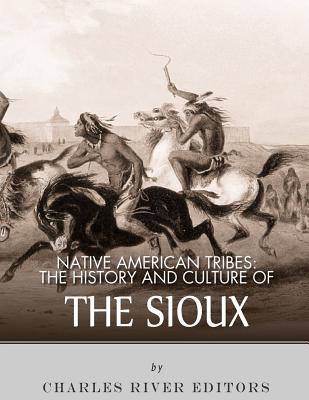
Native American Tribes: The History and Culture of the Sioux
*Includes pictures of important people, places, and events.
*Explains the origins and legends of the various Sioux tribes
*Comprehensively covers Red Cloud's War, the Battle of the Little Bighorn, and the Wounded Knee Massacre.
*Includes a Bibliography for further reading.
"They made us many promises, more than I can remember. But they kept but one--They promised to take our land...and they took it." - Oglala Lakota Chief Red Cloud
From the "Trail of Tears" to Wounded Knee and Little Bighorn, the narrative of American history is incomplete without the inclusion of the Native Americans that lived on the continent before European settlers arrived in the 16th and 17th centuries. Since the first contact between natives and settlers, tribes like the Sioux, Cherokee, and Navajo have both fascinated and perplexed outsiders with their history, language, and culture. In Charles River Editors' Native American Tribes series, readers can get caught up to speed on the history and culture of North America's most famous native tribes in the time it takes to finish a commute, while learning interesting facts long forgotten or never known.
Among Native American tribes, the Sioux are one of the best known and most important. Participants in some of the most famous and notorious events in American history, the history of the Sioux is replete with constant reminders of the consequences of both their accommodation of and resistance to American incursions into their territory by pioneering white settlers pushing further westward during the 19th century. Some Sioux leaders and their bands resisted incoming whites, while others tried to accommodate them, but the choice often had little impact on the ultimate outcome. Crazy Horse, who was never defeated in battle by U.S. troops, surrendered to them in 1877, only to be bayoneted to death by soldiers attempting to imprison him. Black Kettle, who flew a large American flag from his lodge to indicate his friendship with the white man, was shot to death by soldiers under George Custer's command in 1868.
Throughout the 19th century, the U.S. government and its officials in the West adopted a policy of dividing the Sioux into two groups: "Treaty Indians" and "Non-treaty Indians." Often they used these groups against each other or used one group to influence another, but the end was always the same. They were forced off the land where they resided, their populations were decimated by disease, and they were
PRP: 86.34 Lei

Acesta este Prețul Recomandat de Producător. Prețul de vânzare al produsului este afișat mai jos.
77.71Lei
77.71Lei
86.34 LeiPrimești 77 puncte
Indisponibil
Descrierea produsului
*Includes pictures of important people, places, and events.
*Explains the origins and legends of the various Sioux tribes
*Comprehensively covers Red Cloud's War, the Battle of the Little Bighorn, and the Wounded Knee Massacre.
*Includes a Bibliography for further reading.
"They made us many promises, more than I can remember. But they kept but one--They promised to take our land...and they took it." - Oglala Lakota Chief Red Cloud
From the "Trail of Tears" to Wounded Knee and Little Bighorn, the narrative of American history is incomplete without the inclusion of the Native Americans that lived on the continent before European settlers arrived in the 16th and 17th centuries. Since the first contact between natives and settlers, tribes like the Sioux, Cherokee, and Navajo have both fascinated and perplexed outsiders with their history, language, and culture. In Charles River Editors' Native American Tribes series, readers can get caught up to speed on the history and culture of North America's most famous native tribes in the time it takes to finish a commute, while learning interesting facts long forgotten or never known.
Among Native American tribes, the Sioux are one of the best known and most important. Participants in some of the most famous and notorious events in American history, the history of the Sioux is replete with constant reminders of the consequences of both their accommodation of and resistance to American incursions into their territory by pioneering white settlers pushing further westward during the 19th century. Some Sioux leaders and their bands resisted incoming whites, while others tried to accommodate them, but the choice often had little impact on the ultimate outcome. Crazy Horse, who was never defeated in battle by U.S. troops, surrendered to them in 1877, only to be bayoneted to death by soldiers attempting to imprison him. Black Kettle, who flew a large American flag from his lodge to indicate his friendship with the white man, was shot to death by soldiers under George Custer's command in 1868.
Throughout the 19th century, the U.S. government and its officials in the West adopted a policy of dividing the Sioux into two groups: "Treaty Indians" and "Non-treaty Indians." Often they used these groups against each other or used one group to influence another, but the end was always the same. They were forced off the land where they resided, their populations were decimated by disease, and they were
Detaliile produsului



