







Nicolae Ceaușescu: The Life and Legacy of Romania's Notorious Dictator during the Cold War
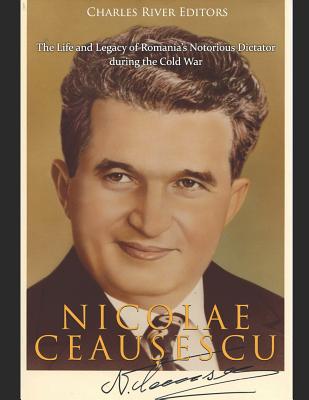
Nicolae Ceaușescu: The Life and Legacy of Romania's Notorious Dictator during the Cold War
*Includes pictures
*Includes online resources and a bibliography for further reading
"Esteemed chairman of the court, today we have to pass a verdict on the defendants Nicolae Ceaușescu and Elena Ceaușescu who have committed the following offenses: Crimes against the people. They carried out acts that are incompatible with human dignity and social thinking; they acted in a despotic and criminal way; they destroyed the people whose leaders they claimed to be. Because of the crimes they committed against the people, I plead, on behalf of the victims of these two tyrants, for the death sentence for the two defendants." - An excerpt of chief prosecutor Dan Voinea's statements during Ceaușescu's trial
Nicolae Ceaușescu, one of the 20th century's most notorious dictators, was both typical and unusual. Outwardly he resembled a standard leader of a communist country in Eastern Europe during the Cold War, yet he was even more repressive and opulent than his contemporaries. In Romania itself, Ceaușescu led a life as an isolated outsider, notably less urbane than the Bucharest elite, and given that he was born in rural poverty to peasant parents, his rise was perhaps the unlikeliest of any of the communists of that generation.
As it turned out, circumstances presented themselves in a manner that led to his elevation, including the acquaintances he made whilst serving time in prison in the 1930s and 1940s, the rise of communism after World War II, and the Soviet occupation of a country that had previously banned the ideology. Ceaușescu was a compromise candidate when Romanian leader Gheorghe Gheorghiu-Dej died in 1965, and he initially appeared to be a liberal-minded, nationalist-orientated reformer. Ceaușescu did fit very easily into one stereotype, however, by proving that absolute power corrupts absolutely. From the early 1970s, he and his wife Elena constructed the most grotesquely personalized cult of dictatorship in the region, and while operating at the pinnacle of a highly corrupt pyramid, the couple bled their country dry with a succession of incompetent and warped policies. Ceaușescu's own father would say of him, "He tells nothing but lies." His son wasn't much more charitable, saying, "The new kind of politicians lie all the time. But my father was one of the old kind, more of a fanatic. He was driven by some kind of fanaticism. This belief that you can do good. It's a sort of madness."
By the end of the 1980s, communism was collapsing acr
*Includes online resources and a bibliography for further reading
"Esteemed chairman of the court, today we have to pass a verdict on the defendants Nicolae Ceaușescu and Elena Ceaușescu who have committed the following offenses: Crimes against the people. They carried out acts that are incompatible with human dignity and social thinking; they acted in a despotic and criminal way; they destroyed the people whose leaders they claimed to be. Because of the crimes they committed against the people, I plead, on behalf of the victims of these two tyrants, for the death sentence for the two defendants." - An excerpt of chief prosecutor Dan Voinea's statements during Ceaușescu's trial
Nicolae Ceaușescu, one of the 20th century's most notorious dictators, was both typical and unusual. Outwardly he resembled a standard leader of a communist country in Eastern Europe during the Cold War, yet he was even more repressive and opulent than his contemporaries. In Romania itself, Ceaușescu led a life as an isolated outsider, notably less urbane than the Bucharest elite, and given that he was born in rural poverty to peasant parents, his rise was perhaps the unlikeliest of any of the communists of that generation.
As it turned out, circumstances presented themselves in a manner that led to his elevation, including the acquaintances he made whilst serving time in prison in the 1930s and 1940s, the rise of communism after World War II, and the Soviet occupation of a country that had previously banned the ideology. Ceaușescu was a compromise candidate when Romanian leader Gheorghe Gheorghiu-Dej died in 1965, and he initially appeared to be a liberal-minded, nationalist-orientated reformer. Ceaușescu did fit very easily into one stereotype, however, by proving that absolute power corrupts absolutely. From the early 1970s, he and his wife Elena constructed the most grotesquely personalized cult of dictatorship in the region, and while operating at the pinnacle of a highly corrupt pyramid, the couple bled their country dry with a succession of incompetent and warped policies. Ceaușescu's own father would say of him, "He tells nothing but lies." His son wasn't much more charitable, saying, "The new kind of politicians lie all the time. But my father was one of the old kind, more of a fanatic. He was driven by some kind of fanaticism. This belief that you can do good. It's a sort of madness."
By the end of the 1980s, communism was collapsing acr
86.34Lei
86.34Lei
Primești 86 puncte

Livrare in 2-4 saptamani
Descrierea produsului
*Includes pictures
*Includes online resources and a bibliography for further reading
"Esteemed chairman of the court, today we have to pass a verdict on the defendants Nicolae Ceaușescu and Elena Ceaușescu who have committed the following offenses: Crimes against the people. They carried out acts that are incompatible with human dignity and social thinking; they acted in a despotic and criminal way; they destroyed the people whose leaders they claimed to be. Because of the crimes they committed against the people, I plead, on behalf of the victims of these two tyrants, for the death sentence for the two defendants." - An excerpt of chief prosecutor Dan Voinea's statements during Ceaușescu's trial
Nicolae Ceaușescu, one of the 20th century's most notorious dictators, was both typical and unusual. Outwardly he resembled a standard leader of a communist country in Eastern Europe during the Cold War, yet he was even more repressive and opulent than his contemporaries. In Romania itself, Ceaușescu led a life as an isolated outsider, notably less urbane than the Bucharest elite, and given that he was born in rural poverty to peasant parents, his rise was perhaps the unlikeliest of any of the communists of that generation.
As it turned out, circumstances presented themselves in a manner that led to his elevation, including the acquaintances he made whilst serving time in prison in the 1930s and 1940s, the rise of communism after World War II, and the Soviet occupation of a country that had previously banned the ideology. Ceaușescu was a compromise candidate when Romanian leader Gheorghe Gheorghiu-Dej died in 1965, and he initially appeared to be a liberal-minded, nationalist-orientated reformer. Ceaușescu did fit very easily into one stereotype, however, by proving that absolute power corrupts absolutely. From the early 1970s, he and his wife Elena constructed the most grotesquely personalized cult of dictatorship in the region, and while operating at the pinnacle of a highly corrupt pyramid, the couple bled their country dry with a succession of incompetent and warped policies. Ceaușescu's own father would say of him, "He tells nothing but lies." His son wasn't much more charitable, saying, "The new kind of politicians lie all the time. But my father was one of the old kind, more of a fanatic. He was driven by some kind of fanaticism. This belief that you can do good. It's a sort of madness."
By the end of the 1980s, communism was collapsing acr
*Includes online resources and a bibliography for further reading
"Esteemed chairman of the court, today we have to pass a verdict on the defendants Nicolae Ceaușescu and Elena Ceaușescu who have committed the following offenses: Crimes against the people. They carried out acts that are incompatible with human dignity and social thinking; they acted in a despotic and criminal way; they destroyed the people whose leaders they claimed to be. Because of the crimes they committed against the people, I plead, on behalf of the victims of these two tyrants, for the death sentence for the two defendants." - An excerpt of chief prosecutor Dan Voinea's statements during Ceaușescu's trial
Nicolae Ceaușescu, one of the 20th century's most notorious dictators, was both typical and unusual. Outwardly he resembled a standard leader of a communist country in Eastern Europe during the Cold War, yet he was even more repressive and opulent than his contemporaries. In Romania itself, Ceaușescu led a life as an isolated outsider, notably less urbane than the Bucharest elite, and given that he was born in rural poverty to peasant parents, his rise was perhaps the unlikeliest of any of the communists of that generation.
As it turned out, circumstances presented themselves in a manner that led to his elevation, including the acquaintances he made whilst serving time in prison in the 1930s and 1940s, the rise of communism after World War II, and the Soviet occupation of a country that had previously banned the ideology. Ceaușescu was a compromise candidate when Romanian leader Gheorghe Gheorghiu-Dej died in 1965, and he initially appeared to be a liberal-minded, nationalist-orientated reformer. Ceaușescu did fit very easily into one stereotype, however, by proving that absolute power corrupts absolutely. From the early 1970s, he and his wife Elena constructed the most grotesquely personalized cult of dictatorship in the region, and while operating at the pinnacle of a highly corrupt pyramid, the couple bled their country dry with a succession of incompetent and warped policies. Ceaușescu's own father would say of him, "He tells nothing but lies." His son wasn't much more charitable, saying, "The new kind of politicians lie all the time. But my father was one of the old kind, more of a fanatic. He was driven by some kind of fanaticism. This belief that you can do good. It's a sort of madness."
By the end of the 1980s, communism was collapsing acr
Detaliile produsului



