








Pulp Empire: The Secret History of Comic Book Imperialism
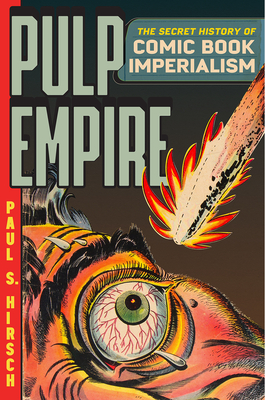
Pulp Empire: The Secret History of Comic Book Imperialism
Winner of the Popular Culture Association's Ray and Pat Browne Award for Best Book in Popular or American Culture In the 1940s and '50s, comic books were some of the most popular--and most unfiltered--entertainment in the United States. Publishers sold hundreds of millions of copies a year of violent, racist, and luridly sexual comics to Americans of all ages until a 1954 Senate investigation led to a censorship code that nearly destroyed the industry. But this was far from the first time the US government actively involved itself with comics--it was simply the most dramatic manifestation of a long, strange relationship between high-level policy makers and a medium that even artists and writers often dismissed as a creative sewer. In Pulp Empire, Paul S. Hirsch uncovers the gripping untold story of how the US government both attacked and appropriated comic books to help wage World War II and the Cold War, promote official--and clandestine--foreign policy and deflect global critiques of American racism. As Hirsch details, during World War II--and the concurrent golden age of comic books--government agencies worked directly with comic book publishers to stoke hatred for the Axis powers while simultaneously attempting to dispel racial tensions at home. Later, as the Cold War defense industry ballooned--and as comic book sales reached historic heights--the government again turned to the medium, this time trying to win hearts and minds in the decolonizing world through cartoon propaganda. Hirsch's groundbreaking research weaves together a wealth of previously classified material, including secret wartime records, official legislative documents, and caches of personal papers. His book explores the uneasy contradiction of how comics were both vital expressions of American freedom and unsettling glimpses into the national id--scourged and repressed on the one hand and deployed as official propaganda on the other. Pulp Empire is a riveting illumination of underexplored chapters in the histories of comic books, foreign policy, and race.
Winner of the Popular Culture Association's Ray and Pat Browne Award for Best Book in Popular or American Culture In the 1940s and '50s, comic books were some of the most popular-and most unfiltered-entertainment in the United States. Publishers sold hundreds of millions of copies a year of violent, racist, and luridly sexual comics to Americans of all ages until a 1954 Senate investigation led to a censorship code that nearly des
Winner of the Popular Culture Association's Ray and Pat Browne Award for Best Book in Popular or American Culture In the 1940s and '50s, comic books were some of the most popular-and most unfiltered-entertainment in the United States. Publishers sold hundreds of millions of copies a year of violent, racist, and luridly sexual comics to Americans of all ages until a 1954 Senate investigation led to a censorship code that nearly des
PRP: 269.96 Lei

Acesta este Prețul Recomandat de Producător. Prețul de vânzare al produsului este afișat mai jos.
215.97Lei
215.97Lei
269.96 LeiPrimești 215 puncte

Livrare in 2-4 saptamani
Descrierea produsului
Winner of the Popular Culture Association's Ray and Pat Browne Award for Best Book in Popular or American Culture In the 1940s and '50s, comic books were some of the most popular--and most unfiltered--entertainment in the United States. Publishers sold hundreds of millions of copies a year of violent, racist, and luridly sexual comics to Americans of all ages until a 1954 Senate investigation led to a censorship code that nearly destroyed the industry. But this was far from the first time the US government actively involved itself with comics--it was simply the most dramatic manifestation of a long, strange relationship between high-level policy makers and a medium that even artists and writers often dismissed as a creative sewer. In Pulp Empire, Paul S. Hirsch uncovers the gripping untold story of how the US government both attacked and appropriated comic books to help wage World War II and the Cold War, promote official--and clandestine--foreign policy and deflect global critiques of American racism. As Hirsch details, during World War II--and the concurrent golden age of comic books--government agencies worked directly with comic book publishers to stoke hatred for the Axis powers while simultaneously attempting to dispel racial tensions at home. Later, as the Cold War defense industry ballooned--and as comic book sales reached historic heights--the government again turned to the medium, this time trying to win hearts and minds in the decolonizing world through cartoon propaganda. Hirsch's groundbreaking research weaves together a wealth of previously classified material, including secret wartime records, official legislative documents, and caches of personal papers. His book explores the uneasy contradiction of how comics were both vital expressions of American freedom and unsettling glimpses into the national id--scourged and repressed on the one hand and deployed as official propaganda on the other. Pulp Empire is a riveting illumination of underexplored chapters in the histories of comic books, foreign policy, and race.
Winner of the Popular Culture Association's Ray and Pat Browne Award for Best Book in Popular or American Culture In the 1940s and '50s, comic books were some of the most popular-and most unfiltered-entertainment in the United States. Publishers sold hundreds of millions of copies a year of violent, racist, and luridly sexual comics to Americans of all ages until a 1954 Senate investigation led to a censorship code that nearly des
Winner of the Popular Culture Association's Ray and Pat Browne Award for Best Book in Popular or American Culture In the 1940s and '50s, comic books were some of the most popular-and most unfiltered-entertainment in the United States. Publishers sold hundreds of millions of copies a year of violent, racist, and luridly sexual comics to Americans of all ages until a 1954 Senate investigation led to a censorship code that nearly des
Detaliile produsului




