







Putin and the Return of History: How the Kremlin Rekindled the Cold War
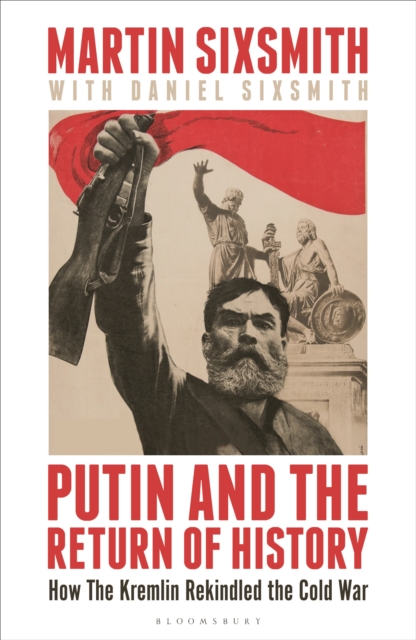
Putin and the Return of History: How the Kremlin Rekindled the Cold War
Vladimir Putin's invasion of Ukraine has reshaped history. In the decades after the collapse of Soviet communism, the West convinced itself that liberal democracy would henceforth be the dominant, ultimately unique, system of governance. An outburst of Western triumphalism proclaimed a US-led unipolar world entitled to 'impose democracy' on countries that failed to recognise the new order. Politicians foretold the universalisation of Western values as the final, enduring form of human society, a hubris that shaped how the West would treat Russia for the next two decades. But history wasn't over. Subsequent events proved it is unwise to make predictions, especially about the future. In February 2022, Vladimir Putin took great delight in proving it.
Putin is a paradox. In the early years of his presidency, he appeared to commit himself to friendship with the West, suggesting that Russia could join the European Union or even NATO. He said he supported free-market democracy and civil rights. But the Putin of those years is unrecognisable today. The Putin of the 2020s is an autocratic nationalist, dedicated to repression at home and anti-Western militarism abroad. So, what happened? Was he lying when he proclaimed his support for freedom, democracy and friendship with the West? Or, was he sincere? Did he change his views at some stage between then and now? And if that is the case, what happened to change him? Putin and the Return of History examines these questions in the context of Russia's thousand-year past, tracing the forces and the myths that have shaped Putin's politics of aggression: the enduring terror of encirclement by outsiders, the subjugation of the individual to the cause of the state, the collectivist values that allow the sacrifice of human lives in battle, the willingness to lie and deceive, the co-opting of religion and the belief in Great Russia's mission to change the world.PRP: 217.00 Lei

Acesta este Prețul Recomandat de Producător. Prețul de vânzare al produsului este afișat mai jos.
195.30Lei
195.30Lei
217.00 LeiPrimești 195 puncte

Indisponibil
Descrierea produsului
Vladimir Putin's invasion of Ukraine has reshaped history. In the decades after the collapse of Soviet communism, the West convinced itself that liberal democracy would henceforth be the dominant, ultimately unique, system of governance. An outburst of Western triumphalism proclaimed a US-led unipolar world entitled to 'impose democracy' on countries that failed to recognise the new order. Politicians foretold the universalisation of Western values as the final, enduring form of human society, a hubris that shaped how the West would treat Russia for the next two decades. But history wasn't over. Subsequent events proved it is unwise to make predictions, especially about the future. In February 2022, Vladimir Putin took great delight in proving it.
Putin is a paradox. In the early years of his presidency, he appeared to commit himself to friendship with the West, suggesting that Russia could join the European Union or even NATO. He said he supported free-market democracy and civil rights. But the Putin of those years is unrecognisable today. The Putin of the 2020s is an autocratic nationalist, dedicated to repression at home and anti-Western militarism abroad. So, what happened? Was he lying when he proclaimed his support for freedom, democracy and friendship with the West? Or, was he sincere? Did he change his views at some stage between then and now? And if that is the case, what happened to change him? Putin and the Return of History examines these questions in the context of Russia's thousand-year past, tracing the forces and the myths that have shaped Putin's politics of aggression: the enduring terror of encirclement by outsiders, the subjugation of the individual to the cause of the state, the collectivist values that allow the sacrifice of human lives in battle, the willingness to lie and deceive, the co-opting of religion and the belief in Great Russia's mission to change the world.Detaliile produsului