







Raspberry Red Building: When Change Becomes a Necessity
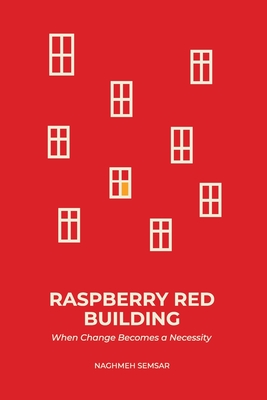
Raspberry Red Building: When Change Becomes a Necessity
Raspberry Red Building is not a traditional novel, it uses literary storytelling to question what happens in today's societies and organizations. It creates a narrative interior where we preach change, yet live in inertia. The author moves through a structure of an old building not physically, but through language. She traces the unsaid, listens between the lines, and confronts the smooth surfaces of spoken language with discomfort and clarity. Raspberry Red Building is not only a place, but a system: built of leadership, expectation, repetition, and structural resistance and stagnation. The "Building" represents more than architecture, it is the organization or the society and community itself, with its visible rules and invisible contradictions; with leadership that pretends to move forward but often only stabilizes itself. The narrator names what is often felt but rarely spoken: How structures prevent decisions How language takes the place of leadership, where communication only mimics action How development is staged without ever taking place And how organizations and societeies become immune to change, through the very routines they repeat, the language they polish, and the silence they maintain The roles in this book are not invented, they are deeply familiar. Not as individual characters, but as roles, postures, states, and responses we encounter daily in organizations or other forms of community. Some of them bear symbolic names, like Prof. Pixel, Commodore, Miss Petal, or Lady Biz. These names do not represent personalities, but functions, recognizable roles, and familiar dynamics that point to systemic positions more than personal stories. But at its core, this story also speaks to deeply human needs: our search for belonging, our instinct to protect what is familiar, and our natural resistance to change. Rather than reducing transformation to abstract systems, the narrative keeps people at its center. It explores how each and every one of us responds, or refuses, to the pressure of change. The story is mindful of the fact that systems are not only made by people, but constantly reshaped through their awareness, habits, fears, and courage. The author also reflects on patterns such as leadership, control, loyalty, and withdrawal, not as isolated traits, but as relational configurations that consistently emerge wherever people engage in shared systems. These dynamics are not bound only to individuals; they arise from collective habits, internalized
PRP: 116.25 Lei

Acesta este Prețul Recomandat de Producător. Prețul de vânzare al produsului este afișat mai jos.
104.62Lei
104.62Lei
116.25 LeiPrimești 104 puncte
Livrare in 2-4 saptamani
Descrierea produsului
Raspberry Red Building is not a traditional novel, it uses literary storytelling to question what happens in today's societies and organizations. It creates a narrative interior where we preach change, yet live in inertia. The author moves through a structure of an old building not physically, but through language. She traces the unsaid, listens between the lines, and confronts the smooth surfaces of spoken language with discomfort and clarity. Raspberry Red Building is not only a place, but a system: built of leadership, expectation, repetition, and structural resistance and stagnation. The "Building" represents more than architecture, it is the organization or the society and community itself, with its visible rules and invisible contradictions; with leadership that pretends to move forward but often only stabilizes itself. The narrator names what is often felt but rarely spoken: How structures prevent decisions How language takes the place of leadership, where communication only mimics action How development is staged without ever taking place And how organizations and societeies become immune to change, through the very routines they repeat, the language they polish, and the silence they maintain The roles in this book are not invented, they are deeply familiar. Not as individual characters, but as roles, postures, states, and responses we encounter daily in organizations or other forms of community. Some of them bear symbolic names, like Prof. Pixel, Commodore, Miss Petal, or Lady Biz. These names do not represent personalities, but functions, recognizable roles, and familiar dynamics that point to systemic positions more than personal stories. But at its core, this story also speaks to deeply human needs: our search for belonging, our instinct to protect what is familiar, and our natural resistance to change. Rather than reducing transformation to abstract systems, the narrative keeps people at its center. It explores how each and every one of us responds, or refuses, to the pressure of change. The story is mindful of the fact that systems are not only made by people, but constantly reshaped through their awareness, habits, fears, and courage. The author also reflects on patterns such as leadership, control, loyalty, and withdrawal, not as isolated traits, but as relational configurations that consistently emerge wherever people engage in shared systems. These dynamics are not bound only to individuals; they arise from collective habits, internalized
Detaliile produsului



