







Securing Japan: Tokyo's Grand Strategy and the Future of East Asia
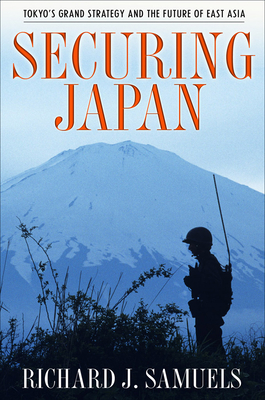
Securing Japan: Tokyo's Grand Strategy and the Future of East Asia
For the past sixty years, the U.S. government has assumed that Japan's security policies would reinforce American interests in Asia. The political and military profile of Asia is changing rapidly, however. Korea's nuclear program, China's rise, and the relative decline of U.S. power have commanded strategic review in Tokyo just as these matters have in Washington. What is the next step for Japan's security policy? Will confluence with U.S. interests--and the alliance--survive intact? Will the policy be transformed? Or will Japan become more autonomous?
Richard J. Samuels demonstrates that over the last decade, a revisionist group of Japanese policymakers has consolidated power. The Koizumi government of the early 2000s took bold steps to position Japan's military to play a global security role. It left its successor, the Abe government, to further define and legitimate Japan's new grand strategy, a project well under way-and vigorously contested both at home and in the region.
Securing Japan begins by tracing the history of Japan's grand strategy--from the Meiji rulers, who recognized the intimate connection between economic success and military advance, to the Konoye consensus that led to Japan's defeat in World War II and the postwar compact with the United States. Samuels shows how the ideological connections across these wars and agreements help explain today's debate. He then explores Japan's recent strategic choices, arguing that Japan will ultimately strike a balance between national strength and national autonomy, a position that will allow it to exist securely without being either too dependent on the United States or too vulnerable to threats from China.
Samuels's insights into Japanese history, society, and politics have been honed over a distinguished career and enriched by interviews with policymakers and original archival research. Securing Japan is a definitive assessment of Japanese security policy and its implications for the future of East Asia.
--Robyn Lim, October 2007, Far Eastern Economic ReviewPRP: 179.49 Lei

Acesta este Prețul Recomandat de Producător. Prețul de vânzare al produsului este afișat mai jos.
161.54Lei
161.54Lei
179.49 LeiPrimești 161 puncte
Indisponibil
Descrierea produsului
For the past sixty years, the U.S. government has assumed that Japan's security policies would reinforce American interests in Asia. The political and military profile of Asia is changing rapidly, however. Korea's nuclear program, China's rise, and the relative decline of U.S. power have commanded strategic review in Tokyo just as these matters have in Washington. What is the next step for Japan's security policy? Will confluence with U.S. interests--and the alliance--survive intact? Will the policy be transformed? Or will Japan become more autonomous?
Richard J. Samuels demonstrates that over the last decade, a revisionist group of Japanese policymakers has consolidated power. The Koizumi government of the early 2000s took bold steps to position Japan's military to play a global security role. It left its successor, the Abe government, to further define and legitimate Japan's new grand strategy, a project well under way-and vigorously contested both at home and in the region.
Securing Japan begins by tracing the history of Japan's grand strategy--from the Meiji rulers, who recognized the intimate connection between economic success and military advance, to the Konoye consensus that led to Japan's defeat in World War II and the postwar compact with the United States. Samuels shows how the ideological connections across these wars and agreements help explain today's debate. He then explores Japan's recent strategic choices, arguing that Japan will ultimately strike a balance between national strength and national autonomy, a position that will allow it to exist securely without being either too dependent on the United States or too vulnerable to threats from China.
Samuels's insights into Japanese history, society, and politics have been honed over a distinguished career and enriched by interviews with policymakers and original archival research. Securing Japan is a definitive assessment of Japanese security policy and its implications for the future of East Asia.
--Robyn Lim, October 2007, Far Eastern Economic ReviewDetaliile produsului



