





Shenyang F-7: China's Fighter for the World
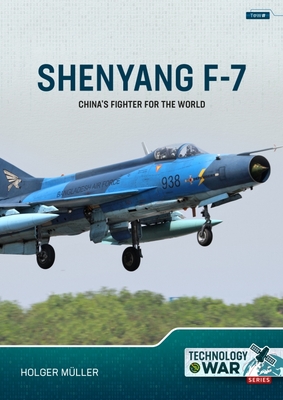
Shenyang F-7: China's Fighter for the World
Traces the development of China's J/F-7 fighter, from its Soviet origins to a modern multi-role aircraft used worldwide.
When it was founded in 1949, the People's Republic of China was an agricultural state with no industrial base to speak of and no armaments industry of its own. From the very beginning, Mao Tse Dng, the founder of the state, endeavored to develop his own modern defense industry in order to gain weight on the international stage. Part of this effort was the development of a domestic aerospace industry with massive support from the Union of Soviet Socialist Republics (colloquially the 'Soviet Union').
Until the two countries broke up in 1961 due to ideological differences, more than 100 aviation companies were established with Soviet help and the licensed production of numerous aircraft types from trainers to heavy bombers was started. The last of these was the MiG-21, which is reproduced in China as the J-7.
It took more than 10 years before the country, weakened by the 'Great Leap Forward' and the Cultural Revolution, succeeded at all in producing this comparatively complex aircraft. Only the comprehensive reforms after the death of state founder Mao created the basis for a return to orderly production of a technology that was already two decades old and outdated.
The rapprochement with the West in the early 1980s made it possible, in part, to overcome the technological backlog. The integration of Western avionics into the Soviet airframe did not make the J/F-7 a modern combat aircraft like the F-16 and MiG-29 developed at the same time, but it increased its combat value to such an extent that it became an export success for the Third World. However, even more important was the access to Western technologies, later also for air-to-air missiles, which were initially, simply copied and later formed the basis for in-house developments of modern equipment and weapons systems.
When cooperation with the West ended abruptly after the Tiananmen massacre of 1989, Chinese engineers and scientists had accumulated enough know-how to provide their own impetus in the further development of the J/F-7 family. Due to the combination of new aerodynamics and modern avionics, true multi-role combat aircraft were finally created which today, still spearhead their air forces in numerous countries in Asia and Africa.
When the production of the J/F-7 finally ended in 2016, two generations of modern fighters based on this
When it was founded in 1949, the People's Republic of China was an agricultural state with no industrial base to speak of and no armaments industry of its own. From the very beginning, Mao Tse Dng, the founder of the state, endeavored to develop his own modern defense industry in order to gain weight on the international stage. Part of this effort was the development of a domestic aerospace industry with massive support from the Union of Soviet Socialist Republics (colloquially the 'Soviet Union').
Until the two countries broke up in 1961 due to ideological differences, more than 100 aviation companies were established with Soviet help and the licensed production of numerous aircraft types from trainers to heavy bombers was started. The last of these was the MiG-21, which is reproduced in China as the J-7.
It took more than 10 years before the country, weakened by the 'Great Leap Forward' and the Cultural Revolution, succeeded at all in producing this comparatively complex aircraft. Only the comprehensive reforms after the death of state founder Mao created the basis for a return to orderly production of a technology that was already two decades old and outdated.
The rapprochement with the West in the early 1980s made it possible, in part, to overcome the technological backlog. The integration of Western avionics into the Soviet airframe did not make the J/F-7 a modern combat aircraft like the F-16 and MiG-29 developed at the same time, but it increased its combat value to such an extent that it became an export success for the Third World. However, even more important was the access to Western technologies, later also for air-to-air missiles, which were initially, simply copied and later formed the basis for in-house developments of modern equipment and weapons systems.
When cooperation with the West ended abruptly after the Tiananmen massacre of 1989, Chinese engineers and scientists had accumulated enough know-how to provide their own impetus in the further development of the J/F-7 family. Due to the combination of new aerodynamics and modern avionics, true multi-role combat aircraft were finally created which today, still spearhead their air forces in numerous countries in Asia and Africa.
When the production of the J/F-7 finally ended in 2016, two generations of modern fighters based on this
PRP: 143.64 Lei

Acesta este Prețul Recomandat de Producător. Prețul de vânzare al produsului este afișat mai jos.
129.28Lei
129.28Lei
143.64 LeiPrimești 129 puncte
Livrare in 2-4 saptamani
Descrierea produsului
Traces the development of China's J/F-7 fighter, from its Soviet origins to a modern multi-role aircraft used worldwide.
When it was founded in 1949, the People's Republic of China was an agricultural state with no industrial base to speak of and no armaments industry of its own. From the very beginning, Mao Tse Dng, the founder of the state, endeavored to develop his own modern defense industry in order to gain weight on the international stage. Part of this effort was the development of a domestic aerospace industry with massive support from the Union of Soviet Socialist Republics (colloquially the 'Soviet Union').
Until the two countries broke up in 1961 due to ideological differences, more than 100 aviation companies were established with Soviet help and the licensed production of numerous aircraft types from trainers to heavy bombers was started. The last of these was the MiG-21, which is reproduced in China as the J-7.
It took more than 10 years before the country, weakened by the 'Great Leap Forward' and the Cultural Revolution, succeeded at all in producing this comparatively complex aircraft. Only the comprehensive reforms after the death of state founder Mao created the basis for a return to orderly production of a technology that was already two decades old and outdated.
The rapprochement with the West in the early 1980s made it possible, in part, to overcome the technological backlog. The integration of Western avionics into the Soviet airframe did not make the J/F-7 a modern combat aircraft like the F-16 and MiG-29 developed at the same time, but it increased its combat value to such an extent that it became an export success for the Third World. However, even more important was the access to Western technologies, later also for air-to-air missiles, which were initially, simply copied and later formed the basis for in-house developments of modern equipment and weapons systems.
When cooperation with the West ended abruptly after the Tiananmen massacre of 1989, Chinese engineers and scientists had accumulated enough know-how to provide their own impetus in the further development of the J/F-7 family. Due to the combination of new aerodynamics and modern avionics, true multi-role combat aircraft were finally created which today, still spearhead their air forces in numerous countries in Asia and Africa.
When the production of the J/F-7 finally ended in 2016, two generations of modern fighters based on this
When it was founded in 1949, the People's Republic of China was an agricultural state with no industrial base to speak of and no armaments industry of its own. From the very beginning, Mao Tse Dng, the founder of the state, endeavored to develop his own modern defense industry in order to gain weight on the international stage. Part of this effort was the development of a domestic aerospace industry with massive support from the Union of Soviet Socialist Republics (colloquially the 'Soviet Union').
Until the two countries broke up in 1961 due to ideological differences, more than 100 aviation companies were established with Soviet help and the licensed production of numerous aircraft types from trainers to heavy bombers was started. The last of these was the MiG-21, which is reproduced in China as the J-7.
It took more than 10 years before the country, weakened by the 'Great Leap Forward' and the Cultural Revolution, succeeded at all in producing this comparatively complex aircraft. Only the comprehensive reforms after the death of state founder Mao created the basis for a return to orderly production of a technology that was already two decades old and outdated.
The rapprochement with the West in the early 1980s made it possible, in part, to overcome the technological backlog. The integration of Western avionics into the Soviet airframe did not make the J/F-7 a modern combat aircraft like the F-16 and MiG-29 developed at the same time, but it increased its combat value to such an extent that it became an export success for the Third World. However, even more important was the access to Western technologies, later also for air-to-air missiles, which were initially, simply copied and later formed the basis for in-house developments of modern equipment and weapons systems.
When cooperation with the West ended abruptly after the Tiananmen massacre of 1989, Chinese engineers and scientists had accumulated enough know-how to provide their own impetus in the further development of the J/F-7 family. Due to the combination of new aerodynamics and modern avionics, true multi-role combat aircraft were finally created which today, still spearhead their air forces in numerous countries in Asia and Africa.
When the production of the J/F-7 finally ended in 2016, two generations of modern fighters based on this
Detaliile produsului



