







Shikoku Island Travel Guide, Japan. Discover Hidden Tourist Destination. It has beautiful scenery, a laidback atmosphere, friendly people and several notable sights, yet SHIKOKU, Japan's fourth main island, is usually at the bottom of most visitors' itineraries if it appears at all. This is a shame, since this tranquil island, nestling in the crook between Honshū and Kyūshū, offers elements of traditional Japan that are often hard to find elsewhere. An ancient Buddhist pilgrimage, original castles and distinctive arts and crafts are some of Shikoku's attractions but equally appealing are the island's rural pace of life and little-visited villages and smaller surrounding islands. Set aside a week or so to get around all Shikoku's four prefectures. If you only have a day or two, though, head straight for Matsuyama's splendid castle and the hot springs at nearby Dōgo; or pay a visit to the landscape gardens of Ritsurin-kōen in Takamatsu, before hopping on a ferry over to the idyllic, contemporary art-filled island of Naoshima. According to legend, Shikoku was the second island (after Awaji-shima) born to Izanagi and Izanami, the gods who are considered to be Japan's parents. Its ancient name was Iyo-no-futana and it was divided into four main prefectures: Awa (now Tokushima-ken), Iyo (Ehime-ken), Sanuki (Kagawa-ken) and Tosa (Kōchi-ken). These epithets are still used today when referring to the different prefectures' cuisines and traditional arts. Apart from being the scene of a decisive battle between the Taira and Minamoto clans in the twelfth century (see The Kamakura era), Shikoku has had a relatively peaceful history, due in part to its isolation from the rest of Japan. The physical separation ended with the opening of the Seto Ōhashi in 1989, a series of six bridges that leapfrog the islands of the Inland Sea, carrying both trains and cars. It has since been joined by the Akashi Kaikyō Ōhashi suspension bridge, connecting Shikoku to Honshū via Awaji-shima, the island to the west of Tokushima, and the Nishi Seto Expressway, running along ten bridges spanning nine islands on Shikoku's northern coast. Most of Shikoku's population of just over four million lives in one of the island's four prefectural capitals: Takamatsu, Tokushima, Kōchi and Matsuyama. The island is split by a vast mountain range that runs from Tsurugi-san in the east to Ishizuchi-san, Shikoku's tallest peak, in the west. The north
Shikoku Island Travel Guide, Japan: Discover Hidden Tourist Destination
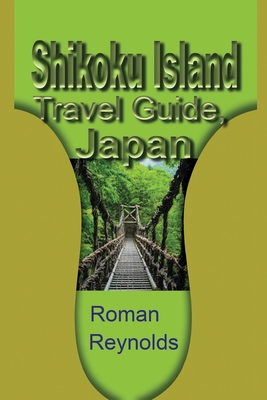
Shikoku Island Travel Guide, Japan: Discover Hidden Tourist Destination
Shikoku Island Travel Guide, Japan. Discover Hidden Tourist Destination. It has beautiful scenery, a laidback atmosphere, friendly people and several notable sights, yet SHIKOKU, Japan's fourth main island, is usually at the bottom of most visitors' itineraries if it appears at all. This is a shame, since this tranquil island, nestling in the crook between Honshū and Kyūshū, offers elements of traditional Japan that are often hard to find elsewhere. An ancient Buddhist pilgrimage, original castles and distinctive arts and crafts are some of Shikoku's attractions but equally appealing are the island's rural pace of life and little-visited villages and smaller surrounding islands. Set aside a week or so to get around all Shikoku's four prefectures. If you only have a day or two, though, head straight for Matsuyama's splendid castle and the hot springs at nearby Dōgo; or pay a visit to the landscape gardens of Ritsurin-kōen in Takamatsu, before hopping on a ferry over to the idyllic, contemporary art-filled island of Naoshima. According to legend, Shikoku was the second island (after Awaji-shima) born to Izanagi and Izanami, the gods who are considered to be Japan's parents. Its ancient name was Iyo-no-futana and it was divided into four main prefectures: Awa (now Tokushima-ken), Iyo (Ehime-ken), Sanuki (Kagawa-ken) and Tosa (Kōchi-ken). These epithets are still used today when referring to the different prefectures' cuisines and traditional arts. Apart from being the scene of a decisive battle between the Taira and Minamoto clans in the twelfth century (see The Kamakura era), Shikoku has had a relatively peaceful history, due in part to its isolation from the rest of Japan. The physical separation ended with the opening of the Seto Ōhashi in 1989, a series of six bridges that leapfrog the islands of the Inland Sea, carrying both trains and cars. It has since been joined by the Akashi Kaikyō Ōhashi suspension bridge, connecting Shikoku to Honshū via Awaji-shima, the island to the west of Tokushima, and the Nishi Seto Expressway, running along ten bridges spanning nine islands on Shikoku's northern coast. Most of Shikoku's population of just over four million lives in one of the island's four prefectural capitals: Takamatsu, Tokushima, Kōchi and Matsuyama. The island is split by a vast mountain range that runs from Tsurugi-san in the east to Ishizuchi-san, Shikoku's tallest peak, in the west. The north
PRP: 232.50 Lei

Acesta este Prețul Recomandat de Producător. Prețul de vânzare al produsului este afișat mai jos.
209.25Lei
209.25Lei
232.50 LeiPrimești 209 puncte

Livrare in 2-4 saptamani
Descrierea produsului
Shikoku Island Travel Guide, Japan. Discover Hidden Tourist Destination. It has beautiful scenery, a laidback atmosphere, friendly people and several notable sights, yet SHIKOKU, Japan's fourth main island, is usually at the bottom of most visitors' itineraries if it appears at all. This is a shame, since this tranquil island, nestling in the crook between Honshū and Kyūshū, offers elements of traditional Japan that are often hard to find elsewhere. An ancient Buddhist pilgrimage, original castles and distinctive arts and crafts are some of Shikoku's attractions but equally appealing are the island's rural pace of life and little-visited villages and smaller surrounding islands. Set aside a week or so to get around all Shikoku's four prefectures. If you only have a day or two, though, head straight for Matsuyama's splendid castle and the hot springs at nearby Dōgo; or pay a visit to the landscape gardens of Ritsurin-kōen in Takamatsu, before hopping on a ferry over to the idyllic, contemporary art-filled island of Naoshima. According to legend, Shikoku was the second island (after Awaji-shima) born to Izanagi and Izanami, the gods who are considered to be Japan's parents. Its ancient name was Iyo-no-futana and it was divided into four main prefectures: Awa (now Tokushima-ken), Iyo (Ehime-ken), Sanuki (Kagawa-ken) and Tosa (Kōchi-ken). These epithets are still used today when referring to the different prefectures' cuisines and traditional arts. Apart from being the scene of a decisive battle between the Taira and Minamoto clans in the twelfth century (see The Kamakura era), Shikoku has had a relatively peaceful history, due in part to its isolation from the rest of Japan. The physical separation ended with the opening of the Seto Ōhashi in 1989, a series of six bridges that leapfrog the islands of the Inland Sea, carrying both trains and cars. It has since been joined by the Akashi Kaikyō Ōhashi suspension bridge, connecting Shikoku to Honshū via Awaji-shima, the island to the west of Tokushima, and the Nishi Seto Expressway, running along ten bridges spanning nine islands on Shikoku's northern coast. Most of Shikoku's population of just over four million lives in one of the island's four prefectural capitals: Takamatsu, Tokushima, Kōchi and Matsuyama. The island is split by a vast mountain range that runs from Tsurugi-san in the east to Ishizuchi-san, Shikoku's tallest peak, in the west. The north
Detaliile produsului




