





Sir Gibbie. NOVEL by: George MacDonald. (Original Version)
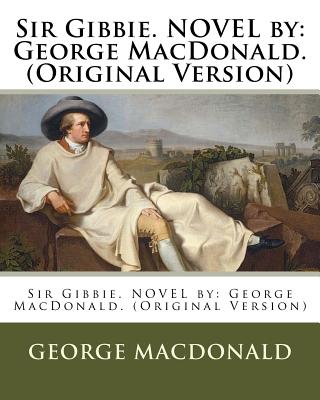
Sir Gibbie. NOVEL by: George MacDonald. (Original Version)
Sir Gibbie is an 1879 novel by the Scottish author George MacDonald. It is notable for its Doric dialogue, but has been criticised, especially by members of the Scottish Renaissance, for being part of the kailyard movement. Despite this there are far more who claim the book paints a fair view of urban as well as rural life. The book doesn't seem to dwell as long on physical geography as it does on the spiritual geography of the soul. MacDonald's editor, Elizabeth Yates wrote of Sir Gibbie, "It moved me the way books did when, as a child, the great gates of literature began to open and first encounters with noble thoughts and utterances were unspeakably thrilling." The book shows a complex cast of characters from all the social levels: from the laird to the homeless, going through a couple of priests, one of them prone to yield to worldly considerations, although he's good enough, or clever enough, not to fall into wickedness; the other merely pompous and self-righteous. The aim of the story is to show that the idea that bad people are the almost inevitable result of unjust social treatment is wrong. Wee Sir Gibbie has all the numbers to become one of the dregs of society: a drunkard father; as a child he gets in a den of assassins; in rags and poverty, he flies away; then he is punished for having done good to others. But he grows to become a Christ-figure, a knight-errant, a wrong-righter. In 1937, the novel was included in an influential list of notable English language literature entitled Literary Taste: How to Form It (second edition).
PRP: 124.16 Lei

Acesta este Prețul Recomandat de Producător. Prețul de vânzare al produsului este afișat mai jos.
99.33Lei
99.33Lei
124.16 LeiPrimești 99 puncte
Indisponibil
Descrierea produsului
Sir Gibbie is an 1879 novel by the Scottish author George MacDonald. It is notable for its Doric dialogue, but has been criticised, especially by members of the Scottish Renaissance, for being part of the kailyard movement. Despite this there are far more who claim the book paints a fair view of urban as well as rural life. The book doesn't seem to dwell as long on physical geography as it does on the spiritual geography of the soul. MacDonald's editor, Elizabeth Yates wrote of Sir Gibbie, "It moved me the way books did when, as a child, the great gates of literature began to open and first encounters with noble thoughts and utterances were unspeakably thrilling." The book shows a complex cast of characters from all the social levels: from the laird to the homeless, going through a couple of priests, one of them prone to yield to worldly considerations, although he's good enough, or clever enough, not to fall into wickedness; the other merely pompous and self-righteous. The aim of the story is to show that the idea that bad people are the almost inevitable result of unjust social treatment is wrong. Wee Sir Gibbie has all the numbers to become one of the dregs of society: a drunkard father; as a child he gets in a den of assassins; in rags and poverty, he flies away; then he is punished for having done good to others. But he grows to become a Christ-figure, a knight-errant, a wrong-righter. In 1937, the novel was included in an influential list of notable English language literature entitled Literary Taste: How to Form It (second edition).
Detaliile produsului



