- /
- Librarie online
- /
- Carti in engleza
- /
- Juvenile Fiction
- /
- General
- /
- Spider Weaver - Margaret Musgrove
Spider Weaver
Spider Weaver
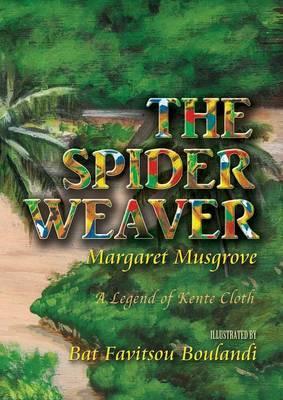
The story in this book is widely known among the weavers in Ghana and dates back to the mid-seventeenth century during the time of King Oti Akenten. Today, kente cloth is worn all over the world, but most often by heads of state in different African countries. Even now, certain patterns are reserved for the Ashanti king. If anyone is wearing a pattern the king has chosen, they must immediately remove it and select another kente. In the United States of America and other countries with people of African descent, kente is often worn as a statement of pride in African heritage. Students frequently wear a strip of kente on their gowns when they graduate. Some fraternities and sororities have their Greek letters and colors woven into kente strips. Machine-woven kente is less expensive than the handmade cloth, but it is also less refined, and the colors are less vibrant. Kente is a beautiful, expensive cloth. People almost never cut the strips of kente to make shirts or skirts. Instead, they wear one strip alone or many strips sewn together, making yards of kente cloth to drape around the body. Many patterns woven in kente cloth have significance. All of the traditional old patterns have meanings which, for the most part, are proverbs. "One man cannot rule a country" is one of the translations. When heads of state and other dignitaries visit Ghana, often original kente designs are made for these visitors. In the Ashanti region of Ghana, you can still see yellow, red, and blue threads laid out to dry in the sun. There are fine, handmade looms and asase-ntoma - apprentice weavers - who learn to gather their own dyes and process yarns for weaving kente. And like their masters, and their masters' masters before them, they are told the story of how a beautiful spider shared her weaving secrets with two resourceful, expert weavers.
92.94Lei
92.94Lei
Primești 92 puncte

Indisponibil
Descrierea produsului
The story in this book is widely known among the weavers in Ghana and dates back to the mid-seventeenth century during the time of King Oti Akenten. Today, kente cloth is worn all over the world, but most often by heads of state in different African countries. Even now, certain patterns are reserved for the Ashanti king. If anyone is wearing a pattern the king has chosen, they must immediately remove it and select another kente. In the United States of America and other countries with people of African descent, kente is often worn as a statement of pride in African heritage. Students frequently wear a strip of kente on their gowns when they graduate. Some fraternities and sororities have their Greek letters and colors woven into kente strips. Machine-woven kente is less expensive than the handmade cloth, but it is also less refined, and the colors are less vibrant. Kente is a beautiful, expensive cloth. People almost never cut the strips of kente to make shirts or skirts. Instead, they wear one strip alone or many strips sewn together, making yards of kente cloth to drape around the body. Many patterns woven in kente cloth have significance. All of the traditional old patterns have meanings which, for the most part, are proverbs. "One man cannot rule a country" is one of the translations. When heads of state and other dignitaries visit Ghana, often original kente designs are made for these visitors. In the Ashanti region of Ghana, you can still see yellow, red, and blue threads laid out to dry in the sun. There are fine, handmade looms and asase-ntoma - apprentice weavers - who learn to gather their own dyes and process yarns for weaving kente. And like their masters, and their masters' masters before them, they are told the story of how a beautiful spider shared her weaving secrets with two resourceful, expert weavers.
Detaliile produsului