







Taking Nazi Technology: Allied Exploitation of German Science After the Second World War
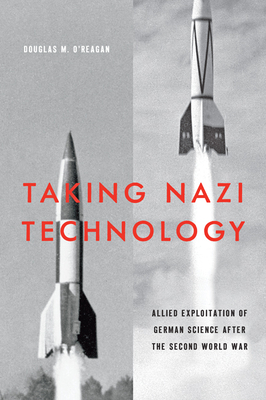
Taking Nazi Technology: Allied Exploitation of German Science After the Second World War
During the Second World War, German science and technology posed a terrifying threat to the Allied nations. These advanced weapons, which included rockets, V-2 missiles, tanks, submarines, and jet airplanes, gave troubling credence to Nazi propaganda about forthcoming "wonder-weapons" that would turn the war decisively in favor of the Axis. After the war ended, the Allied powers raced to seize "intellectual reparations" from almost every field of industrial technology and academic science in occupied Germany. It was likely the largest-scale technology transfer in history.
In Taking Nazi Technology, Douglas M. O'Reagan describes how the Western Allies gathered teams of experts to scour defeated Germany, seeking industrial secrets and the technical personnel who could explain them. Swarms of investigators invaded Germany's factories and research institutions, seizing or copying all kinds of documents, from patent applications to factory production data to science journals. They questioned, hired, and sometimes even kidnapped hundreds of scientists, engineers, and other technical personnel. They studied technologies from aeronautics to audiotapes, toy making to machine tools, chemicals to carpentry equipment. They took over academic libraries, jealously competed over chemists, and schemed to deny the fruits of German invention to any other land--including that of other Allied nations.
Drawing on declassified records, O'Reagan looks at which techniques worked for these very different nations, as well as which failed--and why. Most importantly, he shows why securing this technology, how the Allies did it, and when still matters today. He also argues that these programs did far more than spread German industrial science: they forced businessmen and policymakers around the world to rethink how science and technology fit into diplomacy, business, and society itself.
PRP: 363.22 Lei

Acesta este Prețul Recomandat de Producător. Prețul de vânzare al produsului este afișat mai jos.
326.90Lei
326.90Lei
363.22 LeiPrimești 326 puncte
Indisponibil
Descrierea produsului
During the Second World War, German science and technology posed a terrifying threat to the Allied nations. These advanced weapons, which included rockets, V-2 missiles, tanks, submarines, and jet airplanes, gave troubling credence to Nazi propaganda about forthcoming "wonder-weapons" that would turn the war decisively in favor of the Axis. After the war ended, the Allied powers raced to seize "intellectual reparations" from almost every field of industrial technology and academic science in occupied Germany. It was likely the largest-scale technology transfer in history.
In Taking Nazi Technology, Douglas M. O'Reagan describes how the Western Allies gathered teams of experts to scour defeated Germany, seeking industrial secrets and the technical personnel who could explain them. Swarms of investigators invaded Germany's factories and research institutions, seizing or copying all kinds of documents, from patent applications to factory production data to science journals. They questioned, hired, and sometimes even kidnapped hundreds of scientists, engineers, and other technical personnel. They studied technologies from aeronautics to audiotapes, toy making to machine tools, chemicals to carpentry equipment. They took over academic libraries, jealously competed over chemists, and schemed to deny the fruits of German invention to any other land--including that of other Allied nations.
Drawing on declassified records, O'Reagan looks at which techniques worked for these very different nations, as well as which failed--and why. Most importantly, he shows why securing this technology, how the Allies did it, and when still matters today. He also argues that these programs did far more than spread German industrial science: they forced businessmen and policymakers around the world to rethink how science and technology fit into diplomacy, business, and society itself.
Detaliile produsului



