







Teaching With Trauma in Mind: Teaching Black and Poor Students More Effectively by Being Trauma-Informed
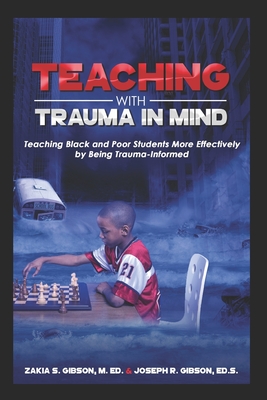
Teaching With Trauma in Mind: Teaching Black and Poor Students More Effectively by Being Trauma-Informed
Please check out more of our related titles at thepgi.org About five years ago, the National Task Force on Children Exposed to Violence recommended (or perhaps more accurately, warned) that "every school in our country should have trauma-informed staff and consultants providing school-based trauma-specific treatment." Apparently, few schools-especially those with high-poverty, high-minority student populations-actually heard (and heeded) the recommendation. Most teachers and administrators have accepted that there is simply not enough time to focus on "soft skills" like teaching impulse control, resilience, or emotional regulation and concurrently cover enough content to get test scores high enough to maintain their employment. Our rebuttal to this conclusion is that time isn't their problem, values and priorities are. In other words, if being a trauma-informed educator was adequately valued, then it would be prioritized and time would be "found" to be a trauma-informed educator. Becoming trauma-informed also requires a fundamental understanding that trauma, to quote Catherine Woodiwiss, "permanently changes us." Specifically, the chronic stress accompanying ongoing (or complex) childhood trauma can negatively and enduringly change a child's brain. Childhood traumas like physical or emotional abuse, sexual assault, and persistent family poverty typically triggers neuroplasticity.The commonness of students in classrooms across this country experiencing trauma and trauma-based maladaptive neuroplasticity is far greater than most of us would ever comfortably imagine. Most studies have concluded that 25-40% of all students have already been exposed to (and their brains changed by) some type of acute or complex childhood trauma. Considering the traumatic impact of race and poverty, instead of 25-40%, in these schools we're possibly looking at closer to 80-90% of students presumably having already been exposed to (and their brains negatively changed by) childhood trauma.Race and poverty are highly prevalent traumatic stressors-logically-in schools that have higher percentages of Black and poor students. However, because race and poverty are not typically recognized by educators as traumatic stressors, trauma is not looked at as the most likely motivation for the common negative student behaviors experienced in such schools. Moreover, becoming more trauma-informed is not particularly valued by educators in schools that have higher percentages of Black and poo
PRP: 154.92 Lei

Acesta este Prețul Recomandat de Producător. Prețul de vânzare al produsului este afișat mai jos.
139.43Lei
139.43Lei
154.92 LeiPrimești 139 puncte
Indisponibil
Descrierea produsului
Please check out more of our related titles at thepgi.org About five years ago, the National Task Force on Children Exposed to Violence recommended (or perhaps more accurately, warned) that "every school in our country should have trauma-informed staff and consultants providing school-based trauma-specific treatment." Apparently, few schools-especially those with high-poverty, high-minority student populations-actually heard (and heeded) the recommendation. Most teachers and administrators have accepted that there is simply not enough time to focus on "soft skills" like teaching impulse control, resilience, or emotional regulation and concurrently cover enough content to get test scores high enough to maintain their employment. Our rebuttal to this conclusion is that time isn't their problem, values and priorities are. In other words, if being a trauma-informed educator was adequately valued, then it would be prioritized and time would be "found" to be a trauma-informed educator. Becoming trauma-informed also requires a fundamental understanding that trauma, to quote Catherine Woodiwiss, "permanently changes us." Specifically, the chronic stress accompanying ongoing (or complex) childhood trauma can negatively and enduringly change a child's brain. Childhood traumas like physical or emotional abuse, sexual assault, and persistent family poverty typically triggers neuroplasticity.The commonness of students in classrooms across this country experiencing trauma and trauma-based maladaptive neuroplasticity is far greater than most of us would ever comfortably imagine. Most studies have concluded that 25-40% of all students have already been exposed to (and their brains changed by) some type of acute or complex childhood trauma. Considering the traumatic impact of race and poverty, instead of 25-40%, in these schools we're possibly looking at closer to 80-90% of students presumably having already been exposed to (and their brains negatively changed by) childhood trauma.Race and poverty are highly prevalent traumatic stressors-logically-in schools that have higher percentages of Black and poor students. However, because race and poverty are not typically recognized by educators as traumatic stressors, trauma is not looked at as the most likely motivation for the common negative student behaviors experienced in such schools. Moreover, becoming more trauma-informed is not particularly valued by educators in schools that have higher percentages of Black and poo
Detaliile produsului



