





The Belle Epoque: Homosexual Renaissance
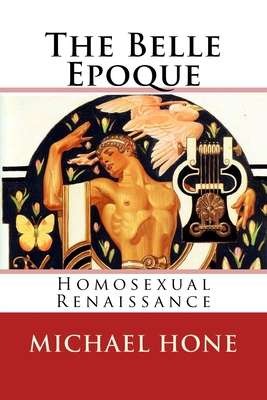
The Belle Epoque: Homosexual Renaissance
The honor of beginning this three-part book goes overwhelmingly to the Germans who became so involved in homosexuality, as actors and in research, that not only did they invent the word homosexual, some analysts believe they created the phenomenon itself, as not since the Ancient Greeks were boys placed on pedestals and worshipped for their beauty, as seen in the German Belle Époque art of Max Liebermann, Glyn Philpot, Sascha Schneider, Lucian Freud, Wilhelm von Gloeden, Guglielmo Plüschow and others. The population of Berlin exploded, from the 400,000 to 4 million in 1920. Berlin went from a city of open sewers to the first city ever electrified, with, in 1800, electric streetcars and lighting, public toilets and baths, a city infinitely more hygienic than London, Paris and New York. There were 170 male bordellos and hundreds of hustlers, many of whom were soldiers who knew that the prestige of a uniform could earn them 50 pfennig per pass, a sum that was trifling due to the huge number of boys offering their wares, many in lederhosen, the pockets cut out so the client could assess the merchandise by slipping in his hand. More than an oasis, Berlin became an earthly heaven because every variation of sex was represented, because beer and liquor flowed, [as well as newly-invented cocaine], and because of hugely successful floorshows, as seen in Bob Fosse's Cabaret. In Victorian London women were also worshipped on pedestals, admired from afar while no-holds-barred orgies took place nightly in boarding-school dormitories, about which John Symonds wrote, ''The talk in the dormitories and studies was of the grossest character, with repulsive scenes of onanism, mutual masturbation and obscene orgies of naked boys in bed together. There was no refinement, just animal lust.'' There were never so many male brothels, nor scandals as there were in the Victorian Belle Époque, beginning with one involving telegraph boys sent from one aristocrat to another, earning needed pocket change, followed by the seismic Oscar Wilde trial. The epicenter of Belle Époque homosexuality was nonetheless Paris, where male-male love was permitted since 1791, a haven for Oscar Wilde following his liberation from prison, and Jean Cocteau reigned supreme at the Boeuf sur le Toit cabaret. The Moulin Rouge and the Folies Bergère were already iconic, as was their publicist Toulouse-Lautrec. Art Nouveau astonished the world with its forms, colors and inimitable beauty, Diaghilev drew crowds at
PRP: 93.00 Lei

Acesta este Prețul Recomandat de Producător. Prețul de vânzare al produsului este afișat mai jos.
83.70Lei
83.70Lei
93.00 LeiPrimești 83 puncte
Livrare in 2-4 saptamani
Descrierea produsului
The honor of beginning this three-part book goes overwhelmingly to the Germans who became so involved in homosexuality, as actors and in research, that not only did they invent the word homosexual, some analysts believe they created the phenomenon itself, as not since the Ancient Greeks were boys placed on pedestals and worshipped for their beauty, as seen in the German Belle Époque art of Max Liebermann, Glyn Philpot, Sascha Schneider, Lucian Freud, Wilhelm von Gloeden, Guglielmo Plüschow and others. The population of Berlin exploded, from the 400,000 to 4 million in 1920. Berlin went from a city of open sewers to the first city ever electrified, with, in 1800, electric streetcars and lighting, public toilets and baths, a city infinitely more hygienic than London, Paris and New York. There were 170 male bordellos and hundreds of hustlers, many of whom were soldiers who knew that the prestige of a uniform could earn them 50 pfennig per pass, a sum that was trifling due to the huge number of boys offering their wares, many in lederhosen, the pockets cut out so the client could assess the merchandise by slipping in his hand. More than an oasis, Berlin became an earthly heaven because every variation of sex was represented, because beer and liquor flowed, [as well as newly-invented cocaine], and because of hugely successful floorshows, as seen in Bob Fosse's Cabaret. In Victorian London women were also worshipped on pedestals, admired from afar while no-holds-barred orgies took place nightly in boarding-school dormitories, about which John Symonds wrote, ''The talk in the dormitories and studies was of the grossest character, with repulsive scenes of onanism, mutual masturbation and obscene orgies of naked boys in bed together. There was no refinement, just animal lust.'' There were never so many male brothels, nor scandals as there were in the Victorian Belle Époque, beginning with one involving telegraph boys sent from one aristocrat to another, earning needed pocket change, followed by the seismic Oscar Wilde trial. The epicenter of Belle Époque homosexuality was nonetheless Paris, where male-male love was permitted since 1791, a haven for Oscar Wilde following his liberation from prison, and Jean Cocteau reigned supreme at the Boeuf sur le Toit cabaret. The Moulin Rouge and the Folies Bergère were already iconic, as was their publicist Toulouse-Lautrec. Art Nouveau astonished the world with its forms, colors and inimitable beauty, Diaghilev drew crowds at
Detaliile produsului



