





The Brown Plague: Travels in Late Weimar and Early Nazi Germany
The Brown Plague: Travels in Late Weimar and Early Nazi Germany
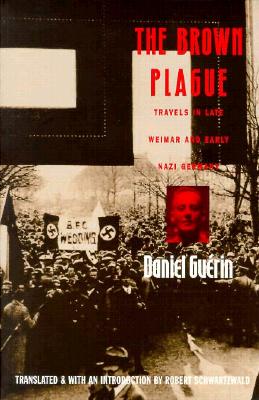
In 1932 and 1933, during the months surrounding the Nazi seizure of power, Daniel Guérin, then a young French journalist, made two trips through Germany. The Brown Plague, translated here into English for the first time, is Guérin's eyewitness account of the fall of the Weimar Republic and the first months of the Third Reich. Originally written for the popular French left press and then revised by the author into book form, The Brown Plague delivers a passionate warning to French workers about the terror and horror of fascism. Guérin chronicles the collapse of the German workers' movement and reports on the beginnings of clandestine resistance to the Nazis. He also describes the Socialist and Communist leaderships' inability to recognize the danger that led to their demise. Through vivid dialogs, interviews, and revealing descriptions of everyday life among the German people, he offers insight into the tragedy that was beginning to unfold.
Guérin's travels took him across the countryside and into the cities of Germany. He describes with extraordinary clarity, for example, his encounters with large groups of unemployed workers in Berlin and the spectacle of Goering presiding over the Reichstag. Staying in youth hostels, Guérin met individuals representing a range of various groups and movements, including the Wandervögel, leftist brigades, Hitler Youth, and the strange, semicriminal sexual underground of the Wild-frei. Devoting particular attention to the cultural politics of fascism and the lure of Nazism for Germany's disaffected youth, he describes the seductive rituals by which the Nazis were able to win over much of the population. As Robert Schwartzwald makes clear in his introduction, Guérin's interest in Germany at this time was driven, in part, by a homoerotic component that could not be stated explicitly in his published material. This excellent companion essay also places The Brown Plague within a broad historical and literary context while drawing connections between fascism, aesthetics, and sexuality.
Informed by an epic view of class struggle and an admiration for German culture, The Brown Plague, a notable primary source in the literature of modern Europe, provides a unique view onto the rise of Nazism.
Guérin's travels took him across the countryside and into the cities of Germany. He describes with extraordinary clarity, for example, his encounters with large groups of unemployed workers in Berlin and the spectacle of Goering presiding over the Reichstag. Staying in youth hostels, Guérin met individuals representing a range of various groups and movements, including the Wandervögel, leftist brigades, Hitler Youth, and the strange, semicriminal sexual underground of the Wild-frei. Devoting particular attention to the cultural politics of fascism and the lure of Nazism for Germany's disaffected youth, he describes the seductive rituals by which the Nazis were able to win over much of the population. As Robert Schwartzwald makes clear in his introduction, Guérin's interest in Germany at this time was driven, in part, by a homoerotic component that could not be stated explicitly in his published material. This excellent companion essay also places The Brown Plague within a broad historical and literary context while drawing connections between fascism, aesthetics, and sexuality.
Informed by an epic view of class struggle and an admiration for German culture, The Brown Plague, a notable primary source in the literature of modern Europe, provides a unique view onto the rise of Nazism.
PRP: 232.04 Lei

Acesta este Prețul Recomandat de Producător. Prețul de vânzare al produsului este afișat mai jos.
208.84Lei
208.84Lei
232.04 LeiPrimești 208 puncte
Livrare in 2-4 saptamani
Descrierea produsului
In 1932 and 1933, during the months surrounding the Nazi seizure of power, Daniel Guérin, then a young French journalist, made two trips through Germany. The Brown Plague, translated here into English for the first time, is Guérin's eyewitness account of the fall of the Weimar Republic and the first months of the Third Reich. Originally written for the popular French left press and then revised by the author into book form, The Brown Plague delivers a passionate warning to French workers about the terror and horror of fascism. Guérin chronicles the collapse of the German workers' movement and reports on the beginnings of clandestine resistance to the Nazis. He also describes the Socialist and Communist leaderships' inability to recognize the danger that led to their demise. Through vivid dialogs, interviews, and revealing descriptions of everyday life among the German people, he offers insight into the tragedy that was beginning to unfold.
Guérin's travels took him across the countryside and into the cities of Germany. He describes with extraordinary clarity, for example, his encounters with large groups of unemployed workers in Berlin and the spectacle of Goering presiding over the Reichstag. Staying in youth hostels, Guérin met individuals representing a range of various groups and movements, including the Wandervögel, leftist brigades, Hitler Youth, and the strange, semicriminal sexual underground of the Wild-frei. Devoting particular attention to the cultural politics of fascism and the lure of Nazism for Germany's disaffected youth, he describes the seductive rituals by which the Nazis were able to win over much of the population. As Robert Schwartzwald makes clear in his introduction, Guérin's interest in Germany at this time was driven, in part, by a homoerotic component that could not be stated explicitly in his published material. This excellent companion essay also places The Brown Plague within a broad historical and literary context while drawing connections between fascism, aesthetics, and sexuality.
Informed by an epic view of class struggle and an admiration for German culture, The Brown Plague, a notable primary source in the literature of modern Europe, provides a unique view onto the rise of Nazism.
Guérin's travels took him across the countryside and into the cities of Germany. He describes with extraordinary clarity, for example, his encounters with large groups of unemployed workers in Berlin and the spectacle of Goering presiding over the Reichstag. Staying in youth hostels, Guérin met individuals representing a range of various groups and movements, including the Wandervögel, leftist brigades, Hitler Youth, and the strange, semicriminal sexual underground of the Wild-frei. Devoting particular attention to the cultural politics of fascism and the lure of Nazism for Germany's disaffected youth, he describes the seductive rituals by which the Nazis were able to win over much of the population. As Robert Schwartzwald makes clear in his introduction, Guérin's interest in Germany at this time was driven, in part, by a homoerotic component that could not be stated explicitly in his published material. This excellent companion essay also places The Brown Plague within a broad historical and literary context while drawing connections between fascism, aesthetics, and sexuality.
Informed by an epic view of class struggle and an admiration for German culture, The Brown Plague, a notable primary source in the literature of modern Europe, provides a unique view onto the rise of Nazism.
Detaliile produsului



