





The Cambodian Campaign during the Vietnam War: The History of the Controversial Invasion of Cambodia and Laos
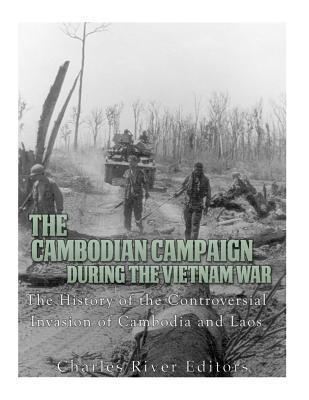
The Cambodian Campaign during the Vietnam War: The History of the Controversial Invasion of Cambodia and Laos
*Includes pictures *Includes excerpts of accounts of the fighting by soldiers *Includes online resources and a bibliography for further reading "When elephants fight, ants should stand aside." - Norodom Sihanouk, King of Cambodia, on the Vietnam War The Vietnam War could have been called a comedy of errors if the consequences weren't so deadly and tragic. In 1951, while war was raging in Korea, the United States began signing defense pacts with nations in the Pacific, intending to create alliances that would contain the spread of Communism. As the Korean War was winding down, America joined the Southeast Asia Treaty Organization, pledging to defend several nations in the region from Communist aggression. One of those nations was South Vietnam. By the end of 1967, with nearly half a million troops deployed, more than 19,000 deaths, and a war that cost $2 billion a month and seemed to grow bloodier by the day, the Johnson administration faced an increasingly impatient and skeptical nation. Early in 1968, a massive coordinated Viet Cong operation - the Tet Offensive - briefly paralyzed American and South Vietnamese forces across the country, threatening even the American embassy compound in Saigon. With this, the smiling mask slipped even further, inflaming the burgeoning antiwar movement. As the results of the Tet Offensive made clear, American forces were hamstrung by political constraints and a wide range of self-imposed limitations, and the United States struggled to deal with the greater strategic nimbleness of the North Vietnamese during the late 1960s. The tremendous power of the American military, blending technological strength and professional skill, gave the Americans the advantage in many, though of course not all, tactical encounters. On the strategic and operational level, however, the North Vietnamese held many of the trump cards. Constrained by a heavily defensive strategy, the U.S. found itself mostly forced to respond to the North's initiatives, and a reactive strategy placed even an extremely potent combatant at a severe disadvantage. The NVA and Viet Cong used this favorable situation to create numerous bases just across the Cambodian border from South Vietnam, enabling them to launch attacks and then retreat to their "neutral" refuge where the U.S. usually refused to authorize its troops to follow them. As U.S. Secretary of State Henry Kissinger said, "Washington had convinced itself that the four Indochinese states were separate enti
PRP: 86.34 Lei

Acesta este Prețul Recomandat de Producător. Prețul de vânzare al produsului este afișat mai jos.
77.71Lei
77.71Lei
86.34 LeiPrimești 77 puncte
Livrare in 2-4 saptamani
Descrierea produsului
*Includes pictures *Includes excerpts of accounts of the fighting by soldiers *Includes online resources and a bibliography for further reading "When elephants fight, ants should stand aside." - Norodom Sihanouk, King of Cambodia, on the Vietnam War The Vietnam War could have been called a comedy of errors if the consequences weren't so deadly and tragic. In 1951, while war was raging in Korea, the United States began signing defense pacts with nations in the Pacific, intending to create alliances that would contain the spread of Communism. As the Korean War was winding down, America joined the Southeast Asia Treaty Organization, pledging to defend several nations in the region from Communist aggression. One of those nations was South Vietnam. By the end of 1967, with nearly half a million troops deployed, more than 19,000 deaths, and a war that cost $2 billion a month and seemed to grow bloodier by the day, the Johnson administration faced an increasingly impatient and skeptical nation. Early in 1968, a massive coordinated Viet Cong operation - the Tet Offensive - briefly paralyzed American and South Vietnamese forces across the country, threatening even the American embassy compound in Saigon. With this, the smiling mask slipped even further, inflaming the burgeoning antiwar movement. As the results of the Tet Offensive made clear, American forces were hamstrung by political constraints and a wide range of self-imposed limitations, and the United States struggled to deal with the greater strategic nimbleness of the North Vietnamese during the late 1960s. The tremendous power of the American military, blending technological strength and professional skill, gave the Americans the advantage in many, though of course not all, tactical encounters. On the strategic and operational level, however, the North Vietnamese held many of the trump cards. Constrained by a heavily defensive strategy, the U.S. found itself mostly forced to respond to the North's initiatives, and a reactive strategy placed even an extremely potent combatant at a severe disadvantage. The NVA and Viet Cong used this favorable situation to create numerous bases just across the Cambodian border from South Vietnam, enabling them to launch attacks and then retreat to their "neutral" refuge where the U.S. usually refused to authorize its troops to follow them. As U.S. Secretary of State Henry Kissinger said, "Washington had convinced itself that the four Indochinese states were separate enti
Detaliile produsului



