





The Electric Vehicle: Technology and Expectations in the Automobile Age
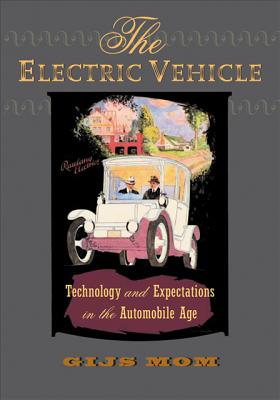
The Electric Vehicle: Technology and Expectations in the Automobile Age
Winner of the Engineer-Historian Award from the International History and Heritage Committee of the American Society of Mechanical Engineers, and the Nicholas-Joseph Cugnot Award given by the Society of Automotive HistoriansRecent attention to hybrid cars that run on both gasoline and electric batteries has made the electric car an apparent alternative to the internal combustion engine and its attendant environmental costs and geopolitical implications. Few people realize that the electric car--neither a recent invention nor a historical curiosity--has a story as old as that of the gasoline-powered automobile, and that at one time many in the nascent automobile industry believed battery-powered engines would become the dominant technology. In both Europe and America, electric cars and trucks succeeded in meeting the needs of a wide range of consumers. Before World War II, as many as 30,000 electric cars and more than 10,000 electric trucks plied American roads; European cities were busy with, electrically propelled fire engines, taxis, delivery vans, buses, heavy trucks and private cars. Even so, throughout the century-long history of electric propulsion, the widespread conviction it was an inferior technology remained stubbornly in place, an assumption mirrored in popular and scholarly memory. In The Electric Vehicle, Gijs Mom challenges this view, arguing that at the beginning of the automobile age neither the internal combustion engine nor the battery-powered vehicle enjoyed a clear advantage. He explores the technology and marketing/consumer-ratio faction relationship over four "generations" of electric-vehicle design, with separate chapters on privately owned passenger cars and commercial vehicles. Mom makes comparisons among European countries and between Europe and America.He finds that the electric vehicle offered many advantages, among them greater reliability and control, less noise and pollution. He also argues that a nexus of factors--cultural (underpowered and less rugged, electric cars seemed "feminine" at a time when most car buyers were men), structural (the shortcomings of battery technology at the time), and systemic (the infrastructural problems of changing large numbers of batteries)--ultimately gave an edge to the internal combustion engine. One hopes, as a new generation of electric vehicles becomes a reality, The Electric Vehicle offers a long-overdue reassessment of the place of this technology in the history of street transport
PRP: 283.50 Lei

Acesta este Prețul Recomandat de Producător. Prețul de vânzare al produsului este afișat mai jos.
255.15Lei
255.15Lei
283.50 LeiPrimești 255 puncte
Livrare in 2-4 saptamani
Descrierea produsului
Winner of the Engineer-Historian Award from the International History and Heritage Committee of the American Society of Mechanical Engineers, and the Nicholas-Joseph Cugnot Award given by the Society of Automotive HistoriansRecent attention to hybrid cars that run on both gasoline and electric batteries has made the electric car an apparent alternative to the internal combustion engine and its attendant environmental costs and geopolitical implications. Few people realize that the electric car--neither a recent invention nor a historical curiosity--has a story as old as that of the gasoline-powered automobile, and that at one time many in the nascent automobile industry believed battery-powered engines would become the dominant technology. In both Europe and America, electric cars and trucks succeeded in meeting the needs of a wide range of consumers. Before World War II, as many as 30,000 electric cars and more than 10,000 electric trucks plied American roads; European cities were busy with, electrically propelled fire engines, taxis, delivery vans, buses, heavy trucks and private cars. Even so, throughout the century-long history of electric propulsion, the widespread conviction it was an inferior technology remained stubbornly in place, an assumption mirrored in popular and scholarly memory. In The Electric Vehicle, Gijs Mom challenges this view, arguing that at the beginning of the automobile age neither the internal combustion engine nor the battery-powered vehicle enjoyed a clear advantage. He explores the technology and marketing/consumer-ratio faction relationship over four "generations" of electric-vehicle design, with separate chapters on privately owned passenger cars and commercial vehicles. Mom makes comparisons among European countries and between Europe and America.He finds that the electric vehicle offered many advantages, among them greater reliability and control, less noise and pollution. He also argues that a nexus of factors--cultural (underpowered and less rugged, electric cars seemed "feminine" at a time when most car buyers were men), structural (the shortcomings of battery technology at the time), and systemic (the infrastructural problems of changing large numbers of batteries)--ultimately gave an edge to the internal combustion engine. One hopes, as a new generation of electric vehicles becomes a reality, The Electric Vehicle offers a long-overdue reassessment of the place of this technology in the history of street transport
Detaliile produsului



