






The End of Family Court: How Abolishing the Court Brings Justice to Children and Families
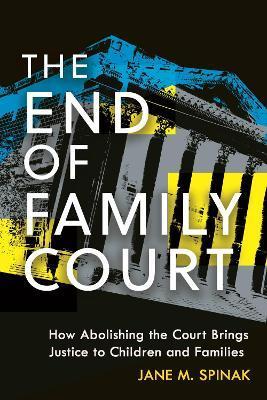
The End of Family Court: How Abolishing the Court Brings Justice to Children and Families
Explores the failures of family court and calls for immediate and permanent change
At the turn of the twentieth century, American social reformers created the first juvenile court. They imagined a therapeutic court where informality, specially trained public servants, and a kindly, all-knowing judge would assist children and families. But the dream of a benevolent means of judicial problem-solving was never realized. A century later, children and families continue to be failed by this deeply flawed court. The End of Family Court rejects the foundational premise that family court can do good when intervening in family life and challenges its endless reinvention to survive. Jane M. Spinak illustrates how the procedures and policies of modern family court are deeply entwined in a heritage of racism, a profound disdain for poverty, and assimilationist norms intent on fixing children and families who are different. And the court's interventionist goals remain steeped in an approach to equity and well-being that demands individual rather than collective responsibility for the security and welfare of families. Spinak proposes concrete steps toward abolishing the court: shifting most family supports out of the court's sphere, vastly reducing the types and number of matters that need court intervention, and ensuring that any case that requires legal adjudication has the due process protections of a court of law. She calls for strategies that center trusting and respecting the abilities of communities to create and sustain meaningful solutions for families. An abolitionist approach, in turn, celebrates a radical imagination that embraces and supports all families in a fair and equal economic and political democracy.PRP: 343.58 Lei

Acesta este Prețul Recomandat de Producător. Prețul de vânzare al produsului este afișat mai jos.
309.22Lei
309.22Lei
343.58 LeiPrimești 309 puncte

Indisponibil
Descrierea produsului
Explores the failures of family court and calls for immediate and permanent change
At the turn of the twentieth century, American social reformers created the first juvenile court. They imagined a therapeutic court where informality, specially trained public servants, and a kindly, all-knowing judge would assist children and families. But the dream of a benevolent means of judicial problem-solving was never realized. A century later, children and families continue to be failed by this deeply flawed court. The End of Family Court rejects the foundational premise that family court can do good when intervening in family life and challenges its endless reinvention to survive. Jane M. Spinak illustrates how the procedures and policies of modern family court are deeply entwined in a heritage of racism, a profound disdain for poverty, and assimilationist norms intent on fixing children and families who are different. And the court's interventionist goals remain steeped in an approach to equity and well-being that demands individual rather than collective responsibility for the security and welfare of families. Spinak proposes concrete steps toward abolishing the court: shifting most family supports out of the court's sphere, vastly reducing the types and number of matters that need court intervention, and ensuring that any case that requires legal adjudication has the due process protections of a court of law. She calls for strategies that center trusting and respecting the abilities of communities to create and sustain meaningful solutions for families. An abolitionist approach, in turn, celebrates a radical imagination that embraces and supports all families in a fair and equal economic and political democracy.Detaliile produsului




