





The Fearless Benjamin Lay: The Quaker Dwarf Who Became the First Revolutionary Abolitionist with a New Preface
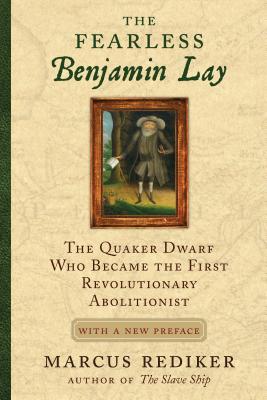
The Fearless Benjamin Lay: The Quaker Dwarf Who Became the First Revolutionary Abolitionist with a New Preface
The little-known story of an eighteenth-century Quaker dwarf who fiercely attacked slavery and imagined a new, more humane way of life In The Fearless Benjamin Lay, renowned historian Marcus Rediker chronicles the transatlantic life and times of a singular man--a Quaker dwarf who demanded the total, unconditional emancipation of all enslaved Africans around the world. Mocked and scorned by his contemporaries, Lay was unflinching in his opposition to slavery, often performing colorful guerrilla theater to shame slave masters, insisting that human bondage violated the fundamental principles of Christianity. He drew on his ideals to create a revolutionary way of life, one that embodied the proclamation "no justice, no peace." Lay was born in 1682 in Essex, England. His philosophies, employments, and places of residence--spanning England, Barbados, Philadelphia, and the open seas--were markedly diverse over the course of his life. He worked as a shepherd, glove maker, sailor, and bookseller. His worldview was an astonishing combination of Quakerism, vegetarianism, animal rights, opposition to the death penalty, and abolitionism. While in Abington, Philadelphia, Lay lived in a cave-like dwelling surrounded by a library of two hundred books, and it was in this unconventional abode where he penned a fiery and controversial book against bondage, which Benjamin Franklin published in 1738. Always in motion and ever confrontational, Lay maintained throughout his life a steadfast opposition to slavery and a fierce determination to make his fellow Quakers denounce it, which they finally began to do toward the end of his life. With passion and historical rigor, Rediker situates Lay as a man who fervently embodied the ideals of democracy and equality as he practiced a unique concoction of radicalism nearly three hundred years ago. Rediker resurrects this forceful and prescient visionary, who speaks to us across the ages and whose innovative approach to activism is a gift, transforming how we consider the past and how we might imagine the future.
PRP: 136.00 Lei

Acesta este Prețul Recomandat de Producător. Prețul de vânzare al produsului este afișat mai jos.
122.40Lei
122.40Lei
136.00 LeiPrimești 122 puncte
Indisponibil
Descrierea produsului
The little-known story of an eighteenth-century Quaker dwarf who fiercely attacked slavery and imagined a new, more humane way of life In The Fearless Benjamin Lay, renowned historian Marcus Rediker chronicles the transatlantic life and times of a singular man--a Quaker dwarf who demanded the total, unconditional emancipation of all enslaved Africans around the world. Mocked and scorned by his contemporaries, Lay was unflinching in his opposition to slavery, often performing colorful guerrilla theater to shame slave masters, insisting that human bondage violated the fundamental principles of Christianity. He drew on his ideals to create a revolutionary way of life, one that embodied the proclamation "no justice, no peace." Lay was born in 1682 in Essex, England. His philosophies, employments, and places of residence--spanning England, Barbados, Philadelphia, and the open seas--were markedly diverse over the course of his life. He worked as a shepherd, glove maker, sailor, and bookseller. His worldview was an astonishing combination of Quakerism, vegetarianism, animal rights, opposition to the death penalty, and abolitionism. While in Abington, Philadelphia, Lay lived in a cave-like dwelling surrounded by a library of two hundred books, and it was in this unconventional abode where he penned a fiery and controversial book against bondage, which Benjamin Franklin published in 1738. Always in motion and ever confrontational, Lay maintained throughout his life a steadfast opposition to slavery and a fierce determination to make his fellow Quakers denounce it, which they finally began to do toward the end of his life. With passion and historical rigor, Rediker situates Lay as a man who fervently embodied the ideals of democracy and equality as he practiced a unique concoction of radicalism nearly three hundred years ago. Rediker resurrects this forceful and prescient visionary, who speaks to us across the ages and whose innovative approach to activism is a gift, transforming how we consider the past and how we might imagine the future.
Detaliile produsului



