





The Identity of Man
The Identity of Man
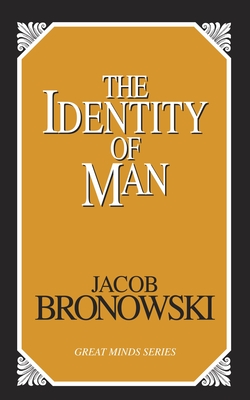
Science has called into question many traditional assumptions about human nature. In the age of the human genome project, this truism is even more obvious than it was in 1965, when scientist and historian of ideas Jacob Bronowski first delivered the lectures upon which this book is based. Has science revealed that we are essentially just complex machines? Or is human identity more than the sum of its parts? With his gift for conveying the excitement of ideas, Bronowski discusses the impact of science on our sense of self and the need to re-evaluate ethics in light of the scientific perspective. As both a practicing scientist and an author of books on poetry, he makes interesting connections between the uses of the imagination in science and in literature. Whereas science creates experiments to test hypotheses about the outside world, literature provides experiments in poetry and prose, allowing readers to experience what it means to be fully human and relating the individual's inner life to that of every human being. In the quest for understanding, science discovers the facts about reality while art depicts the truth of human experience. Bronowski argues that a true humanistic philosophy must give equal place to the inner, subjective vision of the arts and the outer, objective perspective of science since they are both products of one self-conscious creative imagination. In the final analysis, he emphasizes that these perspectives converge in revealing a more enlightened, universal ethics, one that fosters tolerance, mutual understanding, an appreciation of differences, and a sense that we all share a common destiny as human participants in nature's cosmic drama.
Science has called into question many traditional assumptions about human nature. In the age of the human genome project, this truism is even more obvious than it was in 1965, when scientist and historian of ideas Jacob Bronowski first delivered the lectures upon which this book is based. Has science revealed that we are essentially just complex machines? Or is human identity more than the sum of its parts?With his gift for conveying the excitement of ideas, Bronowski discusses the impact of science on our sense of self and the need to re-evaluate ethics in light of the scientific perspective. As both a practicing scientist and an author of books on poetry, he makes interesting connections between the uses of the imagination in science and in literature. Whereas science creates experiments to t
Science has called into question many traditional assumptions about human nature. In the age of the human genome project, this truism is even more obvious than it was in 1965, when scientist and historian of ideas Jacob Bronowski first delivered the lectures upon which this book is based. Has science revealed that we are essentially just complex machines? Or is human identity more than the sum of its parts?With his gift for conveying the excitement of ideas, Bronowski discusses the impact of science on our sense of self and the need to re-evaluate ethics in light of the scientific perspective. As both a practicing scientist and an author of books on poetry, he makes interesting connections between the uses of the imagination in science and in literature. Whereas science creates experiments to t
PRP: 105.75 Lei

Acesta este Prețul Recomandat de Producător. Prețul de vânzare al produsului este afișat mai jos.
95.17Lei
95.17Lei
105.75 LeiPrimești 95 puncte
Livrare in 2-4 saptamani
Descrierea produsului
Science has called into question many traditional assumptions about human nature. In the age of the human genome project, this truism is even more obvious than it was in 1965, when scientist and historian of ideas Jacob Bronowski first delivered the lectures upon which this book is based. Has science revealed that we are essentially just complex machines? Or is human identity more than the sum of its parts? With his gift for conveying the excitement of ideas, Bronowski discusses the impact of science on our sense of self and the need to re-evaluate ethics in light of the scientific perspective. As both a practicing scientist and an author of books on poetry, he makes interesting connections between the uses of the imagination in science and in literature. Whereas science creates experiments to test hypotheses about the outside world, literature provides experiments in poetry and prose, allowing readers to experience what it means to be fully human and relating the individual's inner life to that of every human being. In the quest for understanding, science discovers the facts about reality while art depicts the truth of human experience. Bronowski argues that a true humanistic philosophy must give equal place to the inner, subjective vision of the arts and the outer, objective perspective of science since they are both products of one self-conscious creative imagination. In the final analysis, he emphasizes that these perspectives converge in revealing a more enlightened, universal ethics, one that fosters tolerance, mutual understanding, an appreciation of differences, and a sense that we all share a common destiny as human participants in nature's cosmic drama.
Science has called into question many traditional assumptions about human nature. In the age of the human genome project, this truism is even more obvious than it was in 1965, when scientist and historian of ideas Jacob Bronowski first delivered the lectures upon which this book is based. Has science revealed that we are essentially just complex machines? Or is human identity more than the sum of its parts?With his gift for conveying the excitement of ideas, Bronowski discusses the impact of science on our sense of self and the need to re-evaluate ethics in light of the scientific perspective. As both a practicing scientist and an author of books on poetry, he makes interesting connections between the uses of the imagination in science and in literature. Whereas science creates experiments to t
Science has called into question many traditional assumptions about human nature. In the age of the human genome project, this truism is even more obvious than it was in 1965, when scientist and historian of ideas Jacob Bronowski first delivered the lectures upon which this book is based. Has science revealed that we are essentially just complex machines? Or is human identity more than the sum of its parts?With his gift for conveying the excitement of ideas, Bronowski discusses the impact of science on our sense of self and the need to re-evaluate ethics in light of the scientific perspective. As both a practicing scientist and an author of books on poetry, he makes interesting connections between the uses of the imagination in science and in literature. Whereas science creates experiments to t
Detaliile produsului



