








The Reconquista: The History and Legacy of the Conflicts Between the Moors and Christians on the Iberian Peninsula
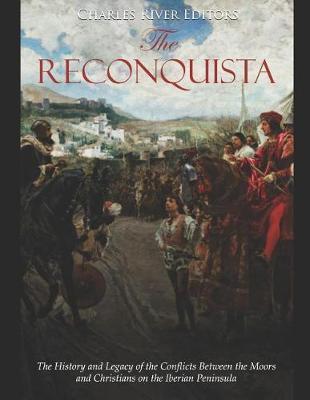
The Reconquista: The History and Legacy of the Conflicts Between the Moors and Christians on the Iberian Peninsula
*Includes pictures
*Includes medieval accounts
*Includes online resources and a bibliography for further reading
The term "Reconquista" is a Spanish word transferred to the English language to represent the nearly 800 years in which the Moors and Christians struggled against one another for control of the Iberian Peninsula. Although the phrase typically refers to the time when the numerous Christian kingdoms mobilized to overthrow the Islamic Caliphates set up in the peninsula, the term can additionally be used to refer to the entire situation starting in the 8th century, when Islamic civilization slowly moved out of North Africa, across the Mediterranean Sea, and into southern Iberia.
Not surprisingly, three religions attempting to coexist during medieval times resulted in nearly incessant conflicts, marked by high taxation, disparate societies, rigid cultural controls, and systemic violence. Despite the odds, these three religions managed to live in a state of quasi-acceptance and peace in most of the major cities like Cordoba and Toledo, with sporadic warfare occurring on the borders between Al-Andalus and the Christian kingdoms near the Pyrenees Mountains. Muslims, Christians, and Jews would attempt to reorganize their societies several times over the centuries through warfare, always with Jews on the lower rungs and Christians and Muslims fighting it out above them.
Though it's often forgotten today, the fighting that took place during the Reconquista was not originally driven by religion. Instead, the majority of the battles were fought by ambitious rulers who sought territorial expansion, like many other civilizations during the Middle Ages. In fact, the Reconquista would not gain its unique religious flavor until the 13th century, when the territories that would become Castile and Aragon drummed up religious fervor to achieve its aims and gained papal support from Rome.
After the Reconquista officially ended, the anger, bitterness, and resentment fostered by the fighting resulted in further warfare as the newly created Christian kingdoms of Spain and Portugal continued their fight by chasing after and conquering Muslim territories and civilizations in Africa. Another byproduct of the Reconquista was the notorious Spanish Inquisition, and Ferdinand and Isabella's choice to expel the Jews had dire consequences not only for the Jewish population but for Spain as well. The country's economy suffered after the expulsion, as the c
PRP: 86.34 Lei

Acesta este Prețul Recomandat de Producător. Prețul de vânzare al produsului este afișat mai jos.
77.71Lei
77.71Lei
86.34 LeiPrimești 77 puncte

Indisponibil
Descrierea produsului
*Includes pictures
*Includes medieval accounts
*Includes online resources and a bibliography for further reading
The term "Reconquista" is a Spanish word transferred to the English language to represent the nearly 800 years in which the Moors and Christians struggled against one another for control of the Iberian Peninsula. Although the phrase typically refers to the time when the numerous Christian kingdoms mobilized to overthrow the Islamic Caliphates set up in the peninsula, the term can additionally be used to refer to the entire situation starting in the 8th century, when Islamic civilization slowly moved out of North Africa, across the Mediterranean Sea, and into southern Iberia.
Not surprisingly, three religions attempting to coexist during medieval times resulted in nearly incessant conflicts, marked by high taxation, disparate societies, rigid cultural controls, and systemic violence. Despite the odds, these three religions managed to live in a state of quasi-acceptance and peace in most of the major cities like Cordoba and Toledo, with sporadic warfare occurring on the borders between Al-Andalus and the Christian kingdoms near the Pyrenees Mountains. Muslims, Christians, and Jews would attempt to reorganize their societies several times over the centuries through warfare, always with Jews on the lower rungs and Christians and Muslims fighting it out above them.
Though it's often forgotten today, the fighting that took place during the Reconquista was not originally driven by religion. Instead, the majority of the battles were fought by ambitious rulers who sought territorial expansion, like many other civilizations during the Middle Ages. In fact, the Reconquista would not gain its unique religious flavor until the 13th century, when the territories that would become Castile and Aragon drummed up religious fervor to achieve its aims and gained papal support from Rome.
After the Reconquista officially ended, the anger, bitterness, and resentment fostered by the fighting resulted in further warfare as the newly created Christian kingdoms of Spain and Portugal continued their fight by chasing after and conquering Muslim territories and civilizations in Africa. Another byproduct of the Reconquista was the notorious Spanish Inquisition, and Ferdinand and Isabella's choice to expel the Jews had dire consequences not only for the Jewish population but for Spain as well. The country's economy suffered after the expulsion, as the c
Detaliile produsului