








The Roman Pantheon: The History and Legacy of Rome's Famous Landmark
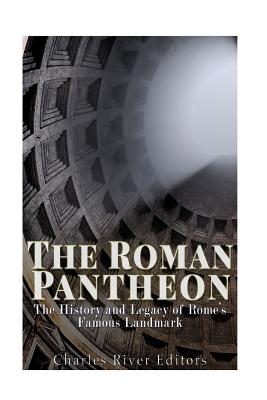
The Roman Pantheon: The History and Legacy of Rome's Famous Landmark
*Includes pictures *Includes historic descriptions of the Pantheon over the last two millennia *Profiles theories regarding the construction and purpose of the Pantheon *Includes online resources, footnotes, and a bibliography for further reading *Includes a table of contents "Of the whole mighty fabric of his productions, more lasting than himself, whereby man establishes the identity of his species in all ages, there is none more principal stone than the Pantheon of Rome." - R.H. Busk, 19th century Pantheon scholar From as early as the 3rd century BCE, the Romans were prodigious monument builders, so much so that the memory of the great Roman Republic and the Roman Empire continues to exist within a cityscape of stone. Rome's public spaces were filled with statues, arches, temples, and many other varieties of monumental images, and each of these structures had its own civic or religious function. At the same time, most were embedded with stories, messages, and symbolism so that they also tended to function as propaganda. These monuments allowed the leading citizens of Rome, especially its emperors, to sculpt their own self-image and embed themselves and their most memorable deeds into the very structure of the Roman city. As the most completely preserved building of the Imperial Roman capital, the Pantheon represents the peak of Imperial monument building at Rome. It is no coincidence that the Pantheon was built during the zenith of the Roman empire's power and wealth; as with most civilizations, this period of exceptional commercial and political activity was symbolized by large-scale building. In this respect, the Pantheon is a visual symbol of the greatness of the Roman Empire, and as such, it captivates all who have been privileged enough to behold it. Michelangelo declared the building to be of "angelic and not human design," while Goethe claimed to be "overwhelmed with admiration" for the structure. While the sublime nature of the Pantheon's design has always been readily apparent, no one has ever been able to figure out exactly what the structure was supposed to mean or even how it was built. Stepping into the Pantheon's soaring, curved interior is itself enough to make anyone feel insignificant by comparison, and this feeling is only reinforced by the elusiveness of its meaning and design. In a sense, however, the fact that the Pantheon seems doomed to be forever shrouded in mystery only serves to enhance its captivating beauty. The Roman Pan
PRP: 79.36 Lei

Acesta este Prețul Recomandat de Producător. Prețul de vânzare al produsului este afișat mai jos.
63.49Lei
63.49Lei
79.36 LeiPrimești 63 puncte

Livrare in 2-4 saptamani
Descrierea produsului
*Includes pictures *Includes historic descriptions of the Pantheon over the last two millennia *Profiles theories regarding the construction and purpose of the Pantheon *Includes online resources, footnotes, and a bibliography for further reading *Includes a table of contents "Of the whole mighty fabric of his productions, more lasting than himself, whereby man establishes the identity of his species in all ages, there is none more principal stone than the Pantheon of Rome." - R.H. Busk, 19th century Pantheon scholar From as early as the 3rd century BCE, the Romans were prodigious monument builders, so much so that the memory of the great Roman Republic and the Roman Empire continues to exist within a cityscape of stone. Rome's public spaces were filled with statues, arches, temples, and many other varieties of monumental images, and each of these structures had its own civic or religious function. At the same time, most were embedded with stories, messages, and symbolism so that they also tended to function as propaganda. These monuments allowed the leading citizens of Rome, especially its emperors, to sculpt their own self-image and embed themselves and their most memorable deeds into the very structure of the Roman city. As the most completely preserved building of the Imperial Roman capital, the Pantheon represents the peak of Imperial monument building at Rome. It is no coincidence that the Pantheon was built during the zenith of the Roman empire's power and wealth; as with most civilizations, this period of exceptional commercial and political activity was symbolized by large-scale building. In this respect, the Pantheon is a visual symbol of the greatness of the Roman Empire, and as such, it captivates all who have been privileged enough to behold it. Michelangelo declared the building to be of "angelic and not human design," while Goethe claimed to be "overwhelmed with admiration" for the structure. While the sublime nature of the Pantheon's design has always been readily apparent, no one has ever been able to figure out exactly what the structure was supposed to mean or even how it was built. Stepping into the Pantheon's soaring, curved interior is itself enough to make anyone feel insignificant by comparison, and this feeling is only reinforced by the elusiveness of its meaning and design. In a sense, however, the fact that the Pantheon seems doomed to be forever shrouded in mystery only serves to enhance its captivating beauty. The Roman Pan
Detaliile produsului




