



- /
- Librarie online
- /
- Carti in engleza
- /
- Social Science
- /
- Slavery
- /
- The Science of Abolition: How Slaveholders Became the Enemies of Progress - Eric Herschthal
The Science of Abolition: How Slaveholders Became the Enemies of Progress
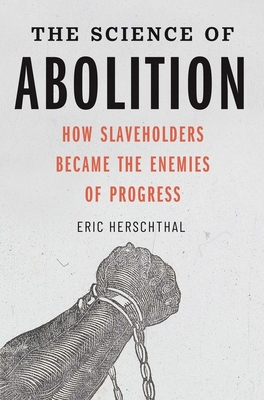
The Science of Abolition: How Slaveholders Became the Enemies of Progress
A revealing look at how antislavery scientists and Black and white abolitionists used scientific ideas to discredit slaveholders In the context of slavery, science is usually associated with slaveholders' scientific justifications of racism. But abolitionists were equally adept at using scientific ideas to discredit slaveholders. Looking beyond the science of race, The Science of Abolition shows how Black and white scientists and abolitionists drew upon a host of scientific disciplines--from chemistry, botany, and geology, to medicine and technology--to portray slaveholders as the enemies of progress. From the 1770s through the 1860s, scientists and abolitionists in Britain and the United States argued that slavery stood in the way of scientific progress, blinded slaveholders to scientific evidence, and prevented enslavers from adopting labor-saving technologies that might eradicate enslaved labor. While historians increasingly highlight slavery's centrality to the modern world, fueling the rise of capitalism, science, and technology, few have asked where the myth of slavery's backwardness comes from in the first place. This book contends that by routinely portraying slaveholders as the enemies of science, abolitionists and scientists helped generate that myth.
A revealing look at how antislavery scientists and Black and white abolitionists used scientific ideas to discredit slaveholders "While recent historical literature has shown the complicity of the early science of man in the defense of slavery, Herschthal unearths an equally long intellectual tradition of antislavery science. This innovative book is timely, when science itself is under assault."--Manisha Sinha, author of The Slave's Cause: A History of Abolition In the context of slavery, science is usually associated with slaveholders' scientific justifications of racism. But abolitionists were equally adept at using scientific ideas to discredit slaveholders. Looking beyond the science of race, The Science of Abolition shows how Black and white scientists and abolitionists drew upon a host of scientific disciplines--from chemistry, botany, and geology, to medicine and technology--to portray slaveholders as the enemies of progress. From the 1770s through the 1860s, scientists and abolitionists in Britain and the United States argued that slavery stood in the way of scientific progress, blinded slaveholders to scientific evidence, and prevented enslavers from adopting labor-saving techno
PRP: 294.67 Lei

Acesta este Prețul Recomandat de Producător. Prețul de vânzare al produsului este afișat mai jos.
265.20Lei
265.20Lei
294.67 LeiPrimești 265 puncte

Indisponibil
Descrierea produsului
A revealing look at how antislavery scientists and Black and white abolitionists used scientific ideas to discredit slaveholders In the context of slavery, science is usually associated with slaveholders' scientific justifications of racism. But abolitionists were equally adept at using scientific ideas to discredit slaveholders. Looking beyond the science of race, The Science of Abolition shows how Black and white scientists and abolitionists drew upon a host of scientific disciplines--from chemistry, botany, and geology, to medicine and technology--to portray slaveholders as the enemies of progress. From the 1770s through the 1860s, scientists and abolitionists in Britain and the United States argued that slavery stood in the way of scientific progress, blinded slaveholders to scientific evidence, and prevented enslavers from adopting labor-saving technologies that might eradicate enslaved labor. While historians increasingly highlight slavery's centrality to the modern world, fueling the rise of capitalism, science, and technology, few have asked where the myth of slavery's backwardness comes from in the first place. This book contends that by routinely portraying slaveholders as the enemies of science, abolitionists and scientists helped generate that myth.
A revealing look at how antislavery scientists and Black and white abolitionists used scientific ideas to discredit slaveholders "While recent historical literature has shown the complicity of the early science of man in the defense of slavery, Herschthal unearths an equally long intellectual tradition of antislavery science. This innovative book is timely, when science itself is under assault."--Manisha Sinha, author of The Slave's Cause: A History of Abolition In the context of slavery, science is usually associated with slaveholders' scientific justifications of racism. But abolitionists were equally adept at using scientific ideas to discredit slaveholders. Looking beyond the science of race, The Science of Abolition shows how Black and white scientists and abolitionists drew upon a host of scientific disciplines--from chemistry, botany, and geology, to medicine and technology--to portray slaveholders as the enemies of progress. From the 1770s through the 1860s, scientists and abolitionists in Britain and the United States argued that slavery stood in the way of scientific progress, blinded slaveholders to scientific evidence, and prevented enslavers from adopting labor-saving techno
Detaliile produsului