








The Workfare State: Public Assistance Politics from the New Deal to the New Democrats
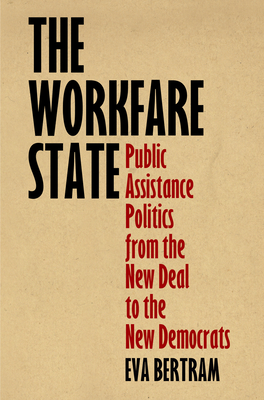
In the Great Recession of 2007-2009, the United States suffered the most sustained and extensive wave of job destruction since the Great Depression. When families in need sought help from the safety net, however, they found themselves trapped in a system that increasingly tied public assistance to private employment. In The Workfare State, Eva Bertram recounts the compelling history of the evolving social contract from the New Deal to the present to show how a need-based entitlement was replaced with a work-conditioned safety net, heightening the economic vulnerability of many poor families.
The Workfare State challenges the conventional understanding of the development of modern public assistance policy. New Deal and Great Society Democrats expanded federal assistance from the 1930s to the 1960s, according to the standard account. After the 1980 election, the tide turned and Republicans ushered in a new conservative era in welfare politics. Bertram argues that the decisive political struggles took place in the 1960s and 1970s, when Southern Democrats in Congress sought to redefine the purposes of public assistance in ways that would preserve their region's political, economic, and racial order. She tells the story of how the South--the region with the nation's highest levels of poverty and inequality and least generous social welfare policies--won the fight to rewrite America's antipoverty policy in the decades between the Great Society and the 1996 welfare reform. Their successes provided the foundation for leaders in both parties to build the contemporary workfare state--just as deindustrialization and global economic competition made low-wage jobs less effective at providing income security and mobility.PRP: 270.86 Lei

Acesta este Prețul Recomandat de Producător. Prețul de vânzare al produsului este afișat mai jos.
243.77Lei
243.77Lei
270.86 LeiPrimești 243 puncte

Indisponibil
Descrierea produsului
In the Great Recession of 2007-2009, the United States suffered the most sustained and extensive wave of job destruction since the Great Depression. When families in need sought help from the safety net, however, they found themselves trapped in a system that increasingly tied public assistance to private employment. In The Workfare State, Eva Bertram recounts the compelling history of the evolving social contract from the New Deal to the present to show how a need-based entitlement was replaced with a work-conditioned safety net, heightening the economic vulnerability of many poor families.
The Workfare State challenges the conventional understanding of the development of modern public assistance policy. New Deal and Great Society Democrats expanded federal assistance from the 1930s to the 1960s, according to the standard account. After the 1980 election, the tide turned and Republicans ushered in a new conservative era in welfare politics. Bertram argues that the decisive political struggles took place in the 1960s and 1970s, when Southern Democrats in Congress sought to redefine the purposes of public assistance in ways that would preserve their region's political, economic, and racial order. She tells the story of how the South--the region with the nation's highest levels of poverty and inequality and least generous social welfare policies--won the fight to rewrite America's antipoverty policy in the decades between the Great Society and the 1996 welfare reform. Their successes provided the foundation for leaders in both parties to build the contemporary workfare state--just as deindustrialization and global economic competition made low-wage jobs less effective at providing income security and mobility.Detaliile produsului




