








The World from 1000 Bce to 300 Ce
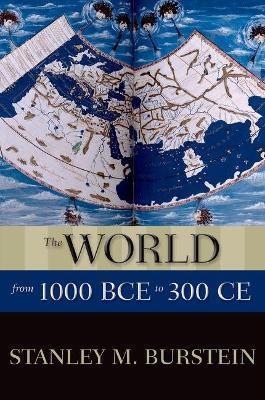
The World from 1000 Bce to 300 Ce
This book provides the first comprehensive history of Afro-Eurasia during the first millennium BCE and the beginning of the first millennium CE. The history of these 1300 plus years can be summed up in one word: connectivity. The growth in connectivity during this period was marked by increasing political, economic, and cultural interaction throughout the region, and the replacement of the numerous political and cultural entities by a handful of great empires at the end of the period. In the process, local cultural traditions were replaced by great traditions rooted in lingua francas and spread by formalized educational systems.
This process began with the collapse of the Bronze Age empires in the east and west, widespread population movements, and almost chronic warfare throughout Afro-Eurasia, while the cavalry revolution transformed the nomads of the central Asian steppes into founders of tribal confederations assembled by charismatic leaders and covering huge territories. At the same time, new artistic and intellectual movements appeared, including the teachings of Socrates, Confucius, the Buddha, and Laozi. Increased literacy also allowed people from a wide range of social classes such as the Greek soldier Xenophon, the Indian Buddhist emperor Ashoka, the Roman emperor Marcus Aurelius, and elite women such as the poetess Sappho, the Christian martyr Perpetua, and the scholar Ban Zhao to create literary works. When the period ended in 300 CE, conditions had changed dramatically. Temperate Afro-Eurasia from the Atlantic to the Pacific was dominated by a handful of empires--Rome, Sassanid Persia, and Jin Empire-that ruled more than half the world's population, while an extensive network of trade routes bound them to Southeast and Central Asia and Sub-Saharan Africa and made possible the spread of new book based religions including Christianity, Manichaeism, Zoroastrianism, and Buddhism, thereby setting the stage for the next millennium of Afro-Eurasian history.
This process began with the collapse of the Bronze Age empires in the east and west, widespread population movements, and almost chronic warfare throughout Afro-Eurasia, while the cavalry revolution transformed the nomads of the central Asian steppes into founders of tribal confederations assembled by charismatic leaders and covering huge territories. At the same time, new artistic and intellectual movements appeared, including the teachings of Socrates, Confucius, the Buddha, and Laozi. Increased literacy also allowed people from a wide range of social classes such as the Greek soldier Xenophon, the Indian Buddhist emperor Ashoka, the Roman emperor Marcus Aurelius, and elite women such as the poetess Sappho, the Christian martyr Perpetua, and the scholar Ban Zhao to create literary works. When the period ended in 300 CE, conditions had changed dramatically. Temperate Afro-Eurasia from the Atlantic to the Pacific was dominated by a handful of empires--Rome, Sassanid Persia, and Jin Empire-that ruled more than half the world's population, while an extensive network of trade routes bound them to Southeast and Central Asia and Sub-Saharan Africa and made possible the spread of new book based religions including Christianity, Manichaeism, Zoroastrianism, and Buddhism, thereby setting the stage for the next millennium of Afro-Eurasian history.
PRP: 274.77 Lei

Acesta este Prețul Recomandat de Producător. Prețul de vânzare al produsului este afișat mai jos.
247.29Lei
247.29Lei
274.77 LeiPrimești 247 puncte

Indisponibil
Descrierea produsului
This book provides the first comprehensive history of Afro-Eurasia during the first millennium BCE and the beginning of the first millennium CE. The history of these 1300 plus years can be summed up in one word: connectivity. The growth in connectivity during this period was marked by increasing political, economic, and cultural interaction throughout the region, and the replacement of the numerous political and cultural entities by a handful of great empires at the end of the period. In the process, local cultural traditions were replaced by great traditions rooted in lingua francas and spread by formalized educational systems.
This process began with the collapse of the Bronze Age empires in the east and west, widespread population movements, and almost chronic warfare throughout Afro-Eurasia, while the cavalry revolution transformed the nomads of the central Asian steppes into founders of tribal confederations assembled by charismatic leaders and covering huge territories. At the same time, new artistic and intellectual movements appeared, including the teachings of Socrates, Confucius, the Buddha, and Laozi. Increased literacy also allowed people from a wide range of social classes such as the Greek soldier Xenophon, the Indian Buddhist emperor Ashoka, the Roman emperor Marcus Aurelius, and elite women such as the poetess Sappho, the Christian martyr Perpetua, and the scholar Ban Zhao to create literary works. When the period ended in 300 CE, conditions had changed dramatically. Temperate Afro-Eurasia from the Atlantic to the Pacific was dominated by a handful of empires--Rome, Sassanid Persia, and Jin Empire-that ruled more than half the world's population, while an extensive network of trade routes bound them to Southeast and Central Asia and Sub-Saharan Africa and made possible the spread of new book based religions including Christianity, Manichaeism, Zoroastrianism, and Buddhism, thereby setting the stage for the next millennium of Afro-Eurasian history.
This process began with the collapse of the Bronze Age empires in the east and west, widespread population movements, and almost chronic warfare throughout Afro-Eurasia, while the cavalry revolution transformed the nomads of the central Asian steppes into founders of tribal confederations assembled by charismatic leaders and covering huge territories. At the same time, new artistic and intellectual movements appeared, including the teachings of Socrates, Confucius, the Buddha, and Laozi. Increased literacy also allowed people from a wide range of social classes such as the Greek soldier Xenophon, the Indian Buddhist emperor Ashoka, the Roman emperor Marcus Aurelius, and elite women such as the poetess Sappho, the Christian martyr Perpetua, and the scholar Ban Zhao to create literary works. When the period ended in 300 CE, conditions had changed dramatically. Temperate Afro-Eurasia from the Atlantic to the Pacific was dominated by a handful of empires--Rome, Sassanid Persia, and Jin Empire-that ruled more than half the world's population, while an extensive network of trade routes bound them to Southeast and Central Asia and Sub-Saharan Africa and made possible the spread of new book based religions including Christianity, Manichaeism, Zoroastrianism, and Buddhism, thereby setting the stage for the next millennium of Afro-Eurasian history.
Detaliile produsului