





Theurgia: The Egyptian Mysteries
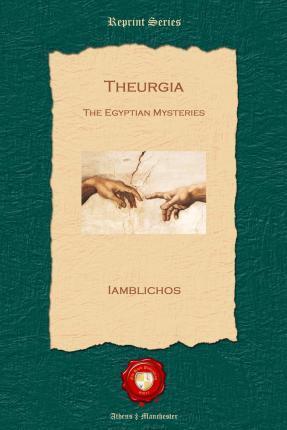
Theurgia: The Egyptian Mysteries
Iamblichos (245 A.D. - 325 A.D.) also known as Iamblichos Chalcidensis, was an Assyrian Neoplatonist philosopher who determined the direction taken by later Neoplatonic philosophy. He is perhaps best known for his compendium on Pythagorean philosophy. He was born at Chalcis (modern Ginnasrin) in Syria. He was the son of a rich and illustrious family, and he is said to have been the descendant of several priest-kings of royal family of Emesa. He initially studied under Anatolius of Laodicea, and later went on to study under Porphyry, a pupil of Plotinus, the founder of Neoplatonism. It was with Porphyry that he is known to have had a disagreement over the practice of theurgy, the criticisms of which Iamblichos responds to in his attributed De Mysteriis Aegyptiorum (on the Egyptian mysteries). Around 304 A.D., he returned to Syria to found his own school at Apameia (near Antioch), a city famous for its Neoplatonic philosophers where he designed a curriculum for studying Plato and Aristotle, and he wrote grand commentaries on them that survive only in fragments. Still, for Iamblichos, Pythagoras was the supreme authority. He is known to have written the Collection of Pythagorean Doctrines, which, in ten books, comprised extracts from several ancient philosophers. Only the first four books, and fragments of the fifth, survive. Iamblichos was the chief representative of Syrian Neoplatonism, though his influence spread over much of the ancient world. The events of his life and his religious beliefs are not entirely known, but the main tenets of his beliefs can be worked out from his extant writings. Iamblichos was said to have been a man of great culture and learning. He was also renowned for his charity and self-denial.
PRP: 195.69 Lei

Acesta este Prețul Recomandat de Producător. Prețul de vânzare al produsului este afișat mai jos.
176.12Lei
176.12Lei
195.69 LeiPrimești 176 puncte
Livrare in 2-4 saptamani
Descrierea produsului
Iamblichos (245 A.D. - 325 A.D.) also known as Iamblichos Chalcidensis, was an Assyrian Neoplatonist philosopher who determined the direction taken by later Neoplatonic philosophy. He is perhaps best known for his compendium on Pythagorean philosophy. He was born at Chalcis (modern Ginnasrin) in Syria. He was the son of a rich and illustrious family, and he is said to have been the descendant of several priest-kings of royal family of Emesa. He initially studied under Anatolius of Laodicea, and later went on to study under Porphyry, a pupil of Plotinus, the founder of Neoplatonism. It was with Porphyry that he is known to have had a disagreement over the practice of theurgy, the criticisms of which Iamblichos responds to in his attributed De Mysteriis Aegyptiorum (on the Egyptian mysteries). Around 304 A.D., he returned to Syria to found his own school at Apameia (near Antioch), a city famous for its Neoplatonic philosophers where he designed a curriculum for studying Plato and Aristotle, and he wrote grand commentaries on them that survive only in fragments. Still, for Iamblichos, Pythagoras was the supreme authority. He is known to have written the Collection of Pythagorean Doctrines, which, in ten books, comprised extracts from several ancient philosophers. Only the first four books, and fragments of the fifth, survive. Iamblichos was the chief representative of Syrian Neoplatonism, though his influence spread over much of the ancient world. The events of his life and his religious beliefs are not entirely known, but the main tenets of his beliefs can be worked out from his extant writings. Iamblichos was said to have been a man of great culture and learning. He was also renowned for his charity and self-denial.
Detaliile produsului



