





Tomorrow Perhaps the Future: Writers, Outsiders, and the Spanish Civil War
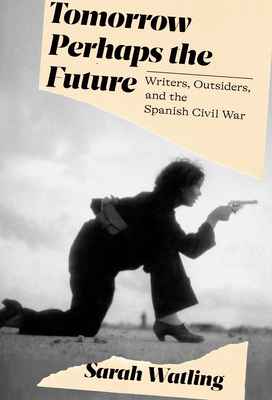
Tomorrow Perhaps the Future: Writers, Outsiders, and the Spanish Civil War
An extraordinary account of the women artists and activists whose determination to live--and to create--with courage and conviction took them as far as the Spanish Civil War "Now, as certainly as never before, we are determined or compelled, to take sides."
--Nancy Cunard An attempted insurrection, a country divided, a democracy threatened. It was the Spanish Civil War of 1936, surprisingly, that Sarah Watling found herself drawn to when confounded by the tumultuous politics of our present day. This was a conflict that galvanized tens of thousands of volunteers from around the world to join the fight. For them, the choice seemed clear: either you were for fascism or you were against it. Seeking to understand how they knew that the moment to act had arrived, Watling sifts through archives for lost journals, letters, and manifestos, discovering a trove of work by writers and outsiders who had often been relegated to the shadows of famous men like Ernest Hemingway and George Orwell. She encounters the rookie journalist Martha Gellhorn coming into her own in Spain and the radical writer Josephine Herbst questioning her political allegiances. She finds the novelist Sylvia Townsend Warner embracing a freedom in Barcelona that was impossible for queer women back at home in England and, by contrast, Virginia Woolf struggling to keep the war out of her life, honing her intellectual position as she did so. She tracks down the stories of Gerda Taro, a Jewish photographer whose work had long been misattributed, and Salaria Kea, a nurse from Harlem who saw the war as a chance to combat the prejudice she experienced as a woman of color. Here were individuals seizing an opportunity to oppose the forces that frightened them. From a variety of backgrounds and beliefs, these women saw history coming, and they went out to meet it. Yet the reality was far from simple. When does tolerance become apathy? Where is the line between solidarity and appropriation? Is writing about the revolution the same as actively participating in it? With profound, personal insight, Watling reveals that their answers are as relevant today as they were then.
PRP: 186.00 Lei

Acesta este Prețul Recomandat de Producător. Prețul de vânzare al produsului este afișat mai jos.
167.40Lei
167.40Lei
186.00 LeiPrimești 167 puncte
Livrare in 2-4 saptamani
Descrierea produsului
An extraordinary account of the women artists and activists whose determination to live--and to create--with courage and conviction took them as far as the Spanish Civil War "Now, as certainly as never before, we are determined or compelled, to take sides."
--Nancy Cunard An attempted insurrection, a country divided, a democracy threatened. It was the Spanish Civil War of 1936, surprisingly, that Sarah Watling found herself drawn to when confounded by the tumultuous politics of our present day. This was a conflict that galvanized tens of thousands of volunteers from around the world to join the fight. For them, the choice seemed clear: either you were for fascism or you were against it. Seeking to understand how they knew that the moment to act had arrived, Watling sifts through archives for lost journals, letters, and manifestos, discovering a trove of work by writers and outsiders who had often been relegated to the shadows of famous men like Ernest Hemingway and George Orwell. She encounters the rookie journalist Martha Gellhorn coming into her own in Spain and the radical writer Josephine Herbst questioning her political allegiances. She finds the novelist Sylvia Townsend Warner embracing a freedom in Barcelona that was impossible for queer women back at home in England and, by contrast, Virginia Woolf struggling to keep the war out of her life, honing her intellectual position as she did so. She tracks down the stories of Gerda Taro, a Jewish photographer whose work had long been misattributed, and Salaria Kea, a nurse from Harlem who saw the war as a chance to combat the prejudice she experienced as a woman of color. Here were individuals seizing an opportunity to oppose the forces that frightened them. From a variety of backgrounds and beliefs, these women saw history coming, and they went out to meet it. Yet the reality was far from simple. When does tolerance become apathy? Where is the line between solidarity and appropriation? Is writing about the revolution the same as actively participating in it? With profound, personal insight, Watling reveals that their answers are as relevant today as they were then.
Detaliile produsului



