







Traditional Islamic Ethics: The Concept of Virtue and its Implications for Contemporary Human Rights
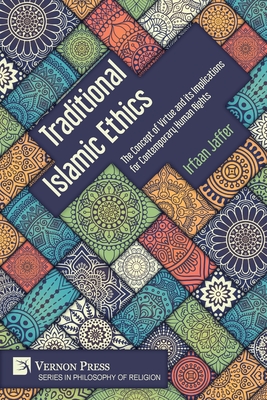
Traditional Islamic Ethics: The Concept of Virtue and its Implications for Contemporary Human Rights
"Traditional Islamic Ethics: The Concept of Virtue and its Implications for Human Rights" concentrates on the subject of Islam and modernity and Islam and human rights, a topic that has become popular and relevant with the rise of globalization and the interest in Islamic extremism and human rights. This book distinguishes itself by operating within the framework of the traditional school of thought or 'Islamic Traditionalism'. In doing so, it draws on Islam's 1400-year-old spiritual and intellectual tradition and its understanding of ethics and virtue, along with truth, justice, freedom, and equality. This book argues that Islam's pre-modern approach is indispensable in creating an organic and integral human rights model for Muslims.
The first section argues that the current understanding and implementation of international human rights needs to be more flexible and inclusive if it truly aims to be universal in scope; this is because 'The Universal Declaration' and its offshoots are still underpinned by secular-liberal principles, and therefore, are at odds with other cultural traditions. To this end, this section critically explores popular human rights histories and contemporary ethical theories that attempt to justify human rights. The second section of this book provides a general overview on the subject of 'Islam and Human Rights'. After explaining some of the main problems, this section examines various solutions offered by Muslim academics and scholars, focusing on four different types of Muslim responses to modernity and human rights: liberal, progressive, traditional, and fundamentalist. It concludes that there are 'spaces of convergence' between modern-liberal ethics and traditional Islamic virtue ethics while maintaining that there are also fundamental differences and that these differences should be welcomed by human rights theorists and advocates.
The book's intended audience is primarily post-graduate students and professional academics in the fields of Human Rights, Ethical Philosophy, and Islamic Studies (modern Islamic thought, Sufism, Islamic theology, Islamic Philosophy, and Traditionalism). It will also appeal to anyone interested in the subject of Islam and modernity in general and Islam and human rights in particular.
PRP: 347.20 Lei

Acesta este Prețul Recomandat de Producător. Prețul de vânzare al produsului este afișat mai jos.
312.48Lei
312.48Lei
347.20 LeiPrimești 312 puncte

Indisponibil
Descrierea produsului
"Traditional Islamic Ethics: The Concept of Virtue and its Implications for Human Rights" concentrates on the subject of Islam and modernity and Islam and human rights, a topic that has become popular and relevant with the rise of globalization and the interest in Islamic extremism and human rights. This book distinguishes itself by operating within the framework of the traditional school of thought or 'Islamic Traditionalism'. In doing so, it draws on Islam's 1400-year-old spiritual and intellectual tradition and its understanding of ethics and virtue, along with truth, justice, freedom, and equality. This book argues that Islam's pre-modern approach is indispensable in creating an organic and integral human rights model for Muslims.
The first section argues that the current understanding and implementation of international human rights needs to be more flexible and inclusive if it truly aims to be universal in scope; this is because 'The Universal Declaration' and its offshoots are still underpinned by secular-liberal principles, and therefore, are at odds with other cultural traditions. To this end, this section critically explores popular human rights histories and contemporary ethical theories that attempt to justify human rights. The second section of this book provides a general overview on the subject of 'Islam and Human Rights'. After explaining some of the main problems, this section examines various solutions offered by Muslim academics and scholars, focusing on four different types of Muslim responses to modernity and human rights: liberal, progressive, traditional, and fundamentalist. It concludes that there are 'spaces of convergence' between modern-liberal ethics and traditional Islamic virtue ethics while maintaining that there are also fundamental differences and that these differences should be welcomed by human rights theorists and advocates.
The book's intended audience is primarily post-graduate students and professional academics in the fields of Human Rights, Ethical Philosophy, and Islamic Studies (modern Islamic thought, Sufism, Islamic theology, Islamic Philosophy, and Traditionalism). It will also appeal to anyone interested in the subject of Islam and modernity in general and Islam and human rights in particular.
Detaliile produsului