






Washington's China: The National Security World, the Cold War, and the Origins of Globalism
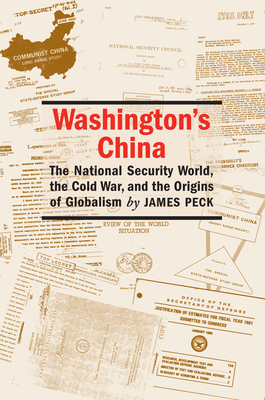
Washington's China: The National Security World, the Cold War, and the Origins of Globalism
This book addresses a central question about the Cold War that has never been adequately resolved. Why did the United States go to such lengths not merely to contain the People's Republic of China but to isolate it from all diplomatic, cultural, and economic ties to other nations? Why, in other words, was American policy more hostile to China than to the Soviet Union, at least until President Nixon visited China in 1972?The answer, as set out here, lies in the fear of China's emergence as a power capable of challenging the new Asian order the United States sought to shape in the wake of World War II. To meet this threat, American policymakers fashioned an ideology that was not simply or exclusively anticommunist, but one that aimed at creating an integrated, cooperative world capitalism under U.S. leadership--an ideology, in short, designed to outlive the Cold War.In building his argument, James Peck draws on a wide variety of little-known documents from the archives of the National Security Council and the CIA. He shows how American ofï¬ cials initially viewed China as a puppet of the Soviet Union, then as independent junior partner in a Sino-Soviet bloc, andï¬ nally as revolutionary model and sponsor of social upheaval in the Third World. Each of these constructs revealed more about U.S. perceptions and strategic priorities than about actual shifts in Chinese thought and conduct. All were based on the assumption that China posed a direct threat not just to speciï¬ c U.S. interests and objectives abroad but to the larger vision of a new global order dominated by American economic and military power. Although the nature of Washington's China may have changed over the years, Peck contends that the ideology behind it remains unchanged, even today.
PRP: 303.83 Lei

Acesta este Prețul Recomandat de Producător. Prețul de vânzare al produsului este afișat mai jos.
273.45Lei
273.45Lei
303.83 LeiPrimești 273 puncte

Indisponibil
Descrierea produsului
This book addresses a central question about the Cold War that has never been adequately resolved. Why did the United States go to such lengths not merely to contain the People's Republic of China but to isolate it from all diplomatic, cultural, and economic ties to other nations? Why, in other words, was American policy more hostile to China than to the Soviet Union, at least until President Nixon visited China in 1972?The answer, as set out here, lies in the fear of China's emergence as a power capable of challenging the new Asian order the United States sought to shape in the wake of World War II. To meet this threat, American policymakers fashioned an ideology that was not simply or exclusively anticommunist, but one that aimed at creating an integrated, cooperative world capitalism under U.S. leadership--an ideology, in short, designed to outlive the Cold War.In building his argument, James Peck draws on a wide variety of little-known documents from the archives of the National Security Council and the CIA. He shows how American ofï¬ cials initially viewed China as a puppet of the Soviet Union, then as independent junior partner in a Sino-Soviet bloc, andï¬ nally as revolutionary model and sponsor of social upheaval in the Third World. Each of these constructs revealed more about U.S. perceptions and strategic priorities than about actual shifts in Chinese thought and conduct. All were based on the assumption that China posed a direct threat not just to speciï¬ c U.S. interests and objectives abroad but to the larger vision of a new global order dominated by American economic and military power. Although the nature of Washington's China may have changed over the years, Peck contends that the ideology behind it remains unchanged, even today.
Detaliile produsului




