





When Numbers Don't Add Up: Accounting Fraud and Financial Technology
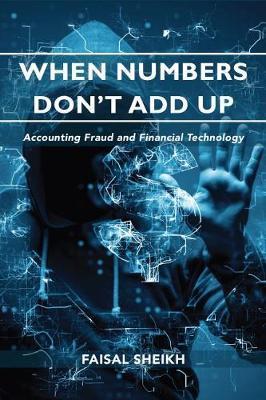
When Numbers Don't Add Up: Accounting Fraud and Financial Technology
The author contextualized the phenomenon of accounting fraud using a framework he developed called "Corporate Governance Cosmos." The book contains an extensive literature review including an evaluation of the seminal theory in this area, namely, the Fraud Triangle. There is a comprehensive exploration of the motivations for accounting fraud and a growing realization that Dark Triad (psychopathy, narcissism, and machiavellianism) tendencies may explain why executives engage in accounting fraud. The author expands an established framework entitled Cooks Recipes Incentives Monitoring End results (C R I M E) by Rezaee (2005), to ''C R I M E L'', where L is the "Learning" from 33 international case studies of accounting fraud.
Accountants, auditors, antifraud practitioners, and graduate students will find the case studies of accounting fraud particularly useful as it makes the phenomenon tangible and more understandable. The penultimate chapter is a study of the likely impact of financial technology on accounting fraud.
The author concludes by marshalling various insights including a brief discussion of ethics, forwarding his International Code of Ethics for Professional Accountants (IFAC) ''Ethical Triangle'', his vision for the future accountant, which he refers to as ''accounting engineers'', and an ancient prescription for the curse of accounting fraud.
PRP: 179.74 Lei

Acesta este Prețul Recomandat de Producător. Prețul de vânzare al produsului este afișat mai jos.
161.77Lei
161.77Lei
179.74 LeiPrimești 161 puncte
Livrare in 2-4 saptamani
Descrierea produsului
The author contextualized the phenomenon of accounting fraud using a framework he developed called "Corporate Governance Cosmos." The book contains an extensive literature review including an evaluation of the seminal theory in this area, namely, the Fraud Triangle. There is a comprehensive exploration of the motivations for accounting fraud and a growing realization that Dark Triad (psychopathy, narcissism, and machiavellianism) tendencies may explain why executives engage in accounting fraud. The author expands an established framework entitled Cooks Recipes Incentives Monitoring End results (C R I M E) by Rezaee (2005), to ''C R I M E L'', where L is the "Learning" from 33 international case studies of accounting fraud.
Accountants, auditors, antifraud practitioners, and graduate students will find the case studies of accounting fraud particularly useful as it makes the phenomenon tangible and more understandable. The penultimate chapter is a study of the likely impact of financial technology on accounting fraud.
The author concludes by marshalling various insights including a brief discussion of ethics, forwarding his International Code of Ethics for Professional Accountants (IFAC) ''Ethical Triangle'', his vision for the future accountant, which he refers to as ''accounting engineers'', and an ancient prescription for the curse of accounting fraud.
Detaliile produsului



