







Where a Hundred Soldiers Were Killed: The Struggle for the Powder River Country in 1866 and the Making of the Fetterman Myth
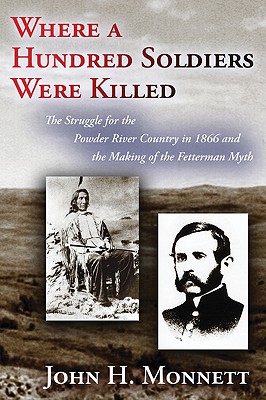
Where a Hundred Soldiers Were Killed: The Struggle for the Powder River Country in 1866 and the Making of the Fetterman Myth
The Powder River country of what is now north central Wyoming was one of the most resource-rich regions of the northern plains in the nineteenth century. As U.S. mining interests and white settlement to the north in Montana Territory increased, conflict arose between the United States and the Lakota and Cheyenne nations. On December 21, 1866, the struggle climaxed when a well-organized force of Lakota, Northern Cheyennes, and Arapahos attacked and destroyed a detachment of forty-nine infantrymen and three officers of the 18th Infantry, twenty-seven troopers of the 2nd Cavalry, and two civilians under the command of Captain William Judd Fetterman near Fort Phil Kearny. The Battle of Where a Hundred Soldiers Were Killed or Hundred in the Hand, as the event is still called, was the worst defeat the U.S. Army had suffered in the Great Plains, only to be exceeded by the Battle of Little Big Horn a decade later.
Because none of the soldiers lived to tell what happened, the Fetterman fight has fostered a body of myth and speculation. In this study, John H. Monnett provides a groundbreaking examination of the conflicts that ensued in the Powder River Country during the nineteenth century and clarifies events and personalities that have become distorted in the annals of Western history. Monnett examines military interests as well as the geopolitical importance of the area and takes into account the environmental history of the conflict as it relates to hunting ranges, vital wood and water resources, and access to trade avenues.
PRP: 185.69 Lei

Acesta este Prețul Recomandat de Producător. Prețul de vânzare al produsului este afișat mai jos.
167.12Lei
167.12Lei
185.69 LeiPrimești 167 puncte
Indisponibil
Descrierea produsului
The Powder River country of what is now north central Wyoming was one of the most resource-rich regions of the northern plains in the nineteenth century. As U.S. mining interests and white settlement to the north in Montana Territory increased, conflict arose between the United States and the Lakota and Cheyenne nations. On December 21, 1866, the struggle climaxed when a well-organized force of Lakota, Northern Cheyennes, and Arapahos attacked and destroyed a detachment of forty-nine infantrymen and three officers of the 18th Infantry, twenty-seven troopers of the 2nd Cavalry, and two civilians under the command of Captain William Judd Fetterman near Fort Phil Kearny. The Battle of Where a Hundred Soldiers Were Killed or Hundred in the Hand, as the event is still called, was the worst defeat the U.S. Army had suffered in the Great Plains, only to be exceeded by the Battle of Little Big Horn a decade later.
Because none of the soldiers lived to tell what happened, the Fetterman fight has fostered a body of myth and speculation. In this study, John H. Monnett provides a groundbreaking examination of the conflicts that ensued in the Powder River Country during the nineteenth century and clarifies events and personalities that have become distorted in the annals of Western history. Monnett examines military interests as well as the geopolitical importance of the area and takes into account the environmental history of the conflict as it relates to hunting ranges, vital wood and water resources, and access to trade avenues.
Detaliile produsului



