







Whose Body? A Lord Peter Wimsey Novel
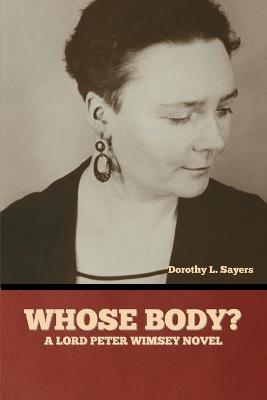
Whose Body? A Lord Peter Wimsey Novel
Whose Body? is a 1923 mystery novel by Dorothy L. Sayers. It was her debut novel, and the book in which she introduced the character of Lord Peter Wimsey.
In their review of crime novels (revised edn 1989), the US writers Barzun and Taylor call Whose Body? "a stunning first novel that disclosed the advent of a new star in the firmament, and one of the first magnitude. The episode of the bum in the bathtub, the character (and the name) of Sir Julian Freke, the detection, and the possibilities in Peter Wimsey are so many signs of genius about to erupt. Peter alone suffers from fatuousness overdone, a period fault that Sayers soon blotted out".
A. N. Wilson, writing in 1993, noted that "The publisher made [Sayers] tone the story down, but the plot depends on Lord Peter being clever enough to spot that the body, uncircumcised, is not that of a Jew". In the 1923 text, Parker says that the body in the bath could not be Sir Reuben Levy because "Sir Reuben is a pious Jew of pious parents, and the chap in the bath obviously isn't ..." Later versions replaced this with "But as a matter of fact, the man in the bath is no more Sir Reuben Levy than Adolf Beck, poor devil, was John Smith".
In her introduction to Hodder & Stoughton's 2016 reprint, Laura Wilson notes that Wimsey, conceived as a caricature of the gifted amateur sleuth, owes something to P. G. Wodehouse, whose Bertie Wooster had made his first appearance some years earlier. Sayers said of Wimsey that "at the time I was particularly hard up and it gave me pleasure to spend his fortune for him. When I was dissatisfied with my single unfurnished room I took a luxurious flat for him in Piccadilly. ... I can heartily recommend this inexpensive way of furnishing to all who are discontented with their incomes".
In his 2017 overview of the classic crime genre, Martin Edwards notes that Lord Peter Wimsey began his life as a fantasy figure, created "as a conscious act of escapism by young writer who was short of money and experiencing one unsatisfactory love affair after another". (wikipedia.org) About the author: Dorothy Leigh Sayers (13 June 1893 - 17 December 1957) was an English crime writer and poet. She was also a student of classical and modern languages.
She is best known for her mysteries, a series of novels and short stories set between the First and Second World Wars that feature English aristocrat and amateur sleuth Lord Peter Wimsey. As a crime writer during the "Golden Age of De
In their review of crime novels (revised edn 1989), the US writers Barzun and Taylor call Whose Body? "a stunning first novel that disclosed the advent of a new star in the firmament, and one of the first magnitude. The episode of the bum in the bathtub, the character (and the name) of Sir Julian Freke, the detection, and the possibilities in Peter Wimsey are so many signs of genius about to erupt. Peter alone suffers from fatuousness overdone, a period fault that Sayers soon blotted out".
A. N. Wilson, writing in 1993, noted that "The publisher made [Sayers] tone the story down, but the plot depends on Lord Peter being clever enough to spot that the body, uncircumcised, is not that of a Jew". In the 1923 text, Parker says that the body in the bath could not be Sir Reuben Levy because "Sir Reuben is a pious Jew of pious parents, and the chap in the bath obviously isn't ..." Later versions replaced this with "But as a matter of fact, the man in the bath is no more Sir Reuben Levy than Adolf Beck, poor devil, was John Smith".
In her introduction to Hodder & Stoughton's 2016 reprint, Laura Wilson notes that Wimsey, conceived as a caricature of the gifted amateur sleuth, owes something to P. G. Wodehouse, whose Bertie Wooster had made his first appearance some years earlier. Sayers said of Wimsey that "at the time I was particularly hard up and it gave me pleasure to spend his fortune for him. When I was dissatisfied with my single unfurnished room I took a luxurious flat for him in Piccadilly. ... I can heartily recommend this inexpensive way of furnishing to all who are discontented with their incomes".
In his 2017 overview of the classic crime genre, Martin Edwards notes that Lord Peter Wimsey began his life as a fantasy figure, created "as a conscious act of escapism by young writer who was short of money and experiencing one unsatisfactory love affair after another". (wikipedia.org) About the author: Dorothy Leigh Sayers (13 June 1893 - 17 December 1957) was an English crime writer and poet. She was also a student of classical and modern languages.
She is best known for her mysteries, a series of novels and short stories set between the First and Second World Wars that feature English aristocrat and amateur sleuth Lord Peter Wimsey. As a crime writer during the "Golden Age of De
PRP: 127.13 Lei

Acesta este Prețul Recomandat de Producător. Prețul de vânzare al produsului este afișat mai jos.
114.42Lei
114.42Lei
127.13 LeiPrimești 114 puncte
Livrare in 2-4 saptamani
Descrierea produsului
Whose Body? is a 1923 mystery novel by Dorothy L. Sayers. It was her debut novel, and the book in which she introduced the character of Lord Peter Wimsey.
In their review of crime novels (revised edn 1989), the US writers Barzun and Taylor call Whose Body? "a stunning first novel that disclosed the advent of a new star in the firmament, and one of the first magnitude. The episode of the bum in the bathtub, the character (and the name) of Sir Julian Freke, the detection, and the possibilities in Peter Wimsey are so many signs of genius about to erupt. Peter alone suffers from fatuousness overdone, a period fault that Sayers soon blotted out".
A. N. Wilson, writing in 1993, noted that "The publisher made [Sayers] tone the story down, but the plot depends on Lord Peter being clever enough to spot that the body, uncircumcised, is not that of a Jew". In the 1923 text, Parker says that the body in the bath could not be Sir Reuben Levy because "Sir Reuben is a pious Jew of pious parents, and the chap in the bath obviously isn't ..." Later versions replaced this with "But as a matter of fact, the man in the bath is no more Sir Reuben Levy than Adolf Beck, poor devil, was John Smith".
In her introduction to Hodder & Stoughton's 2016 reprint, Laura Wilson notes that Wimsey, conceived as a caricature of the gifted amateur sleuth, owes something to P. G. Wodehouse, whose Bertie Wooster had made his first appearance some years earlier. Sayers said of Wimsey that "at the time I was particularly hard up and it gave me pleasure to spend his fortune for him. When I was dissatisfied with my single unfurnished room I took a luxurious flat for him in Piccadilly. ... I can heartily recommend this inexpensive way of furnishing to all who are discontented with their incomes".
In his 2017 overview of the classic crime genre, Martin Edwards notes that Lord Peter Wimsey began his life as a fantasy figure, created "as a conscious act of escapism by young writer who was short of money and experiencing one unsatisfactory love affair after another". (wikipedia.org) About the author: Dorothy Leigh Sayers (13 June 1893 - 17 December 1957) was an English crime writer and poet. She was also a student of classical and modern languages.
She is best known for her mysteries, a series of novels and short stories set between the First and Second World Wars that feature English aristocrat and amateur sleuth Lord Peter Wimsey. As a crime writer during the "Golden Age of De
In their review of crime novels (revised edn 1989), the US writers Barzun and Taylor call Whose Body? "a stunning first novel that disclosed the advent of a new star in the firmament, and one of the first magnitude. The episode of the bum in the bathtub, the character (and the name) of Sir Julian Freke, the detection, and the possibilities in Peter Wimsey are so many signs of genius about to erupt. Peter alone suffers from fatuousness overdone, a period fault that Sayers soon blotted out".
A. N. Wilson, writing in 1993, noted that "The publisher made [Sayers] tone the story down, but the plot depends on Lord Peter being clever enough to spot that the body, uncircumcised, is not that of a Jew". In the 1923 text, Parker says that the body in the bath could not be Sir Reuben Levy because "Sir Reuben is a pious Jew of pious parents, and the chap in the bath obviously isn't ..." Later versions replaced this with "But as a matter of fact, the man in the bath is no more Sir Reuben Levy than Adolf Beck, poor devil, was John Smith".
In her introduction to Hodder & Stoughton's 2016 reprint, Laura Wilson notes that Wimsey, conceived as a caricature of the gifted amateur sleuth, owes something to P. G. Wodehouse, whose Bertie Wooster had made his first appearance some years earlier. Sayers said of Wimsey that "at the time I was particularly hard up and it gave me pleasure to spend his fortune for him. When I was dissatisfied with my single unfurnished room I took a luxurious flat for him in Piccadilly. ... I can heartily recommend this inexpensive way of furnishing to all who are discontented with their incomes".
In his 2017 overview of the classic crime genre, Martin Edwards notes that Lord Peter Wimsey began his life as a fantasy figure, created "as a conscious act of escapism by young writer who was short of money and experiencing one unsatisfactory love affair after another". (wikipedia.org) About the author: Dorothy Leigh Sayers (13 June 1893 - 17 December 1957) was an English crime writer and poet. She was also a student of classical and modern languages.
She is best known for her mysteries, a series of novels and short stories set between the First and Second World Wars that feature English aristocrat and amateur sleuth Lord Peter Wimsey. As a crime writer during the "Golden Age of De
Detaliile produsului



