








Good and Bad Sci-Fi/Horror Movies of the 1950s: And the Stars Who Were in Those Films
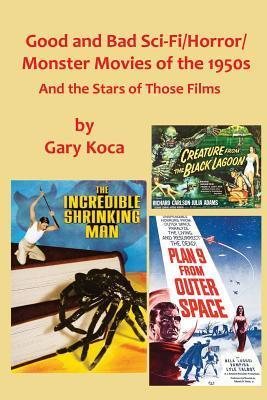
Good and Bad Sci-Fi/Horror Movies of the 1950s: And the Stars Who Were in Those Films
The 1930s and early 1940s are considered by most film historians to be the golden era of black and white horror films, and Universal Studios was the main studio to take advantage of the public's interest in this film genre. Movies such as Frankenstein and its even-better sequel, The Bride of Frankenstein, Dracula, The Mummy, The Invisible Man, The Werewolf of London, and my own personal favorite, The Wolfman, with Lon Chaney, Jr. were all terrific films and spawned a bunch of sequels like Frankenstein Meets the Wolf Man, House of Frankenstein, House of Dracula, and even Abbott and Costello Meet Frankenstein. But by the early 1940s these make-believe monsters were replaced by real ones - Hitler and Nazi Germany as well as the other Axis powers, Italy and Japan. And after World War II ended, the public was interested in different kinds of films - war films, comedies, and movies that dealt with real-life problems like readjustment to civilian life, alcoholism, and life in prison, just to name a few. At the same time, no sooner was World War II brought to a close in August of 1945 after the dropping of the atomic bombs in Hiroshima and Nagasaki, Japan that an all-out nuclear weapons race commenced between the two newly-emerging superpowers, the United States and Russia. Between 1946 and 1949, the United States conducted six nuclear tests, and the Soviet Union conducted its first test in August of 1949. At the outset, neither the U.S. nor the Soviet Union had many nuclear weapons to spare, but that changed dramatically in the early 1950s. In January of 1951 the United States established a dedicated test site in Nevada and was also using a site in the Marshall Islands in the Pacific Ocean for extensive nuclear testing. The Soviet Union began similar testing in Kazakhstan. An atmosphere of fear and suspicion between the two countries led the feeding frenzy to build more powerful and sophisticated bombs, with the result that during the 1950s new hydrogen bomb designs were tested in the Pacific. At the same time, we began to look upward and wonder if we were the only planet in our galaxy or any other solar system that had intelligent life. What if there were life on other planets, beings who were advanced and either saw earth as a place to colonize or were worried about what our gaining sophistication in developing nuclear devices could do to their planets? These thoughts were not lost on Hollywood film makers. As a result, in the early 1950s they began making
PRP: 79.36 Lei

Acesta este Prețul Recomandat de Producător. Prețul de vânzare al produsului este afișat mai jos.
63.49Lei
63.49Lei
79.36 LeiPrimești 63 puncte

Indisponibil
Descrierea produsului
The 1930s and early 1940s are considered by most film historians to be the golden era of black and white horror films, and Universal Studios was the main studio to take advantage of the public's interest in this film genre. Movies such as Frankenstein and its even-better sequel, The Bride of Frankenstein, Dracula, The Mummy, The Invisible Man, The Werewolf of London, and my own personal favorite, The Wolfman, with Lon Chaney, Jr. were all terrific films and spawned a bunch of sequels like Frankenstein Meets the Wolf Man, House of Frankenstein, House of Dracula, and even Abbott and Costello Meet Frankenstein. But by the early 1940s these make-believe monsters were replaced by real ones - Hitler and Nazi Germany as well as the other Axis powers, Italy and Japan. And after World War II ended, the public was interested in different kinds of films - war films, comedies, and movies that dealt with real-life problems like readjustment to civilian life, alcoholism, and life in prison, just to name a few. At the same time, no sooner was World War II brought to a close in August of 1945 after the dropping of the atomic bombs in Hiroshima and Nagasaki, Japan that an all-out nuclear weapons race commenced between the two newly-emerging superpowers, the United States and Russia. Between 1946 and 1949, the United States conducted six nuclear tests, and the Soviet Union conducted its first test in August of 1949. At the outset, neither the U.S. nor the Soviet Union had many nuclear weapons to spare, but that changed dramatically in the early 1950s. In January of 1951 the United States established a dedicated test site in Nevada and was also using a site in the Marshall Islands in the Pacific Ocean for extensive nuclear testing. The Soviet Union began similar testing in Kazakhstan. An atmosphere of fear and suspicion between the two countries led the feeding frenzy to build more powerful and sophisticated bombs, with the result that during the 1950s new hydrogen bomb designs were tested in the Pacific. At the same time, we began to look upward and wonder if we were the only planet in our galaxy or any other solar system that had intelligent life. What if there were life on other planets, beings who were advanced and either saw earth as a place to colonize or were worried about what our gaining sophistication in developing nuclear devices could do to their planets? These thoughts were not lost on Hollywood film makers. As a result, in the early 1950s they began making
Detaliile produsului




