








Looking at Lovemaking: Constructions of Sexuality in Roman Art, 100 B.C.-A.D. 250
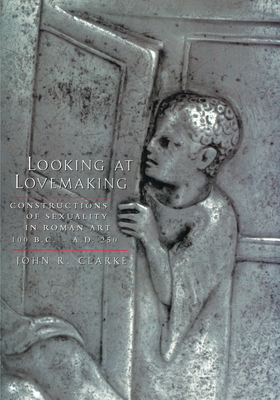
Looking at Lovemaking: Constructions of Sexuality in Roman Art, 100 B.C.-A.D. 250
What did sex mean to the ancient Romans? In this lavishly illustrated study, John R. Clarke investigates a rich assortment of Roman erotic art to answer this question--and along the way, he reveals a society quite different from our own. Clarke reevaluates our understanding of Roman art and society in a study informed by recent gender and cultural studies, and focusing for the first time on attitudes toward the erotic among both the Roman non-elite and women. This splendid volume is the first study of erotic art and sexuality to set these works--many newly discovered and previously unpublished--in their ancient context and the first to define the differences between modern and ancient concepts of sexuality using clear visual evidence.
Roman artists pictured a great range of human sexual activities--far beyond those mentioned in classical literature--including sex between men and women, men and men, women and women, men and boys, threesomes, foursomes, and more. Roman citizens paid artists to decorate expensive objects, such as silver and cameo glass, with scenes of lovemaking. Erotic works were created for and sold to a broad range of consumers, from the elite to the very poor, during a period spanning the first century B.C. through the mid-third century of our era. This erotic art was not hidden away, but was displayed proudly in homes as signs of wealth and luxury. In public spaces, artists often depicted outrageous sexual acrobatics to make people laugh.
Looking at Lovemaking depicts a sophisticated, pre-Christian society that placed a high value on sexual pleasure and the art that represented it. Clarke shows how this culture evolved within religious, social, and legal frameworks that were vastly different from our own and contributes an original and controversial chapter to the history of human sexuality.
Roman artists pictured a great range of human sexual activities--far beyond those mentioned in classical literature--including sex between men and women, men and men, women and women, men and boys, threesomes, foursomes, and more. Roman citizens paid artists to decorate expensive objects, such as silver and cameo glass, with scenes of lovemaking. Erotic works were created for and sold to a broad range of consumers, from the elite to the very poor, during a period spanning the first century B.C. through the mid-third century of our era. This erotic art was not hidden away, but was displayed proudly in homes as signs of wealth and luxury. In public spaces, artists often depicted outrageous sexual acrobatics to make people laugh.
Looking at Lovemaking depicts a sophisticated, pre-Christian society that placed a high value on sexual pleasure and the art that represented it. Clarke shows how this culture evolved within religious, social, and legal frameworks that were vastly different from our own and contributes an original and controversial chapter to the history of human sexuality.
PRP: 284.89 Lei

Acesta este Prețul Recomandat de Producător. Prețul de vânzare al produsului este afișat mai jos.
227.91Lei
227.91Lei
284.89 LeiPrimești 227 puncte

Indisponibil
Descrierea produsului
What did sex mean to the ancient Romans? In this lavishly illustrated study, John R. Clarke investigates a rich assortment of Roman erotic art to answer this question--and along the way, he reveals a society quite different from our own. Clarke reevaluates our understanding of Roman art and society in a study informed by recent gender and cultural studies, and focusing for the first time on attitudes toward the erotic among both the Roman non-elite and women. This splendid volume is the first study of erotic art and sexuality to set these works--many newly discovered and previously unpublished--in their ancient context and the first to define the differences between modern and ancient concepts of sexuality using clear visual evidence.
Roman artists pictured a great range of human sexual activities--far beyond those mentioned in classical literature--including sex between men and women, men and men, women and women, men and boys, threesomes, foursomes, and more. Roman citizens paid artists to decorate expensive objects, such as silver and cameo glass, with scenes of lovemaking. Erotic works were created for and sold to a broad range of consumers, from the elite to the very poor, during a period spanning the first century B.C. through the mid-third century of our era. This erotic art was not hidden away, but was displayed proudly in homes as signs of wealth and luxury. In public spaces, artists often depicted outrageous sexual acrobatics to make people laugh.
Looking at Lovemaking depicts a sophisticated, pre-Christian society that placed a high value on sexual pleasure and the art that represented it. Clarke shows how this culture evolved within religious, social, and legal frameworks that were vastly different from our own and contributes an original and controversial chapter to the history of human sexuality.
Roman artists pictured a great range of human sexual activities--far beyond those mentioned in classical literature--including sex between men and women, men and men, women and women, men and boys, threesomes, foursomes, and more. Roman citizens paid artists to decorate expensive objects, such as silver and cameo glass, with scenes of lovemaking. Erotic works were created for and sold to a broad range of consumers, from the elite to the very poor, during a period spanning the first century B.C. through the mid-third century of our era. This erotic art was not hidden away, but was displayed proudly in homes as signs of wealth and luxury. In public spaces, artists often depicted outrageous sexual acrobatics to make people laugh.
Looking at Lovemaking depicts a sophisticated, pre-Christian society that placed a high value on sexual pleasure and the art that represented it. Clarke shows how this culture evolved within religious, social, and legal frameworks that were vastly different from our own and contributes an original and controversial chapter to the history of human sexuality.
Detaliile produsului